
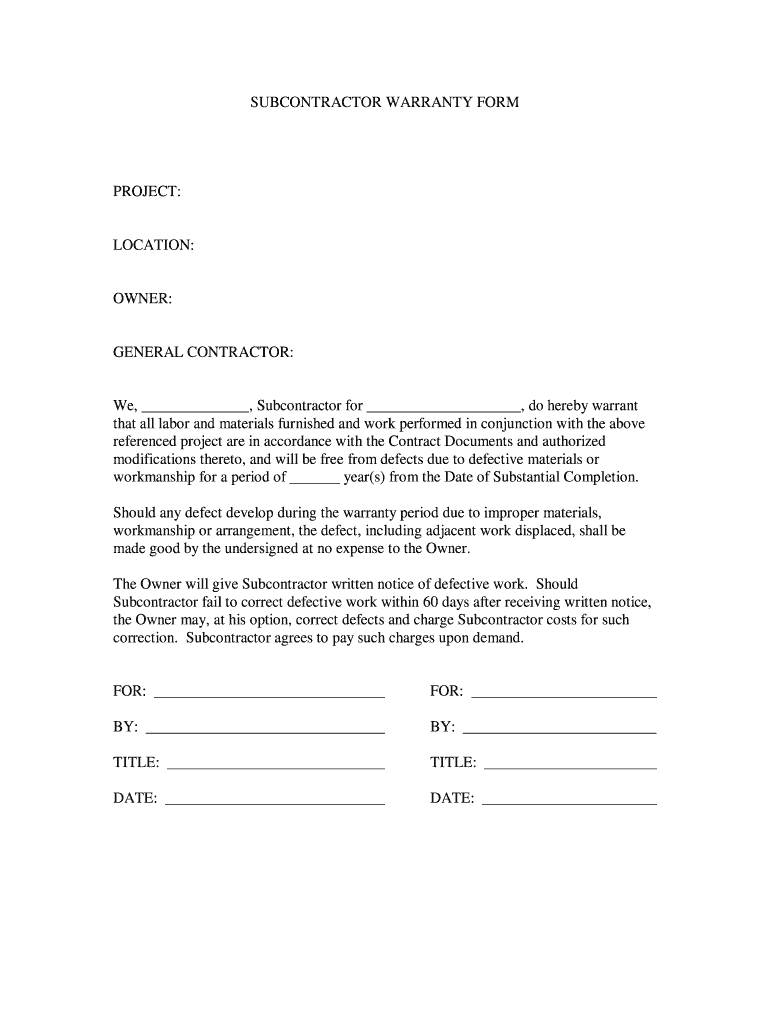







Definition and Meaning of Workmanship Warranty Template
A workmanship warranty template serves as a formal agreement between a contractor and a client, outlining the guarantees regarding the quality of labor provided on a project. This warranty specifies that the workmanship will be free from defects for a defined period following the project's completion, typically one year, although longer durations can be negotiated. In essence, it protects the client by ensuring that the contractor is accountable for any issues stemming from poor workmanship.
The key components of a workmanship warranty typically include:
- Scope of Work: A detailed description of the work covered under the warranty.
- Warranty Period: The time frame during which defects in workmanship will be addressed by the contractor.
- Remedies and Obligations: The contractor's responsibilities to remedy any defects found within the warranty period, often including labor and materials at no cost to the client.
This type of warranty ensures that clients can have confidence in the quality and durability of the services rendered, promoting fairness in business dealings.
Steps to Complete the Workmanship Warranty Template
Completing a workmanship warranty template involves several methodical steps to ensure clarity and legal compliance. Here are the essential actions involved in this process:
-
Download the Template: Obtain a reputable template from a reliable source, such as DocHub, which provides preformatted documents adaptable to specific needs.
-
Fill Out Essential Information: Key fields to populate include:
- Contracting party names and addresses (contractor and client).
- Project details, including location and description.
-
Specify Warranty Terms: Clearly define the duration of the warranty, typically ranging from one to two years, depending on the type of work. It should also outline what happens if defects occur during this period.
-
Detail the Scope of Work: Include a comprehensive description of the work covered to avoid ambiguity. This should detail the nature of the services provided and any materials or components involved.
-
Incorporate Remedies: Specify the terms for remedial actions the contractor will take if defects arise. This generally includes provisions for repairing or replacing flawed work under the warranty.
-
Sign and Date: Ensure both parties sign and date the document, which legitimizes the warranty; this action is crucial in any legal context.
By following these outlined steps, individuals can ensure that the workmanship warranty template is properly filled out and legally binding.
Who Typically Uses the Workmanship Warranty Template?
The workmanship warranty template is widely utilized by various parties in the construction and contracting industries. Here are the primary users:
-
General Contractors: These professionals offer comprehensive project management services, including a gamut of subcontractor services, and they often provide clients with a workmanship warranty to reassure them of their service quality.
-
Subcontractors: Specialists in specific trades, such as plumbing, electrical work, or roofing, include workmanship warranties in their contracts to confirm the quality of their work and instil trust with clients.
-
Homeowners: Individuals commissioning work on their property frequently request a workmanship warranty as a safeguard against potential issues resulting from the construction.
-
Commercial Property Owners: Businesses investing in renovations or new constructions will also seek these warranties to protect their investments.


Key Elements of the Workmanship Warranty Template
A well-crafted workmanship warranty template encompasses several critical elements to ensure its effectiveness and clarity:
-
Clear Definitions: Clear terminology should be defined within the document, establishing the context of the workmanship and the expectations of involved parties.
-
Coverage: Specify precisely what types of defects or failures are covered under the warranty. This might include structural defects, materials failures, or specifically defined workmanship issues.
-
Exclusions: It is equally important to outline any exclusions or limitations of the warranty. This can guard against misunderstandings, such as damage resulting from misuse or normal wear and tear.
-
Claim Process: Detail how a client can initiate a warranty claim, including necessary documentation and communication channels. This enables transparency and facilitates the resolution process.
-
Transferability Conditions: Clarify whether the warranty is transferable to future property owners, which can add value when selling a property.
A comprehensive craftsmanship warranty template that includes these elements establishes a strong foundation for the relationship between the contractor and the client, ultimately fostering trust and satisfaction.
Important Terms Related to the Workmanship Warranty Template
Understanding the terminology associated with workmanship warranties is crucial for both contractors and clients. Here are several key terms:
-
Defect: An imperfection or failure in the workmanship, which could compromise the quality, safety, or functionality of the constructed work.
-
Warranty Period: The timeframe during which the warranty is active, typically starting from the date of substantial completion of the work.
-
Remedy: The contractor's responsibility to repair or replace defective work covered under the warranty, ensuring that the client's satisfaction is prioritized.
-
Exclusions: Conditions or scenarios that are not covered by the warranty, often listed to protect contractors from claims arising from unrelated issues.
Understanding these terms assists all parties in navigating the warranty process and reduces potential conflicts regarding expectations.
Examples of Using the Workmanship Warranty Template
Utilizing a workmanship warranty template can manifest in various scenarios that demonstrate its practical applications. For example:
-
Residential Construction Projects: A homeowner hires a contractor to build an addition to their home. The contractor provides a workmanship warranty ensuring that any structural issues arising within one year will be addressed promptly.
-
Commercial Renovation: A business owner renovates their office space and acquires a workmanship warranty from the contractor. Should any issues with the electrical systems emerge within twelve months, the contractor is obligated to rectify these without additional cost.
-
Roofing Repairs: A client engages a roofing contractor to repair their roof. The contractor issues a workmanship warranty stating they will correct any leaks or defects that occur within a set period, reflecting a commitment to quality and offering peace of mind to the homeowner.
These examples illustrate how a workmanship warranty template serves to define expectations, build credibility, and protect the interests of clients in various construction contexts.




