






Definition & Meaning
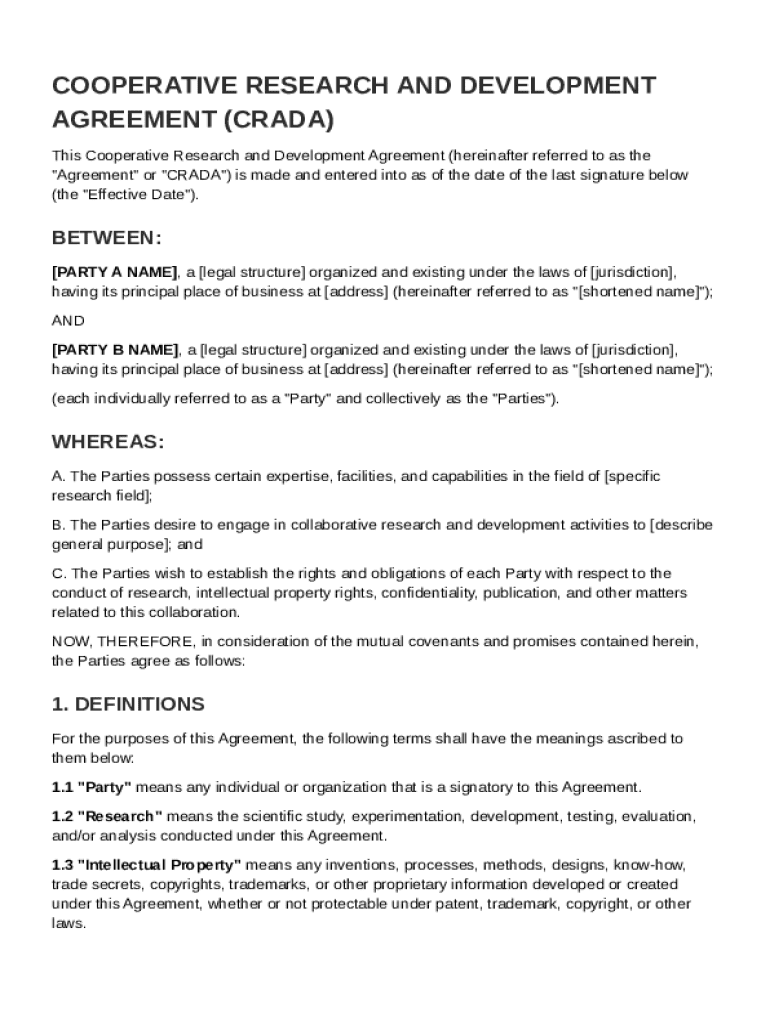
A Cooperative Research and Development Agreement (CRADA) is a formal legal document used when two or more parties wish to collaborate on a specific research project. It outlines the project's scope, delineating each party's roles and responsibilities. The CRADA is designed to facilitate effective cooperation while ensuring that each party's interests are adequately protected. These agreements are primarily used by government entities, research organizations, and businesses aiming to leverage each other's expertise and resources for mutual benefit. The key aspect of a CRADA is the balance it strikes between collaboration and safeguarding intellectual property rights.
Key Components
- Roles and Responsibilities: Specific duties and obligations for each party.
- Funding Arrangements: Details of financial contributions and resource allocations.
- Intellectual Property Rights: Ownership and usage rights for resulting innovations.
- Confidentiality Obligations: Rules governing the protection of sensitive information.
- Termination Conditions: Outlines procedures and conditions for terminating the agreement.
Key Elements of the Cooperative Research and Development Agreement Template
The CRADA template includes several critical sections to ensure comprehensive coverage of relational dynamics and legal obligations. An understanding of these elements is crucial for constructing a functional and legally sound agreement.
Funding and Resource Sharing
In the funding arrangements section, each party's financial contributions, use of equipment, and resource allocations are meticulously documented.
- Financial Contributions: Details on who funds what aspect of the research.
- Resource Allocation: Sharing of equipment, facilities, or personnel.
Intellectual Property Rights
Determining who holds the rights to any products or processes resulting from the collaboration is essential.
- Ownership: Clarity on who owns what after the project.
- Usage Rights: Permissions for using the developed technology or products.
Confidentiality and Publication Rights
The agreement should include confidentiality clauses to protect proprietary information, as well as publication rights to manage how study results are shared.
- Confidentiality Clauses: Outlines how sensitive information is handled.
- Publication Rights: Manages the release of research findings through publications.
How to Use the Cooperative Research and Development Agreement Template
Utilizing the CRADA template effectively involves understanding the step-by-step procedures for tailoring it to specific project needs.
Steps for Customization
- Identify Parties: Clearly define all parties involved and their respective roles.
- Define Objectives: Clearly state the project’s purpose and expected outcomes.
- Negotiate Terms: Engage all parties in a discussion on terms and conditions.
- Document Obligations: Explicitly itemize responsibilities, funding, and resources.
- Review Legal Compliance: Ensure compliance with applicable laws and regulations.
- Finalize and Sign: Once all parties agree, finalize and sign the document.
Practical Example
If a university and a tech firm agree to research renewable energy solutions, the CRADA would help define who provides what resources, data sharing protocols, publication rights, and how the resulting intellectual property is managed.
How to Obtain the Cooperative Research and Development Agreement Template
Accessing a CRADA template often involves navigating institutional databases or legal resource platforms that specialize in providing structured legal forms.
Sources for Templates
- Online Legal Libraries: Websites providing legal forms and templates for various collaborations.
- Institutional Repositories: University or organizational databases with legal document templates focusing on research collaborations.
- Government Agencies: Public department websites offering templates for federally funded projects.
Customized Templates
Professional legal services can tailor a CRADA template to suit specific project needs and ensure it adheres to all regulatory and institutional requirements.
Legal Use of the Cooperative Research and Development Agreement Template
The legality of using a CRADA template is grounded in its alignment with relevant U.S. laws and regulations. It is essential to ensure all terms comply with intellectual property laws, and confidentiality agreements adhere to established standards.
Compliance Considerations
- Intellectual Property Law: Ensure all provisions align with current IP legislation.
- Confidentiality Agreements: Must adhere to legal standards in safeguarding information.
- Federal Regulations: Compliance with federal guidelines if the project involves government entities or funding.
Legal Support
In complex cases, involving legal professionals to review and adapt the CRADA can mitigate risks and ensure comprehensive compliance with all legal aspects.
Business Types That Benefit Most from Cooperative Research and Development Agreement Template
Various entities stand to gain significantly from using the CRADA template, depending on their scope of operations and research focus.
Beneficial Business Categories
- Pharmaceutical Companies: Engaging in joint drug development projects with research institutions.
- Tech Firms: Collaborating with universities on innovative technology solutions.
- Biotech Companies: Partnering with research labs to explore new medical treatments.
Real-World Application
A biotechnology firm could collaborate with a government research lab to develop a vaccine, leveraging the CRADA to outline shared data rights, testing responsibilities, and publication rights.
Important Terms Related to Cooperative Research and Development Agreement Template
Understanding the terminology within a CRADA ensures all parties have a clear perspective on their rights and responsibilities.
Terminologies Breakdown
- Principal Investigator: Lead individual overseeing the research project.
- Milestone Payments: Financial disbursements linked to achieving project goals.
- Arbitration Clause: Specifies how disputes will be resolved outside of court.
- Force Majeure: Clause addressing unpredictable events that may impact project success.
Importance in Documentation
Each term must be clearly defined within the agreement to prevent misunderstandings and ensure seamless execution of collaborative efforts.