






Definition & Meaning
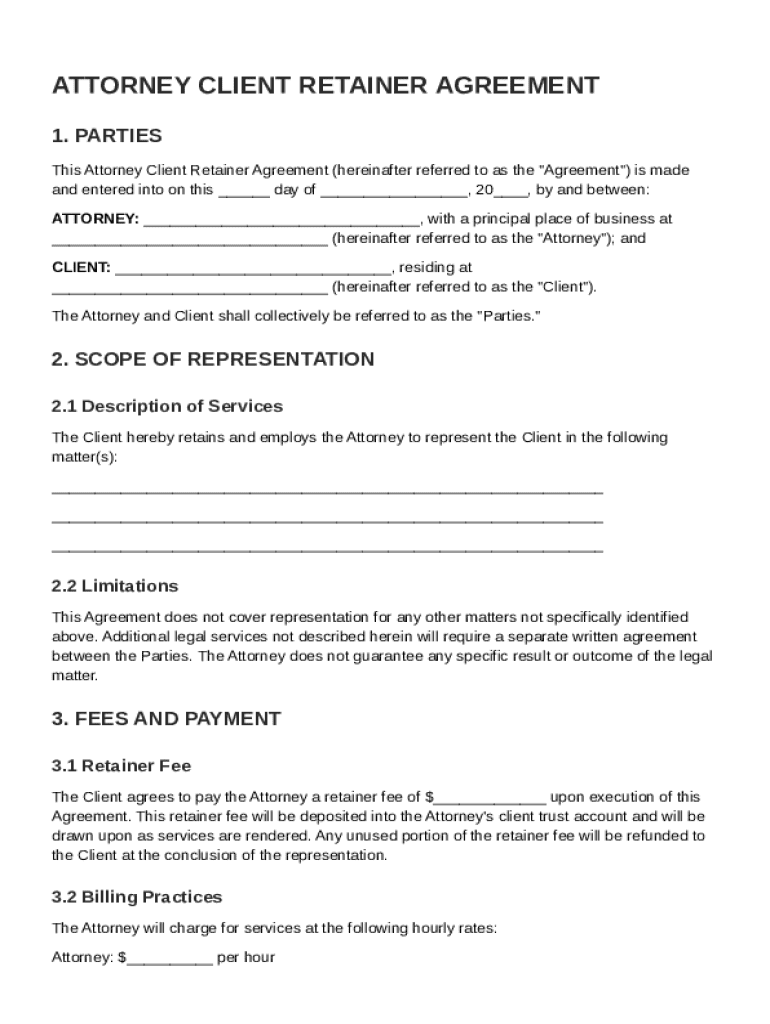
The "Attorney Client Retainer Agreement Template" is a standardized document used to formalize the relationship between an attorney and a client. This template outlines the terms and conditions under which legal services will be provided. By detailing expectations and responsibilities, both parties gain clarity on the professional engagement. The agreement typically specifies the scope of representation, applicable fees, payment structures, and the responsibilities that each party must uphold. Its primary purpose is to establish clear boundaries and protocols to prevent misunderstandings and ensure a structured professional relationship is maintained.
Key Elements of the Attorney Client Retainer Agreement Template
A comprehensive attorney client retainer agreement template should include several key components to ensure clarity and compliance. Each of these elements plays a crucial role in defining the working relationship:
-
Scope of Representation: Clearly defines the legal services the attorney will provide. It establishes the limitations of the services and any exclusions.
-
Fees and Payment Structures: Includes information about hourly rates, flat fees, or contingency fees, and describes payment terms, including timelines and accepted payment methods.
-
Responsibilities of Both Parties: Outlines what each party is expected to do, such as delivering documents timely or maintaining communication.
-
Termination Conditions: Details the circumstances under which either party can terminate the agreement, including any notice requirements or financial implications.
-
Confidentiality Obligations: Emphasizes the importance of maintaining client confidentiality and specifies how information will be protected.
-
Dispute Resolution Procedures: Provides a framework for resolving any disagreements, possibly through mediation or arbitration.
-
Governing Law: Identifies the jurisdiction whose laws will govern the agreement.
How to Use the Attorney Client Retainer Agreement Template
Using the attorney client retainer agreement template effectively involves a few essential steps, ensuring both the client and the attorney have a mutual understanding of the contract's terms:
-
Initial Discussion: Before drafting the agreement, both parties should discuss their expectations, objectives, and any specific terms they wish to include.
-
Customization: Tailor the template to address the specific needs and details of the client-attorney relationship. This may involve editing clauses or adding personalized terms.
-
Review Legal Requirements: Ensure that the template complies with local legal standards and ethical requirements. An attorney should review to avoid any potential conflicts or errors.
-
Review with Client: Go over the document with the client to address any questions or concerns, ensuring they fully understand and agree with the terms.
-
Finalization and Signing: Once the document is agreed upon, both parties should sign it, which signifies mutual consent. Copies should be retained by both parties for their records.
Steps to Complete the Attorney Client Retainer Agreement Template
Completing the attorney client retainer agreement template involves several detailed steps to ensure the document is thorough and legally sound:
-
Gather Information: Start by collecting all necessary client information, including contact details and specifics about the legal issue.
-
Outline Services: Clearly specify the legal services the attorney will provide, along with any exclusions or limitations.
-
Calculate Fees: Define the billing structure, including hourly rates or flat fees, and describe how and when payments should be made.
-
Draft Responsibilities: List each party's responsibilities in detail, noting any required documents or actions.
-
Determine Termination Conditions: Specify the terms under which either party can end the agreement, including any associated costs or penalties.
-
Include Confidentiality Clause: Detail how client information will be protected, focusing on adherence to legal confidentiality standards.
-
Define Dispute Resolution: Propose a process for addressing any contractual disputes, like arbitration or mediation options.
-
Final Review: Conduct a thorough review either individually or with legal counsel to ensure accuracy and completeness.
-
Signatures: Once finalized, both parties should sign the agreement, with copies retained by each for their records.
Legal Use of the Attorney Client Retainer Agreement Template
The attorney client retainer agreement template serves as a legally binding document that establishes the formal relationship between an attorney and a client. It is crucial for both parties to understand the legal implications of this document:
-
Formalizes Engagement: The agreement legally recognizes the attorney-client relationship and establishes the attorney's authority to act on behalf of the client.
-
Enforces Terms: By signing, both parties commit to the terms outlined, making them enforceable in a court of law if necessary.
-
Ensures Compliance: It helps ensure that the attorney adheres to the ethical guidelines and standards of practice set forth by legal authorities.
-
Protects Parties: Provides a framework to protect both parties against breaches or misunderstandings, serving as a reference for resolving disputes.
Important Terms Related to Attorney Client Retainer Agreement Template
Understanding the specific terminology used in the attorney client retainer agreement can enhance clarity and legal compliance:
-
Retainer Fee: An upfront cost paid by the client to secure legal services and commitment from the attorney.
-
Billable Hours: The hours spent on working directly on the client's case, for which the client will be charged.
-
Contingency Fee: A percentage of the client's award or settlement, paid to the attorney only if the case is won.
-
Limitation of Liability: A clause that restricts the attorney's liability in specific circumstances, which must adhere to legal guidelines.
-
Non-engagement Letter: A written notice clarifying that the attorney has not been retained, often used when a potential client declines services.
State-Specific Rules for the Attorney Client Retainer Agreement Template
The terms and enforceability of an attorney client retainer agreement can vary significantly based on jurisdiction. It is important to recognize state-specific nuances:
-
Filing Requirements: Some states require retainers to be registered or documented in specific formats.
-
Fee Arrangements: States might impose restrictions on certain fee structures, such as prohibiting contingency fees in criminal cases.
-
Ethical Standards: Compliance with state bar association standards and ethical rules is essential for legal validity.
-
Client's Rights: Certain states mandate that clients receive specific rights information, typically regarding confidentiality and dispute resolution.
Examples of Using the Attorney Client Retainer Agreement Template
Real-world scenarios help demonstrate how the attorney client retainer agreement template is used across varying legal contexts:
-
Civil Litigation: An attorney uses a retainer agreement to outline the scope and limitations of representation in a lawsuit.
-
Family Law: A family lawyer drafts a retainer agreement for divorce proceedings, detailing fees and client expectations.
-
Business Contracts: Corporate attorneys create agreements for retained advisory services, specifying ongoing or project-based support.
-
Criminal Defense: A defense attorney sets up a retainer agreement for a criminal case, including specifics about trial and pre-trial representation.