






Definition and Meaning of the Land Trust Agreement Template
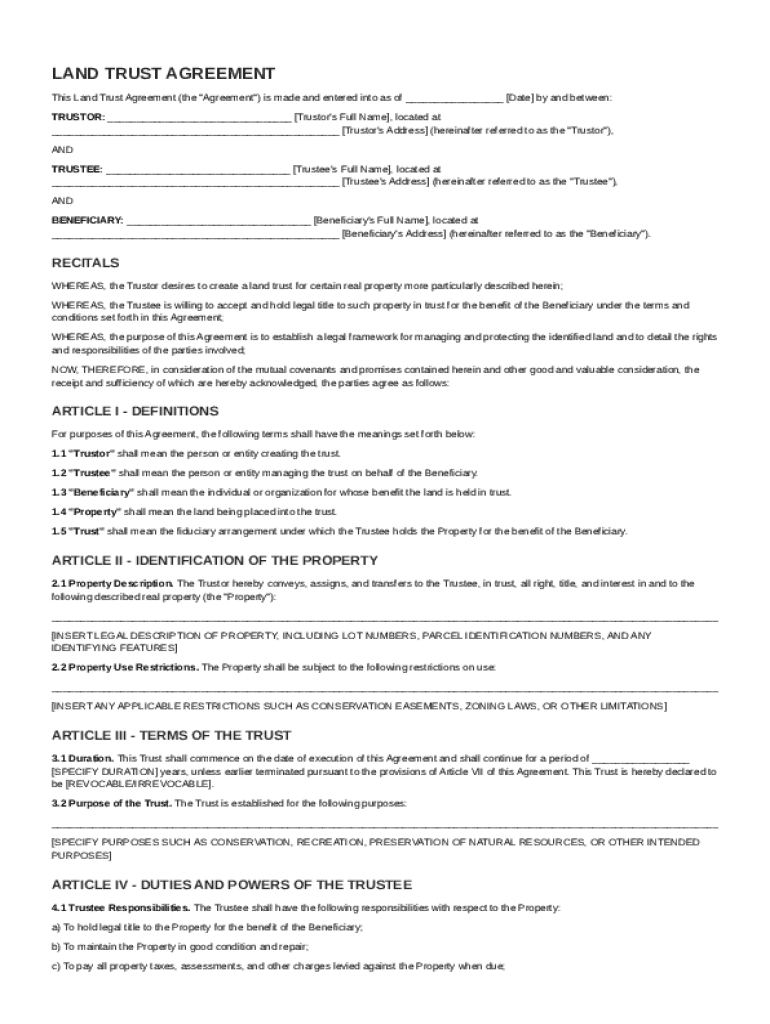
The Land Trust Agreement Template establishes a legal framework involving three primary parties: the Trustor, Trustee, and Beneficiary. This document articulates their roles, responsibilities, and rights concerning specific real property held in trust. The purpose is to ensure that the property is managed and protected while retaining the agreed benefits for the beneficiary. It also includes conditions for amendments, termination, and how disputes are to be handled, providing a streamlined process for real estate management.
The Land Trust Agreement is designed to simplify real estate transactions and property management. It outlines how the real property will be used and managed, allowing flexibility in transferring ownership and succession planning. This template is particularly beneficial for those looking to maintain anonymity in property ownership, as the trustee’s name appears on public records instead of the trustor's or beneficiary's.
How to Use the Land Trust Agreement Template
To utilize the Land Trust Agreement Template effectively, it's essential first to gather all necessary information regarding the property in question and the parties involved. The template typically includes fields where these details can be entered, ensuring that each section is customized to reflect the agreement's specific terms.
- Enter Trustor Details: This includes the full legal name, address, and contact information of the person establishing the trust.
- Identify the Trustee: Insert the details of the person or entity chosen to manage the trust.
- Define the Beneficiary: Clearly state who will benefit from the trust and include their personal information.
- Property Description: Provide a detailed description of the property, including legal identifiers like parcel numbers.
- Outline Duties and Powers: Clearly state how the trustee should manage the property and what powers they have in this role.
- Add Financial Provisions: Specify how any income generated by the property will be handled.
After filling out the form, review it for completeness and accuracy, and then schedule a meeting with all parties to discuss and finalize the agreement.
Key Elements of the Land Trust Agreement Template
The Land Trust Agreement Template includes several critical components to ensure comprehensive coverage of the property trust arrangement.
- Trustee Provisions: Define the scope of authority and responsibilities granted to the trustee, including decision-making processes and management duties.
- Beneficiary Rights: Detail the rights of the beneficiary, including their entitlements to income or use of the property and any limitations on their control over trust decisions.
- Amendment Terms: Conditions under which the agreement can be amended, including approval requirements from involved parties.
- Termination Conditions: Specify the circumstances under which the trust may be terminated or how property will be dealt with upon the trust's conclusion.
These elements ensure clarity and legal compliance in the relationship between the trustor, trustee, and beneficiary, providing a clear roadmap for property management.
Who Typically Uses the Land Trust Agreement Template
A variety of individuals and entities might find the Land Trust Agreement Template beneficial for their specific needs.
- Real Estate Investors: Those looking to manage multiple properties can do so through a land trust, simplifying their assets into a manageable trust structure.
- Estate Planners: Individuals planning the transfer of real estate assets can use the template for effective succession planning.
- Privacy Seekers: Persons wishing to keep property ownership private from public records often choose land trusts, which list the trustee’s name instead of the trustor's or beneficiary's.
- Financial Institutions: Lenders may use land trusts when assessing property management and real estate dealings in their portfolios.
These users benefit from the organization and legal clarity that such agreements provide, ensuring legal compliance and streamlined property management.


Legal Use of the Land Trust Agreement Template
The Land Trust Agreement Template must adhere to various legal statutes to ensure its enforceability.
- Statutory Compliance: It must comply with state laws governing trust agreements and real property.
- Capacity and Intent: All parties must have the legal capacity to enter into the agreement and a clear intention to form a trust.
- Notarization Requirements: Certain states may require the document to be notarized to be valid and enforceable.
- Taxation Obligations: Must account for any tax implications tied to property held in trust to avoid penalties.
These legal requirements ensure that the agreement is valid, binding, and operable under state laws and that it protects the interests of all involved parties.
Example Scenarios for Using the Land Trust Agreement Template
Numerous scenarios illustrate the practical application of the Land Trust Agreement Template.
- Anonymity in Ownership: An individual purchases real estate, placing it in a land trust to maintain anonymity and protect their identity from public records.
- Estate Planning: A family uses a land trust to ensure that real estate passes seamlessly to the next generation without going through probate.
- Multiple Ownerships: Real estate partners form a land trust to manage joint investments, defining roles, responsibilities, and profit-sharing models.
- Aging Property Owners: Elderly property owners might place their home into a trust to facilitate smoother transition and financial management by family members.
These scenarios emphasize versatility and strategic advantages, demonstrating how the template works across different legal and personal circumstances.
Important Terms Related to the Land Trust Agreement Template
Understanding key terms related to the Land Trust Agreement Template is crucial for all parties involved.
- Trustor: The individual or entity that creates the trust, transferring ownership of the property to the trustee.
- Trustee: The person or entity who holds the title to the property and is responsible for managing it according to the trust agreement.
- Beneficiary: The person or group entitled to benefit from the trust’s assets or income.
- Trust Property: Refers to the real estate held within the trust framework.
- Fiduciary Duty: The trustee’s legal obligation to act in the best interest of the beneficiary as outlined in the agreement.
These terms form the foundation of the land trust agreement and are essential for properly interpreting and executing the document.
State-Specific Rules for the Land Trust Agreement Template
Land trust agreements must account for variations in state law that might influence the formation and implementation of the trust.
- Property Law Variations: Different states may have specific requirements about the type of properties eligible to be included in a land trust.
- Fiduciary Responsibilities: State laws often define the scope of fiduciary duty unique to their jurisdiction's legal framework.
- Recording Requirements: Some states mandate that specific portions of the trust, such as transfers of deed, be recorded publicly.
These state-specific nuances must be factored into the creation and execution of a land trust agreement to ensure its legality and enforceability.