






Definition & Scope of the Freight Broker Agent Agreement
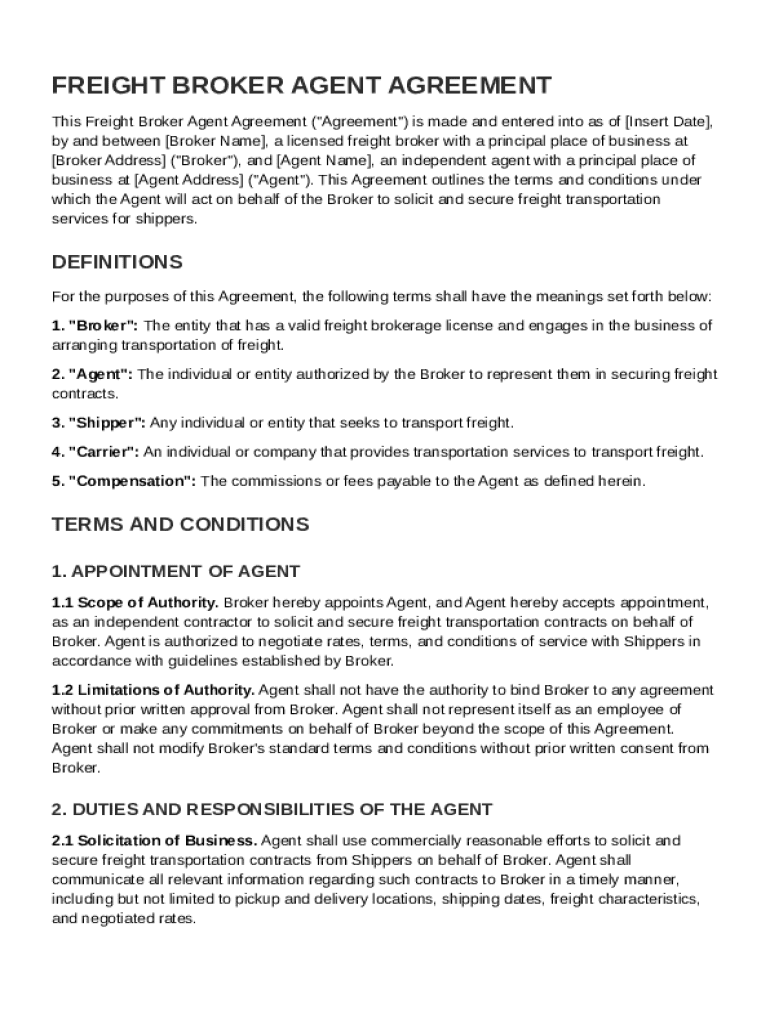
The Freight Broker Agent Agreement is a legally binding document that outlines the relationship between a licensed freight broker and an independent agent. This agreement establishes the terms and conditions under which the agent will solicit and secure freight transportation services on behalf of the broker. Key components of the agreement define the roles and responsibilities of both parties, compensation structures, and compliance with pertinent laws. It also covers confidentiality obligations, detailing what information must remain private, and stipulates the conditions under which the agreement can be terminated. This document is crucial in setting a clear and mutual understanding between the broker and the agent, minimizing potential disputes and ensuring a smooth operational workflow.
How to Use the Freight Broker Agent Agreement Template
Utilizing a Freight Broker Agent Agreement Template begins with understanding its structure and contents. The template should be tailored to fit the specific operational and legal needs of both the broker and the agent. Users should:
- Review each section of the template, ensuring it aligns with their specific requirements.
- Customize fields such as compensation terms, responsibilities, and duration of the agreement.
- Ensure compliance with state-specific legal nuances to protect all parties involved.
- Collaborate with a legal advisor to validate the terms and conditions.
- Disseminate the finalized document among involved parties for approval and signatures.
Providing detailed instructions on how to use the template ensures that users maximize its effectiveness while adhering to legal standards.
Key Elements of the Freight Broker Agent Agreement Template
Several critical elements form the backbone of the Freight Broker Agent Agreement:
- Roles and Responsibilities: Clearly define what the broker and agent are respectively accountable for, including specific duties, limitations, and tasks.
- Compensation: Outline the payment terms, including calculation methods, frequency, and conditions under which additional compensation may arise.
- ** Compliance and Legal Considerations**: Stipulate the need for adherence to state and federal laws, ensuring both parties understand their legal obligations.
- Termination Conditions: Specify the scenarios that could lead to the termination of the agreement, including breach of contract or non-performance.
- Confidentiality Clauses: Address the protection of sensitive information, preventing unauthorized disclosure and usage.
These elements collectively ensure that the agreement is comprehensive, legally sound, and clearly communicates the expectations of both parties.
Steps to Complete the Freight Broker Agent Agreement Template
Completing the Freight Broker Agent Agreement Template effectively requires a step-by-step approach:
- Initial Review: Examine the template thoroughly to understand its structure and components.
- Customization: Adjust sections to reflect the specific needs of both parties. This includes but is not limited to, modifying compensation clauses and assigning duties.
- Legal Consultation: Engage with a legal advisor to ensure that all state-specific and federal regulations are addressed.
- Agreement Validation: Share the revised document with the concerned parties for feedback and any additional modifications.
- Finalization and Signing: Once all parties concur, finalize the agreement and proceed to collect signatures to render it effective.
This structured approach ensures clarity and precision, reducing the risk of disputes or misunderstandings.
Who Typically Uses the Freight Broker Agent Agreement Template
This template is primarily designed for:
- Licensed Freight Brokers: Those seeking to expand their business operations by appointing independent agents.
- Independent Freight Agents: Individuals looking to formalize their working relationship with a freight broker.
- Legal Professionals: Lawyers and consultants who draft or review transport service agreements on behalf of their clients.
- Business Entities: Companies that deal frequently with freight transportation services and require standardized agreements to streamline operations.
Understanding who uses this template allows for more targeted customization and relevance, ensuring that the agreement meets the unique needs of its users.


Legal Use of the Freight Broker Agent Agreement Template
The legal application of this agreement involves:
- Adhering to Federal Regulations: Ensuring the agreement complies with federal transportation laws and standards.
- State-Specific Compliance: Tailoring the agreement to align with state-specific business regulations and legal requirements.
- Protection of Intellectual Property: Including clauses that protect proprietary information shared under the agreement.
- Dispute Resolution: Establishing a framework for addressing disagreements, whether through arbitration or litigation, thus safeguarding both parties' interests.
Appropriately addressing these legal aspects fortifies the agreement's validity and reduces potential legal challenges.
State-Specific Rules for the Freight Broker Agent Agreement Template
Each state may impose different regulations affecting freight broker agreements. Key considerations include:
- Licensing Requirements: Certain states require additional licensing or registration for freight brokerage activities.
- Tax Implications: States might have varying tax obligations and reporting requirements related to commissions and compensation.
- Contractual Terms: Legal requirements for contract terms can differ, impacting clauses like non-compete or confidentiality agreements.
- Jurisdictional Laws: Each state's laws to govern dispute resolution or contract enforcement, which should be acknowledged within the agreement.
Addressing state-specific rules ensures compliance and aligns the agreement with local legal standards, minimizing risk.
Examples of Using the Freight Broker Agent Agreement Template
Consider these practical scenarios:
- A startup freight brokerage hires multiple freelance agents across different states: Each agreement can be customized per state law while maintaining a standardized structure.
- An independent agent collaborates with a new freight broker: This agreement outlines specific compensation terms and the scope of services, ensuring mutual understanding.
- A broker seeks legal validation for contract terms: Using the template as a basis, a legal team can fine-tune the document to reinforce compliance and enforceability.
Providing examples enhances understanding and illustrates the agreement's application in real-world contexts.