






Key Elements of the Promise Agreement Template
Understanding the core components of a Promise Agreement Template is crucial for accurately capturing the terms and commitments between parties. This legal document typically includes several key sections, ensuring clarity, accountability, and enforceability.
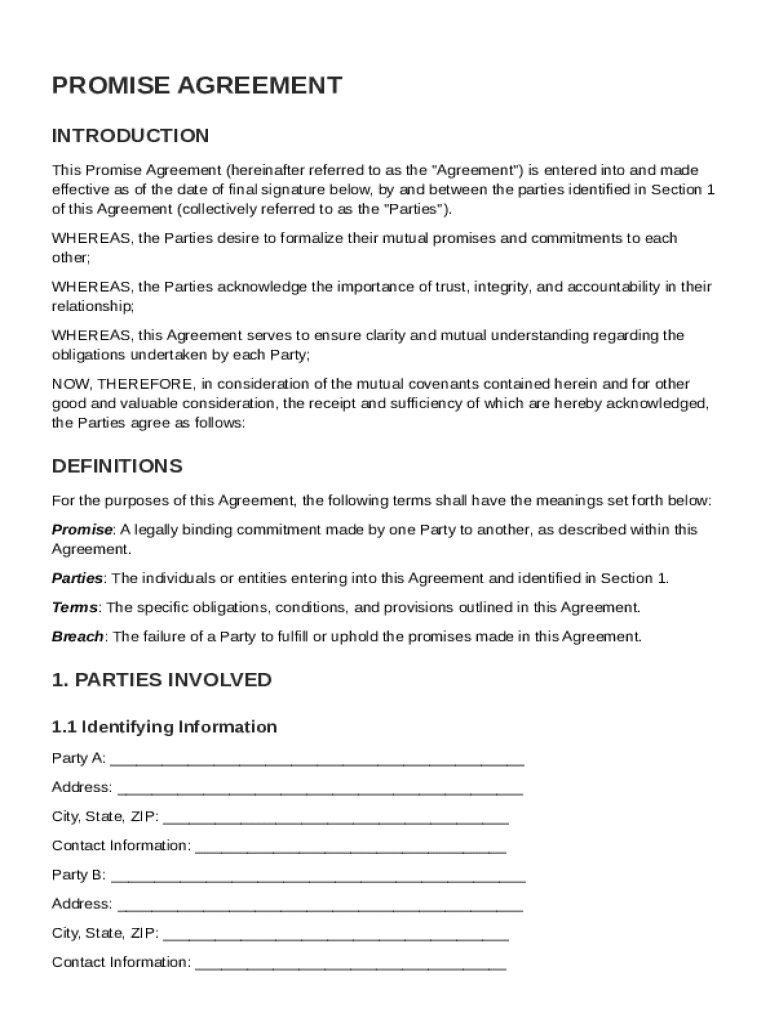
- Parties Involved: Clearly identify all parties. Include names and addresses for individuals and legal entity details for businesses. Accuracy is paramount to ensuring the agreement is binding on the right entities.
- Definitions of Key Terms: Define important terms used throughout the document to avoid ambiguity. These might include "Effective Date," "Confidential Information," and "Termination."
- Promises and Obligations: Detail the specific commitments made by each party. This section should be explicit, indicating duties, timelines, and deliverables involved.
- Performance Conditions: Outline any conditions that must be met for the promises to be enforceable. Specify timelines and performance standards that reflect mutual understanding.
- Consequences of Breach: Describe the repercussions for failing to meet obligations. This could involve financial penalties, specific performance, or termination clauses.
- Governing Law and Jurisdiction: Specify which state's laws will govern the agreement and where any disputes will be adjudicated. This is particularly critical for interstate agreements.
- Confidentiality Provisions: Include clauses to protect sensitive information. Define what constitutes "Confidential Information" and outline the responsibilities for its protection.
Step-by-Step Instructions to Complete the Promise Agreement Template
Filling out a Promise Agreement Template correctly is vital for its validity.
- Gather Necessary Information: Collect all relevant details about the parties. Ensure you have accurate and complete data to avoid future disputes or unenforceability.
- Define All Key Terms and Scope: Clearly define terms referenced within the document to avoid misunderstandings. Take note of vague terms that could lead to conflicting interpretations.
- Detail Promises and Obligations: Outline each party's commitments. Describe what is expected clearly to uphold accountability.
- Set Conditions for Performance: Establish guidelines for how and when obligations will be fulfilled. Include feasible and realistic timelines.
- Specify Breach Consequences: Clearly state the penalties or remedies for failing to meet the agreement. This should deter non-performance and provide clear paths for resolution.
- Include Governing Law: Select which jurisdiction's laws will apply. Consider geographical relevance and legal familiarity for the parties involved.
- Add Confidentiality Terms: Incorporate clauses protecting sensitive data. Ensure parties know what they can share and what must be kept confidential.
Legal Use of the Promise Agreement Template
A Promise Agreement Template serves as an enforceable contract under U.S. law when correctly executed and includes essential elements of offer, acceptance, and consideration.
- Consideration: Each party must provide something of value, whether a product, service, or promise of future action. Without consideration, a contract may be void.
- Mutual Assent: Both parties must agree to the terms without coercion. Documents should reflect negotiation and acceptance of terms.
- Capacity to Contract: Confirm both parties have the legal capacity to enter the agreement, ensuring no issues with age, mental capability, or restrictive covenants.
- Public Policy: Terms must be lawful and not contravene public policies. Unlawful agreements are invalid.
Who Typically Uses the Promise Agreement Template
Promise Agreement Templates are versatile and can be used by various individuals and entities to formalize commitments.
- Small Business Owners: Ideal for outlining service agreements, partnership arrangements, and vendor contracts, ensuring mutual expectations and terms are clear.
- Freelancers and Contractors: Useful for setting clear deliverables and payment terms when engaging with clients. These agreements help safeguard against scope creep and payment issues.
- Individuals in Personal Agreements: Suitable for personal loans or significant non-commercial transactions, allowing legal recognition of the terms.
- Corporations and Large Enterprises: Practical for more complex, long-term arrangements needing structured commitments between multiple departments or external partners.


State-Specific Rules for the Promise Agreement Template
While general terms apply universally, state-specific laws can affect the enforceability and terms of a Promise Agreement Template.
- Governing Law Clauses: Define which state's law governs the agreement. Different states have nuanced contract laws affecting interpretation.
- Statute of Limitations: States vary on how long parties have to bring legal action for breach of contract.
- Usury and Interest Rates: If the agreement involves financial transactions, note state-specific restrictions on interest rates.
- Non-Compete Clauses: States have vastly different stances on enforceability, with states like California limiting their use.
Important Terms Related to Promise Agreement Template
Understanding specific terminology is vital for using the Promise Agreement Template effectively.
- Bilateral vs. Unilateral Agreements: A bilateral agreement involves two parties making promises, while unilateral involves a promise in exchange for performance.
- Consideration: Something of value exchanged between parties, a fundamental element for a contract's enforceability.
- Force Majeure: Clauses exempting parties from performance obligations when unforeseen events beyond control occur, like natural disasters.
- Severability: Provision ensuring that if part of the contract is invalid, the remainder stays enforceable.
Examples of Using the Promise Agreement Template
Real-world scenarios can illustrate how Promise Agreement Templates are applied practically.
- Business Partnerships: Two companies agree to collaborate on a joint venture, using the template to specify deliverables, profit sharing, and dispute resolution.
- Freelance Services: A graphic designer and client use the template to agree on project scope, deadlines, and payment terms.
- Loan Agreements: An individual lending money utilizes the template to set repayment schedules, interest, and security pledges.
- Personal Services: A tutor uses the template to formalize lesson commitments, ensuring both party obligations in educational services.
Digital vs. Paper Version of Promise Agreement Template
Choosing between digital and paper formats can impact the agreement's convenience and legal standing.
- Digital Advantages: Offers ease of sending, signing, storing, and retrieving documents. DocHub provides a seamless experience for signing and annotating digital forms.
- Paper Format: Still preferred among some parties for tradition, legal authenticity, or lack of digital literacy. However, it requires physical storage and manual delivery.
- Electronic Signatures: Recognized as legally binding within the U.S. due to the ESIGN Act, offering a faster, efficient method compared to traditional signatures.
- Validity Concerns: Ensure all parties have access to necessary technology if using a digital format to avoid claims of non-receipt or inability to review terms.