
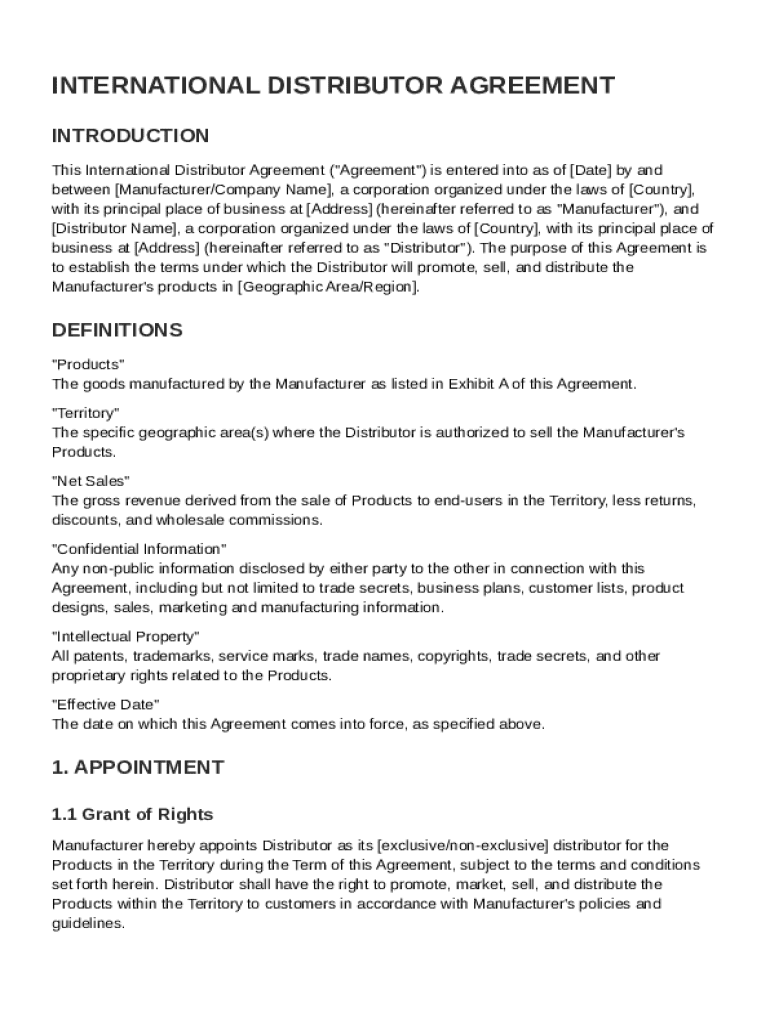







Definition and Purpose of the International Distributor Agreement Template
The International Distributor Agreement Template is a legally binding document that outlines the terms and conditions between a manufacturer and a distributor. It serves as a framework to facilitate the promotion, sale, and distribution of the manufacturer's products within a designated geographic area. The template provides clear definitions of roles, responsibilities, and expectations for both parties. It ensures that both the manufacturer and the distributor are mutually protected and that their business objectives can be met in a structured and organized manner. This template can be customized to suit specific contractual needs, accommodating various products and markets.
How to Use the International Distributor Agreement Template Effectively
Using the International Distributor Agreement Template involves a series of steps that ensure proper customization and execution. First, both parties should review the template thoroughly to understand its contents. Next, details such as the parties' names, addresses, product descriptions, and distribution territories should be entered accurately. Make sure any clauses regarding pricing, payment terms, and performance expectations are clearly defined and mutually agreeable. Both parties should also decide on dispute resolution mechanisms. Once finalized, both parties must sign the document electronically or physically to formalize the agreement. Retain copies for future reference and potential audits.
Obtaining the International Distributor Agreement Template
To obtain an International Distributor Agreement Template, you can access platforms like DocHub that provide a suite of tools for document management. These platforms often offer templates as part of their resources, allowing you to download them in various formats like DOC or PDF. Additionally, legal service providers and online legal form repositories might offer specialized templates for different industries. Ensure that the template you choose aligns with United States legal standards if your business operations are U.S.-based. You also have the option to consult legal professionals who can draft a custom agreement tailored to your specific needs.
Steps to Complete the International Distributor Agreement Template
- Review the Template: Both parties should read and understand every section of the template before making any edits.
- Input Party Details: Enter the full legal names and contact details of the manufacturer and distributor.
- Define the Products and Territory: Clearly describe the products to be distributed and the geographical areas where they will be sold.
- Outline Pricing and Payment Terms: Specify how pricing will be determined and the schedule for payments.
- Define Obligations and Performance Metrics: Detail the responsibilities of each party and any performance targets that need to be met.
- Include Confidentiality and Termination Clauses: Add clauses to protect proprietary information and details on how the agreement can be terminated.
- Finalize and Sign: Both parties should review the finalized agreement for accuracy and sign it to make it legally binding.
Key Elements of the International Distributor Agreement Template
- Definitions: Clear and precise identification of key terms used throughout the agreement.
- Obligations: Duties and responsibilities of both the manufacturer and the distributor.
- Pricing and Payment Terms: How prices will be set and the terms of payment.
- Performance Metrics: Metrics and benchmarks that the distributor must achieve.
- Intellectual Property Rights: Detailed rights related to trademarks and patents.
- Confidentiality and Non-Disclosure: Requirements for maintaining confidentiality of shared information.
- Termination Conditions: Circumstances under which the agreement can be ended by either party.
- Dispute Resolution: Methods and processes for resolving any conflicts that arise during the term of the agreement.
Legal Use of the International Distributor Agreement Template
The International Distributor Agreement Template is crafted to comply with U.S. legal standards, focusing on creating a fair and balanced agreement that protects both parties. It includes clauses that adhere to trade regulations and business laws applicable in the United States. Utilizing this template ensures that the agreement meets legal requirements, limiting potential disputes and misunderstandings. Both parties should seek legal counsel to review the template, ensuring it aligns with specific federal and state laws relevant to the industry in question. Legal advice can also help customize terms to address specific business needs or industry standards.
State-Specific Rules and Considerations
While the International Distributor Agreement Template aligns with general U.S. legal standards, state-specific laws and regulations may affect certain terms. For instance, some states might have unique requirements regarding the termination of distribution agreements or specific disclosures that need to be made. It's crucial for businesses operating in multiple states to customize the template by considering these regional variations. Consulting with legal experts familiar with state laws can prevent non-compliance issues and ensure that the agreement is comprehensive and legally sound across all jurisdictions where business is conducted.
Business Types Benefiting from the International Distributor Agreement Template
Various business entities, including LLCs, corporations, and partnerships, find value in using the International Distributor Agreement Template. Manufacturing companies seeking to expand their market reach through third-party distributors will greatly benefit from this agreement. It offers a clear structure which is especially advantageous for complex supply chains requiring detailed operational guidelines. Startups or SMEs entering international markets can leverage this template to secure fair partnerships with experienced distributors, ensuring growth while minimizing risk. Customizing the template to fit unique business models can help optimize outcomes and foster long-term partnerships.




