






Definition & Meaning
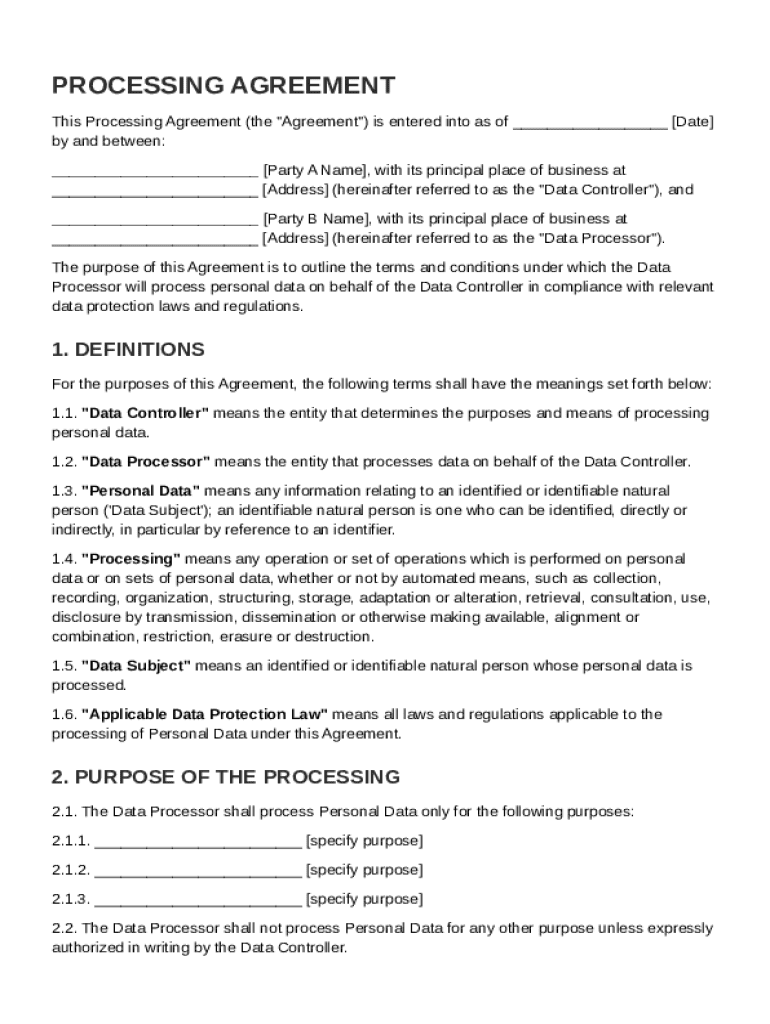
The "Processing Agreement Template" is a legal document that establishes the framework under which a Data Processor can manage personal data on behalf of a Data Controller. This arrangement is crucial in ensuring both parties comply with relevant data protection laws, such as the General Data Protection Regulation (GDPR) in Europe and various privacy laws within the United States. The template outlines key responsibilities, including data handling procedures, security requirements, and confidentiality standards. This comprehensive agreement is designed to protect personal data while fostering a transparent relationship between all involved parties.
Key Elements of the Processing Agreement Template
Understanding the components of a Processing Agreement Template is essential for proper implementation. Here are the primary elements:
- Roles and Responsibilities: Defines who is the Data Controller and who is the Data Processor.
- Data Security Measures: Outlines the technical and organizational security measures required to protect the data.
- Confidentiality Obligations: Ensures that personal data is handled confidentially and only accessed by authorized personnel.
- Data Breach Procedures: Details notification timelines and processes in case of data breaches.
- Data Subject Rights: Defines how the Data Processor assists the Data Controller in managing data subject rights, such as access and deletion requests.
- Sub-Processor Clauses: Controls the outsourcing of data processing to additional sub-processors.
Important Terms Related to the Processing Agreement Template
Several terms are significant when discussing Processing Agreement Templates:
- Data Controller: The entity that determines the purposes and means of processing personal data.
- Data Processor: The entity that processes data on behalf of the Data Controller.
- Data Subject: Individuals whose personal data is being processed.
- Personal Data: Any information related to an identified or identifiable person.
- Processing: Any operation performed on personal data, such as collection, storage, or usage.
Steps to Complete the Processing Agreement Template
Completing a Processing Agreement Template involves several important steps to ensure compliance and clarity:
- Identify Parties: Clearly define who the Data Controller and Data Processor are.
- Define the Scope: Specify the type of personal data being processed and the purpose.
- Allocate Responsibilities: Outline the duties of each party, focusing on data security and management.
- Include Security Details: Incorporate specific measures the Data Processor must implement.
- Data Breach Protocols: Detail the steps for reporting and managing breaches.
- Agreement Review: Have legal professionals review the agreement to ensure it meets legal standards.
Why Use a Processing Agreement Template
Utilizing a Processing Agreement Template is vital for several reasons:
- Legal Compliance: Ensures adherence to data protection laws, reducing the risk of legal repercussions.
- Data Security: Establishes protocols to protect sensitive information.
- Trust Building: Enhances trust and transparency between business partners and clients.
- Clear Framework: Provides a structured approach to handling personal data.
State-Specific Rules for the Processing Agreement Template
While the core principles of a Processing Agreement Template remain consistent, certain state-specific laws affect implementation in the United States:
- California Consumer Privacy Act (CCPA): Adds specific requirements for businesses operating in California, focusing on consumer data rights.
- New York's SHIELD Act: Mandates additional security measures for businesses handling New York residents' data.
- Virginia Consumer Data Protection Act (CDPA): Includes consumer rights similar to CCPA with some variations in accountability and enforcement.
Legal Use of the Processing Agreement Template
The Processing Agreement Template ensures legal integrity by defining the permissible use of personal data. It assists in documenting the basis for data processing, supporting the Data Controller's compliance efforts. Legally, it fortifies the relationship between parties, providing a written record of the agreed terms and obligations. Regular updates reflect changes in law or organizational needs, which underscores the necessity of revisiting the agreement periodically.
Examples of Using the Processing Agreement Template
Real-world scenarios highlight the utility of a Processing Agreement Template:
- A healthcare provider contracts an IT firm to manage patient data, enforcing robust data security measures.
- An e-commerce platform employs a third-party marketing agency to process customer data, ensuring marketing actions are compliant with privacy laws.
- A financial service company hires an external consultant to analyze user data, with the agreement specifying data access limitations.
These scenarios emphasize the application of the Processing Agreement Template across various sectors for seamless and lawful data management.
Software Compatibility and Integration
Compatibility with existing software solutions is crucial when utilizing a Processing Agreement Template. DocHub's features integrate well with platforms like Google Workspace, offering seamless file management across Google Drive, Docs, and Sheets. This functionality allows users to edit, sign, and share agreements without disrupting their digital workflows, enhancing efficiency and convenience when dealing with complex data processing agreements.
Business Types That Benefit Most From the Processing Agreement Template
Certain business types derive particular benefits from a Processing Agreement Template:
- Tech Companies: Frequently handling large volumes of user data and requiring stringent compliance.
- Healthcare Providers: Dealing with sensitive patient data necessitating rigorous data protection measures.
- Marketing Firms: Managing consumer data for targeted campaigns aligned with legal standards.
- Financial Institutions: Ensuring secure handling of financial and personal data to uphold client trust.
By establishing clear legal frameworks, these businesses mitigate legal risks and enhance data management practices.