




01. Edit your form online
Type text, add images, blackout confidential details, add comments, highlights and more.

Type text, add images, blackout confidential details, add comments, highlights and more.

Draw your signature, type it, upload its image, or use your mobile device as a signature pad.

Send it via email, link, or fax. You can also download it, export it or print it out.
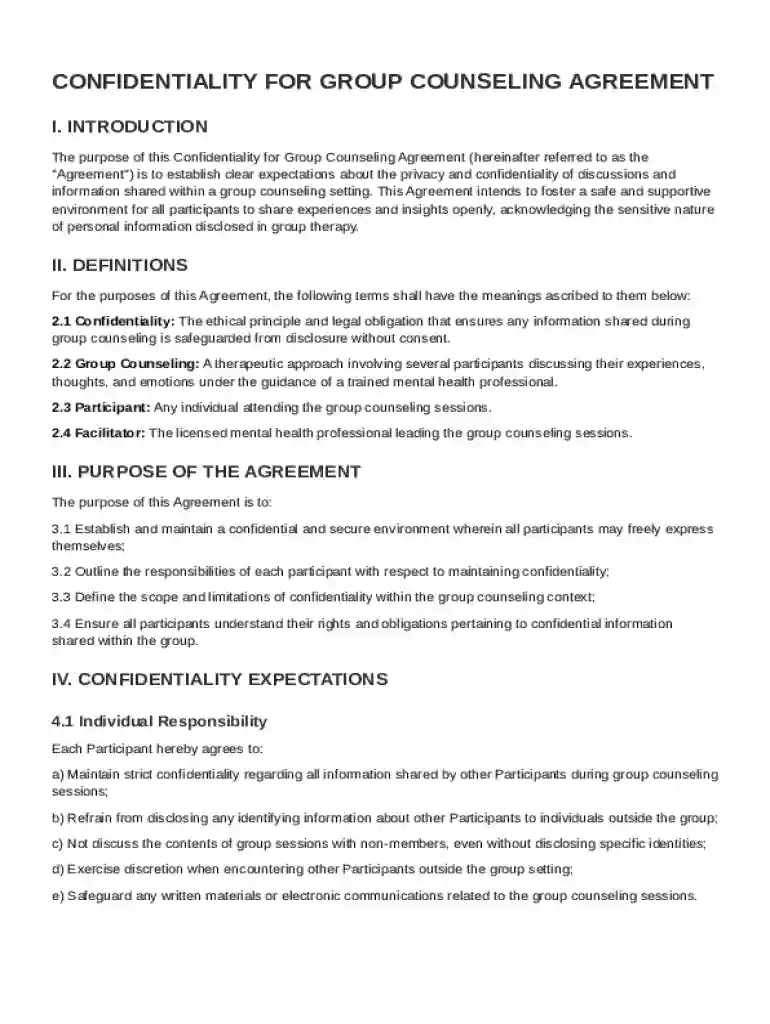
The Confidentiality for Group Counseling Agreement Template is a document designed to ensure privacy and confidentiality during group counseling sessions. This agreement delineates the responsibilities and expectations regarding the protection of information shared by participants. It serves as a foundational tool to create a safe environment, encouraging open communication and trust among group members. The document outlines scenarios where confidentiality might be breached, many of which involve legal obligations, such as instances of harm or abuse.
This template includes several critical components to uphold confidentiality effectively:
Participant Commitments: It lists the obligations of each participant to maintain privacy. Each member agrees not to disclose any personal information shared during sessions.
Limits of Confidentiality: The agreement specifies situations where confidentiality may be legally breached, such as reporting child abuse or threats of harm to self or others.
Counselor Responsibilities: The document details the counselor's role in safeguarding participant information, utilizing professional standards, and adhering to legal requirements.
Group Dynamics: Guidelines focus on fostering a collaborative environment where trust and respect are cultivated.
These elements are vital in establishing a transparent contract between the counselor and participants, emphasizing individual accountability.
To use this template effectively, follow these steps:
Review the Template Thoroughly: Familiarize yourself with the content, ensuring that it aligns with your counseling practice's specific needs.
Customize Sections: Modify the template to reflect the unique aspects of your counseling group, such as adding state-specific legal references.
Discuss with Participants: Before the first session, discuss the agreement with all group members to ensure clear understanding and address any questions.
Collect Signatures: Obtain signatures from all participants as a formal acknowledgment of their commitment to confidentiality.
This structured approach ensures that all parties are informed and have consented to the terms.
This template is widely used by various professionals and organizations:
Licensed Therapists and Counselors: In both private practices and institutional settings, these professionals utilize the template to ensure compliance with confidentiality standards.
Educational Institutions: Schools and universities often implement this in group counseling sessions offered to students.
Nonprofit Organizations: Entities focusing on mental health services for specific communities or demographics benefit from using this agreement.
These users rely on the template to build a trustworthy framework for sharing sensitive information.


In the United States, maintaining confidentiality in group counseling is legally significant and governed by several regulations:
HIPAA Compliance: The template supports the requirements under the Health Insurance Portability and Accountability Act concerning protected health information.
State Laws: Depending on the state, additional regulations might affect how confidentiality agreements are structured, particularly concerning reporting obligations.
Adhering to these legal standards helps professionals minimize liability risks and protect participants’ rights.
Certain terms are essential to understanding and using the agreement effectively:
Confidentiality: The assurance that information shared within the group will not be disclosed to outside parties.
Breach of Confidentiality: Situations where confidentiality might be compromised, often due to legal obligations.
Boundaries: Defined limits regarding what can be shared outside the counseling group.
Informed Consent: The process of getting participants' approval based on a clear understanding of the agreement terms.
These terms help set clear expectations and ensure mutual understanding among all parties involved.
Completing the agreement involves several steps:
Download the Template: Obtain the template from a reliable source or use an online document editor for real-time customization.
Personalize the Document: Adjust any sections to include specific details applicable to the group or legal jurisdiction.
Explain to Participants: Provide a thorough explanation of each section to ensure comprehension.
Signatures: Have each participant sign the agreement, confirming their understanding and acceptance of the terms.
Archive a Copy: Keep a signed copy for records, accessible for future reference.
This process reinforces commitment and provides a legal record of the confidentiality terms.
Real-world applications of this template include:
Therapy Groups for Anxiety: In specialized groups addressing anxiety disorders, this agreement ensures members feel secure when sharing personal experiences.
Support Groups for Grief: In sessions focusing on coping with loss, confidentiality allows participants to express emotions without fear of external judgment.
Utilizing the template in such settings reinforces a supportive atmosphere, encouraging active participation and trust among group members.
State laws can influence how this template is used:
California: The California Confidentiality of Medical Information Act (CMIA) sets out additional privacy protections, impacting how confidentiality is managed in group counseling settings.
Texas: Laws specify mandatory reporting obligations for suspected child abuse, affecting the limits of confidentiality outlined in the agreement.
Counselors must tailor their agreements to comply with state-specific legal frameworks to ensure all confidentiality terms are enforceable.
At DocHub, your data security is our priority. We follow HIPAA, SOC2, GDPR, and other standards, so you can work on your documents with confidence.


Confidentiality exists when providing couples or group therapy, but there are differences from the confidentiality that exists in individual evaluation andRead more
An example of informed consent is when a patient signs a consent form after a doctor has thoroughly explained a surgical procedure and its potential risks andRead more


