
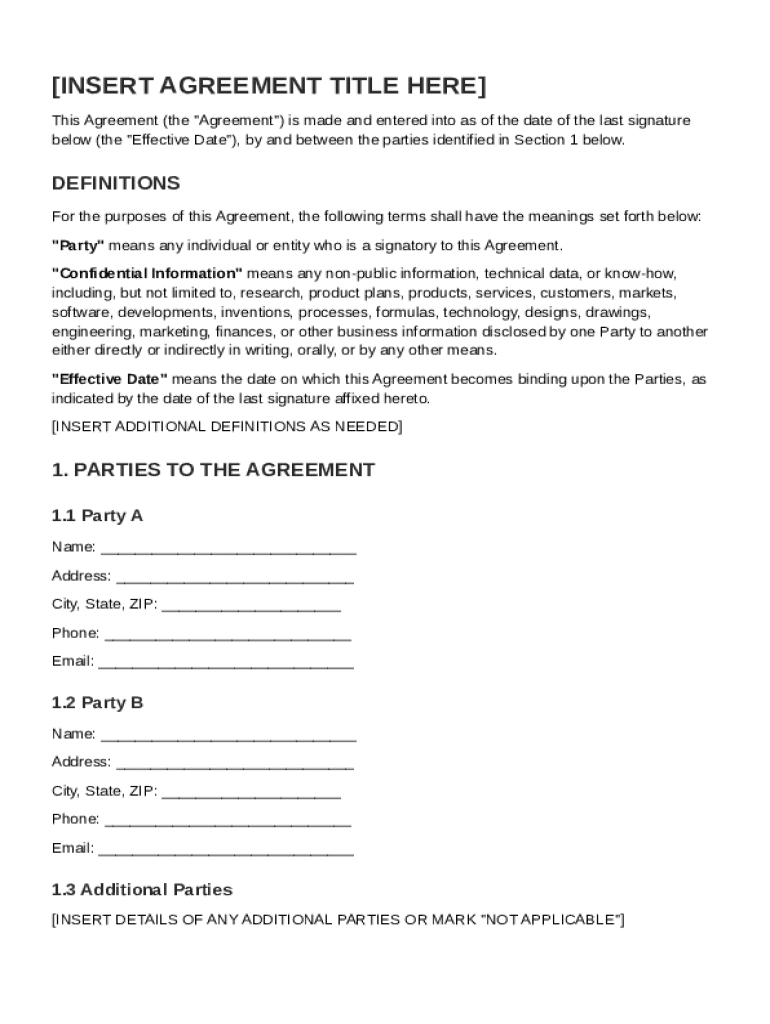







Definition and Meaning of the Paper Agreement Template
A Paper Agreement Template serves as a fundamental document for formalizing the terms and conditions between two or more parties. This template is crucial in ensuring that all parties clearly understand their obligations, rights, and responsibilities. These templates typically outline the mutual obligations of the involved parties and include essential clauses such as confidentiality terms and dispute resolution processes. The document serves as a framework, defining terms like 'Confidential Information,' and establishes key elements such as the effective date, the obligations of each party, payment terms, and duration of the agreement. The primary aim is to provide legal protection by securing commitments and managing risks associated with business dealings.
How to Use the Paper Agreement Template
Utilizing the Paper Agreement Template effectively requires an understanding of its structure and components. Here's a step-by-step guide on how to use it:
-
Identify Participants: Clearly list all parties involved in the agreement. This could include individuals, companies, or other entities.
-
Outline Obligations: Detail the specific obligations and tasks each party agrees to fulfill. This should be clear to avoid any ambiguities.
-
Set Terms and Conditions: Define the terms, including confidentiality clauses, payment terms, and duration. Ensure all terms are mutually agreed upon.
-
Include Dispute Resolution: Specify the methods for resolving any disagreements, such as negotiation or arbitration.
-
Review and Sign: Before finalizing, ensure all parties understand and consent to the terms. Obtain signatures as proof of agreement.
This systematic approach ensures that the agreement serves its intended purpose effectively.
Importance of the Paper Agreement Template
The Paper Agreement Template is crucial for several reasons:
- Legal Security: Provides a legal framework that protects parties by clearly outlining duties and expectations.
- Conflict Resolution: Establishes predetermined methods for resolving disputes, reducing potential litigation.
- Confidentiality: Safeguards sensitive information through defined confidentiality terms.
- Clear Communication: Promotes transparency and understanding between parties.
These aspects emphasize the essential role of this template in professional and business environments.
Key Elements of the Paper Agreement Template
The Paper Agreement Template includes several vital components that ensure its effectiveness:
- Parties Involved: Clearly identifies all parties and their roles.
- Obligations and Rights: Outlines each party's responsibilities and rights within the agreement.
- Payment Terms: Specifies how payments should be handled, including amounts, schedules, and methods.
- Confidentiality Clause: Protects sensitive information from unauthorized disclosure.
- Duration and Termination: Defines the agreement's start date, duration, and conditions for termination.
These elements work together to create a comprehensive agreement that anticipates all necessary contingencies.
Legal Use of the Paper Agreement Template
This template is designed to comply with U.S. legal standards, ensuring that the agreement is legally binding:
- Compliant with Laws: Adheres to relevant laws and regulations, ensuring enforceability.
- Legally Binding Signatures: Utilizes signatures that meet legal requirements, such as electronic signatures under the ESIGN Act.
- Governing Law Clause: Stipulates the jurisdiction under which the agreement is governed.
A legally robust agreement template is pivotal in providing a reliable platform for business operations.
Practical Examples of Using the Paper Agreement Template
To illustrate the application of a Paper Agreement Template, consider these scenarios:
-
Business Partnerships: Two companies entering into a strategic partnership utilize the template to clarify roles, revenue sharing, and goals.
-
Client Services: A service provider and a client outline project deliverables, timelines, and payment terms in the template to ensure mutual understanding.
-
Freelancer Contracts: Independent contractors use the template to document project specifics and ensure protection of their rights.
These examples highlight the flexibility and adaptability of the template across various business contexts.
State-Specific Rules for the Paper Agreement Template
While the template offers a generic structure, state-specific regulations might influence its application:
- Governing Law: Each state may have different laws affecting agreements, necessitating customization.
- Specific Clauses: Some states require specific clauses regarding consumer protection or business operations.
- Enforcement Variations: The enforceability of certain terms, such as non-compete clauses, can vary by state.
Understanding these nuances helps tailor the agreement to fit legal contexts within specific jurisdictions.
Digital vs. Paper Versions of the Agreement Template
Choosing between digital and paper formats involves understanding their respective benefits:
- Digital Version: Offers convenience with easy editing, signing, and sharing capabilities. Ideal for remote transactions.
- Paper Version: Preferred for formal settings where traditional signatures and physical documentation are required.
Both formats aim to ensure compliance and provide a robust framework for agreements, allowing users to choose based on their specific needs and situation.


