






Definition and Meaning
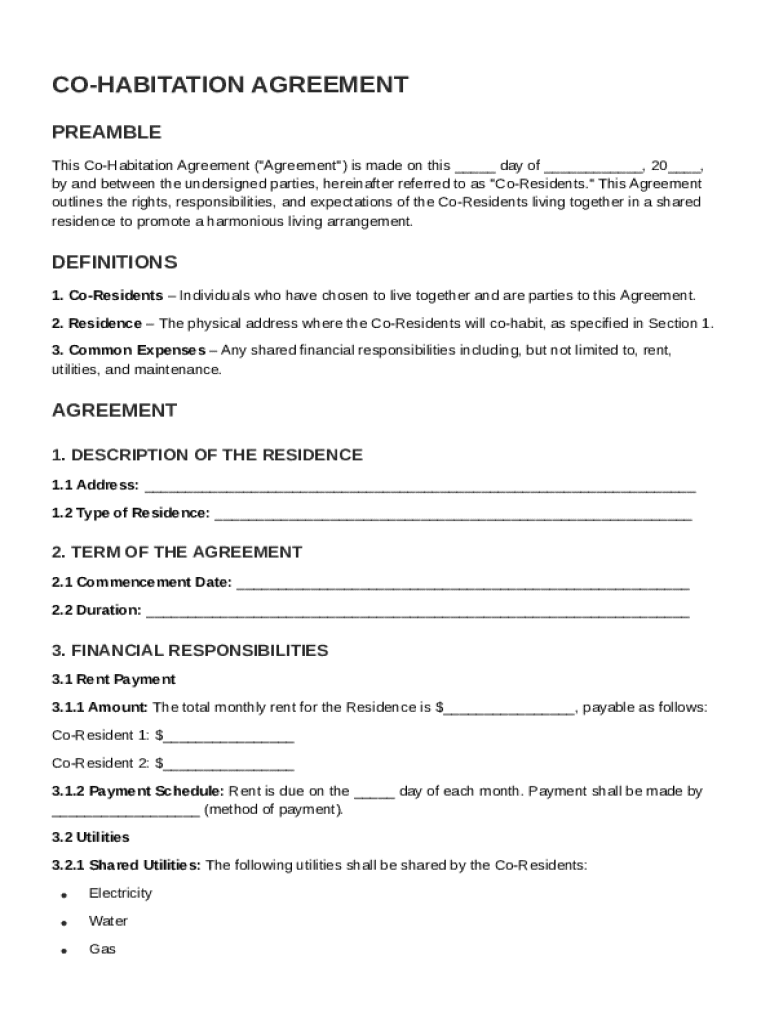
A Co-Habitation Agreement is a legal document that establishes the rights and responsibilities of individuals who live together without being married. This agreement serves to outline various aspects of shared living arrangements, such as financial obligations, household responsibilities, and dispute resolution mechanisms. By clearly defining these terms, the agreement aims to minimize conflicts and ensure a harmonious living environment.
Core Components
- Financial Responsibilities: Clarifies who is responsible for paying rent, utilities, and other shared expenses.
- Household Duties: Outlines chores and maintenance duties, ensuring everyone contributes fairly.
- Guest Policies: Sets rules for hosting guests to maintain peace within the shared residence.
- Conflict Resolution: Provides guidelines for resolving disputes without escalating tensions.
- Termination Terms: Details the process for ending the cohabitation arrangement.
Key Elements of the Co-Habitation Agreement Template
A Co-Habitation Agreement Template generally includes several critical elements to ensure a comprehensive understanding between parties involved:
Financial Arrangements
- Rent and Utilities: Specific amounts each party is responsible for, including payment deadlines.
- Property Expenses: Provisions for maintenance and repair costs shared between parties.
Living Arrangements
- Space Allocation: Description of how living spaces are divided (e.g., bedrooms, shared areas).
- Personal Property: Guidelines on what items are shared and what remains personal to each individual.
Decision-Making Authority
- Major Decisions: Outlines how decisions affecting the living situation are made, typically requiring mutual agreement.
How to Use the Co-Habitation Agreement Template
Utilizing the Co-Habitation Agreement Template effectively involves several steps to ensure its validity and applicability:
Preparation and Drafting
- Review Each Section: Carefully examine every part to understand its implications.
- Customize the Template: Tailor the document to fit the unique circumstances of your living arrangement.
Execution
- Discussion: Ensure all parties discuss and agree on the terms outlined.
- Signatures: Each party must sign the document in the presence of a witness or notary to enhance its legal enforceability.
Steps to Complete the Co-Habitation Agreement Template
Completing the template requires a methodical approach to ensure all aspects are correctly addressed:
Step-by-Step Process
- Gather Information: Collect details regarding financial contributions, living arrangements, and personal expectations.
- Fill in the Template: Accurately complete each section, adhering to discussions and agreed terms.
- Review the Draft: All parties should review the document thoroughly to confirm all stipulations are accurate and agreed upon.
Finalization
- Legal Consultation: Consider having a legal professional review the agreement to ensure compliance with local laws.
- Document Signing: Execute the signing procedure with all parties and witnesses present.
Why Use a Co-Habitation Agreement Template
Utilizing a Co-Habitation Agreement offers several benefits that can enhance the living experience for those cohabiting:
Advantages
- Clarity and Transparency: Establishes clear expectations and responsibilities for all individuals involved.
- Conflict Prevention: Minimizes potential disputes by having predefined resolutions and obligations.
- Legal Protection: Provides a legal basis for addressing grievances that may arise during the cohabitation period.
Legal Use of the Co-Habitation Agreement Template
Legal enforceability is a critical consideration when using the Co-Habitation Agreement Template:
Compliance and Protection
- Legal Validity: To ensure legal protection, the agreement must comply with state-specific laws and regulations.
- Enforcement: Serving as evidence in legal disputes, the agreement provides protection and clarity for all parties.
State-Specific Rules for the Co-Habitation Agreement Template
Different states may have variations in the laws governing cohabitation agreements:
Considerations by State
- State Laws: Legal requirements can vary, affecting enforceability and the need for additional clauses.
- Consultation: Engaging with a legal expert familiar with state laws can help tailor the agreement to ensure it meets local requirements.
Examples of Using the Co-Habitation Agreement Template
Real-world scenarios illustrate the practical applications of a Co-Habitation Agreement:
Case Studies
- Shared Living with Friends: Differentiating financial responsibilities helps maintain friendships and ensures fairness.
- Couples Planning Long-Term Cohabitation: Establishes expectations while protecting individual interests and assets.
Each block includes detailed analysis, practical scenarios, and provides comprehensive insights, ensuring maximum utility for users engaging with the Co-Habitation Agreement Template.