






Key Elements of the Store Rental Agreement Template
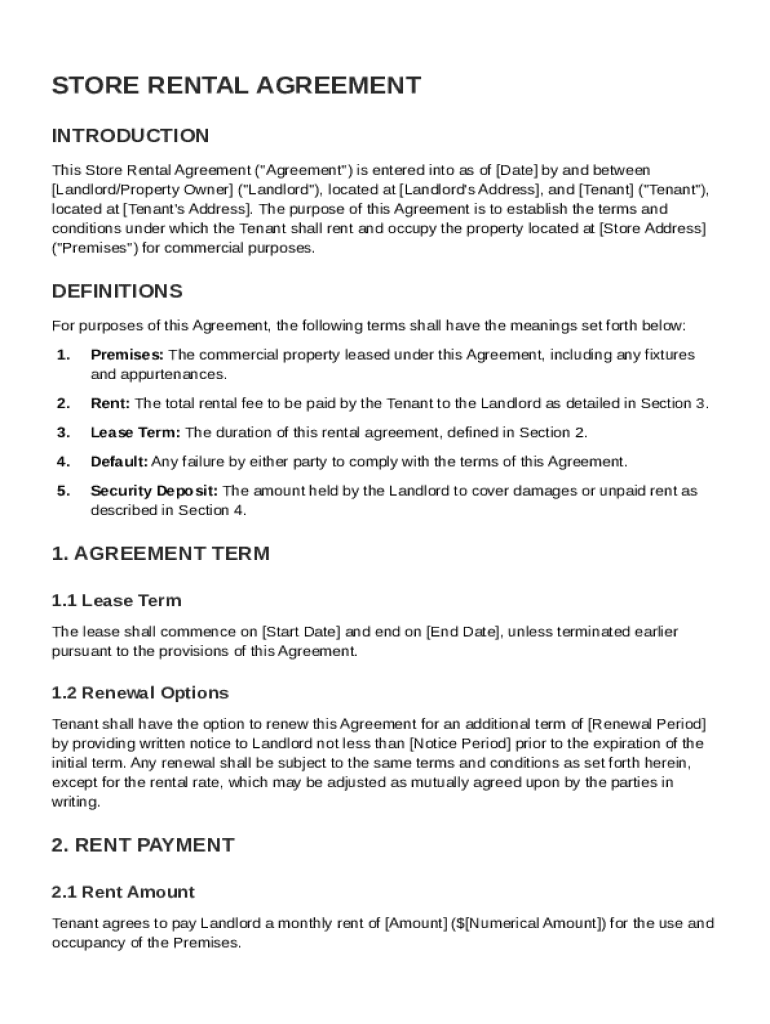
A Store Rental Agreement Template is a critical legal document designed to outline the terms and conditions of leasing a commercial property. It serves as a binding contract between a landlord and a tenant, ensuring clarity and mutual understanding. Here are the essential components that you typically find in this template:
-
Lease Term and Renewal: Defines the duration of the lease agreement and the terms under which it can be renewed. This section specifies the start and end dates of the lease and outlines any options or conditions for renewal.
-
Rent Payment Structure: Details the amount of rent, payment method, and due dates. It may also include information about late fees, grace periods, and any escalations over the lease term.
-
Security Deposit: Outlines the amount required as a security deposit, the conditions under which it will be returned, and any deductions that may be made for damages beyond normal wear and tear.
-
Permitted Use of Premises: Specifies what the leased property can be used for, such as retail operations, and any restrictions on alterations or usage that might interfere with zoning laws or building regulations.
-
Maintenance and Repairs: Clarifies the responsibility of the landlord and tenant regarding maintenance and repairs of the property. This section also addresses procedures for reporting and resolving maintenance issues.
-
Insurance Obligations: Requires tenants to maintain certain levels of insurance coverage, such as liability or property insurance, to protect against potential risks and liabilities.
-
Default and Termination Provisions: Details the circumstances under which the lease may be terminated, including breach of contract, and outlines the process for resolving disputes.
These elements work together to protect the interests of both parties involved in a rental arrangement.
How to Use the Store Rental Agreement Template
Utilizing a Store Rental Agreement Template involves several steps to ensure that the document meets legal standards and adequately reflects the terms agreed upon by all parties.
-
Download or Access the Template: The template can usually be accessed or downloaded from document management platforms like DocHub, where it can be edited directly in the browser.
-
Customize for Specific Needs: Modify the template to address specific requirements. Customize sections related to the lease term, rental amounts, and conditions based on the specific needs of the landlord and tenant.
-
Input Personal and Property Details: Enter both the landlord's and tenant’s contact information and details about the commercial property. Accurate information is crucial for the contract’s validity.
-
Define Terms Clearly: Ensure that all terms are clearly defined to prevent ambiguities. Discuss and record any special conditions or clauses that are applicable to the lease agreement.
-
Review for Legal Compliance: It is advisable to have the agreement reviewed by legal professionals to ensure compliance with local laws and regulations.
-
Sign and Store Securely: Once both parties are satisfied, sign the agreement digitally using a platform like DocHub, which offers legally binding electronic signatures. Store the finalized document securely for future reference.
This structured approach helps in effectively using the Store Rental Agreement Template.
Important Terms Related to Store Rental Agreement Template
Understanding key terms within a Store Rental Agreement Template enhances clarity and prevents misunderstandings. Here are some critical terms often included:
-
Leasehold Improvements: Refers to physical enhancements made by or on behalf of the tenant, such as shelving or counters.
-
Gross vs. Net Lease: A gross lease includes all property-related expenses in the rent. In contrast, a net lease requires the tenant to pay additional costs such as utilities, taxes, or maintenance.
-
Force Majeure: A clause that frees both parties from liability or obligation when unforeseeable events beyond their control, like natural disasters, occur.
-
Subletting: The ability of the tenant to lease the premises to an external party. This section outlines permissible conditions and requires landlord approval.
-
Holdover Tenant: Describes a situation where the tenant remains on the premises after the lease term expires, detailing any conditions or penalties applicable.
Proper understanding of these terms helps in negotiating and drafting an effective agreement.
Legal Use of the Store Rental Agreement Template
Store Rental Agreements must comply with local, state, and federal laws to be enforceable. Legal considerations include:
-
Compliance with State Laws: The agreement must conform to state-specific requirements such as security deposit limits, eviction processes, and disclosure obligations.
-
Fair Housing Act: Landlords must comply with federal laws that prevent discrimination based on race, color, religion, sex, disability, familial status, or national origin.
-
Zoning Laws and Permits: The intended use of the store must align with local zoning regulations. Any necessary permits should be secured before signing the agreement.
Ensuring legal compliance protects both parties and fortifies the agreement’s enforceability.
Examples of Using the Store Rental Agreement Template
A Store Rental Agreement Template is widely used across various commercial leasing scenarios. Some practical applications include:
-
Retail Spaces in Shopping Centers: Typically used when renting spaces in malls to define collective responsibilities and operating hours.
-
Pop-up Stores: Short-term rentals benefit from the streamlined setup and clarity offered by a formal agreement.
-
Business Start-ups: Entrepreneurs leasing small commercial spaces for the first time gain security and structure through a well-defined rental agreement.
Each example illustrates flexibility and adaptability of the template across different lease contexts.
State-specific Rules for the Store Rental Agreement Template
Several states impose specific requirements that must be incorporated into the Store Rental Agreement Template:
-
California: Requires disclosure about the presence of hazardous substances, along with a minimum three days' notice for eviction due to non-payment.
-
New York: Mandates registration with the city for certain commercial properties and adherence to stringent fire safety regulations.
-
Texas: No statutory cap on late fees, but they must be reasonable and proportionate to incurred losses.
Understanding these state-specific regulations ensures that the agreement complies with local legal standards.
Steps to Complete the Store Rental Agreement Template
Finalizing the Store Rental Agreement involves several clear steps to ensure comprehensiveness and legal soundness:
-
Collect Required Information: Gather necessary details such as landlord and tenant identification, property specifics, and financial terms.
-
Fill Out Each Section Thoroughly: Input accurate data into each component of the agreement, ensuring that all stipulated conditions are captured.
-
Draft Specific Clauses: Customize any special conditions directly relevant to the parties involved, like early termination terms or renovation agreements.
-
Review and Approve Document: Cross-check information for accuracy and have both parties review the contract to confirm their agreement with all terms.
-
Digitally Sign the Agreement: Use an electronic signature tool to finalize the document, ensuring both parties have equal access and records of the agreement.
-
File and Distribute Copies: Store the completed document securely and ensure that each stakeholder has a copy for their records.
Following these steps contributes to a thorough and efficient completion process.
Software Compatibility for Editing and Signing
Integrating technology with legal documents enhances efficiency. The Store Rental Agreement Template benefits from compatibility with document management software like DocHub, offering:
-
Editing Flexibility: Users can edit documents in various formats, such as PDFs and DOCs, directly online without the need for conversion.
-
Secure Signatures: Provides the means to securely sign documents following legal guidelines, making signatures legally binding.
-
Cloud Integration: Compatibility with cloud storage services ensures ease of access and document sharing among interested parties.
This technological adaptability facilitates a streamlined and secure document workflow.