







Definition and Meaning
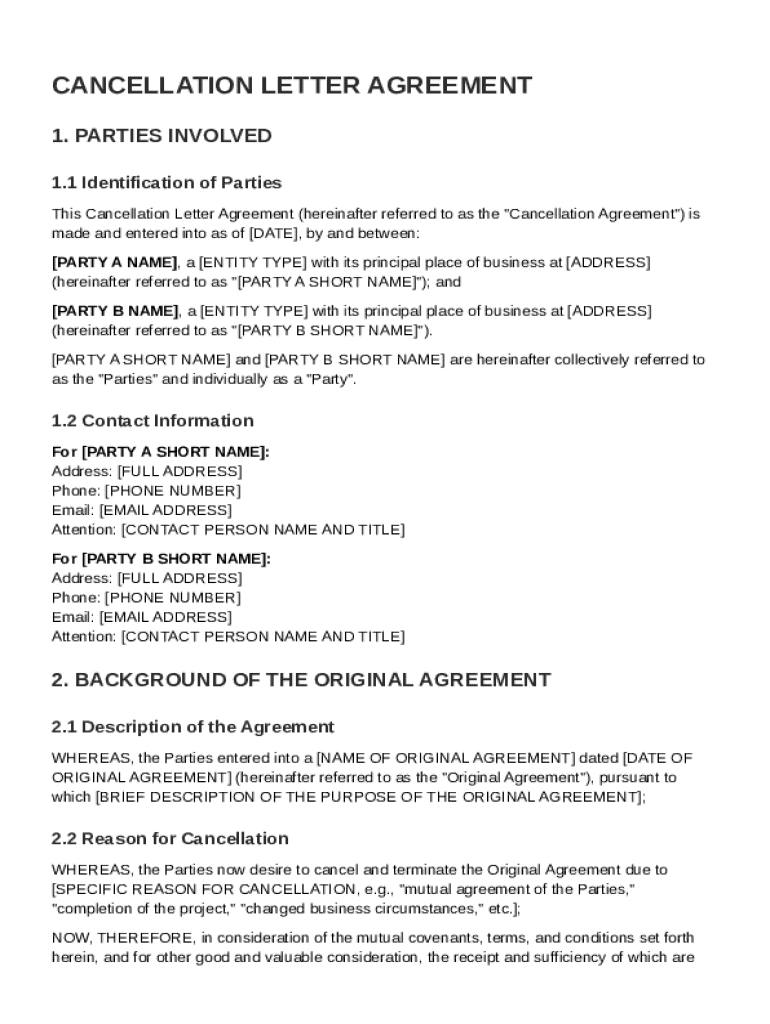
A Cancellation Letter Agreement Template serves as a structured document used to formally terminate a contractual agreement between two parties. It outlines the specific terms and conditions associated with the cancellation, including identification of the parties involved, reasons for termination, and the effective date of the cancellation. The template ensures that both parties have a clear understanding of their obligations and rights upon termination, facilitating a smooth and amicable conclusion to the agreement.
The document typically includes sections that detail any consequences of cancellation, such as financial settlements or penalties, and a mutual release of claims to prevent future disputes. It also addresses how any remaining obligations, like the return of property or s settlement of outstanding payments, will be handled.
Key Elements of the Cancellation Letter Agreement Template
A well-crafted Cancellation Letter Agreement Template is comprehensive and covers several crucial elements to protect the interests of both parties. These key elements include:
- Parties Identification: Clearly identify the entities involved in the original agreement and the cancellation process.
- Reasons for Cancellation: State the specific grounds for terminating the contract, such as breach of terms, mutual agreement, or external factors.
- Effective Date: Specify the exact date on which the cancellation becomes effective, ensuring clarity for all parties.
- Consequences and Settlements: Describe any financial or legal repercussions resulting from the termination, along with instructions for settling these issues.
- Mutual Release of Claims: Include a clause that releases both parties from future claims related to the original agreement to prevent litigation.
- Governing Law: Indicate which jurisdiction’s legal framework will govern the interpretation and enforcement of the agreement.
- Dispute Resolution: Outline the procedures for resolving any disputes that may arise following the cancellation.
Steps to Complete the Cancellation Letter Agreement Template
Filling out a Cancellation Letter Agreement Template involves several clear steps to ensure all necessary information is included and correctly formatted:
- Gather Necessary Information: Collect relevant details about the original agreement, including copies of the contract, relevant dates, and contact details of involved parties.
- Fill in the Parties’ Information: Enter the full legal names and addresses of both parties involved in the agreement.
- Detail the Reasons for Cancellation: Clearly articulate the grounds for cancellation, ensuring mutual understanding and agreement.
- Specify the Effective Date: Indicate the precise date when the cancellation will take effect.
- Outline Settlements and Consequences: Document financial settlements, asset returns, or any penalties agreed upon by the parties.
- Include a Mutual Release Clause: Write a clause that releases all parties from any future claims or obligations under the original contract.
- Insert Governing Law and Dispute Resolution Terms: Identify the jurisdiction applicable to this agreement and describe the process for handling disputes.
- Review and Sign: Ensure both parties review the document thoroughly before signing. Legal consultation is recommended for compliance with local laws.
Important Terms Related to the Cancellation Letter Agreement Template
Understanding specific legal terminologies often appearing in these agreements is critical for crafting a legally sound document:
- Mutual Consent: An acknowledgment that both parties agree to the terms of cancellation without coercion.
- Breach of Contract: A situation where one or both parties fail to fulfill their obligations under the original agreement, leading to cancellation.
- Indemnity: A provision ensuring that neither party suffers unfair loss or damage due to the cancelation.
- Consideration: Any compensation or legal benefit exchanged by the parties during the cancellation process.
- Force Majeure: A clause that addresses extraordinary events leading to the agreement’s termination, outside the control of either party.
Legal Use of the Cancellation Letter Agreement Template
Using a Cancellation Letter Agreement Template legally binds both parties to the terms set forth within it. To ensure the agreement holds up in a court of law, the document must adhere to specific legal standards. Legal uses for such templates include:
- Terminating Lease Agreements: Used to end rental agreements in compliance with local landlord-tenant laws.
- Dissolving Business Contracts: Applicable where joint ventures or partnerships are concluded by mutual agreement.
- Cancelling Service Contracts: Suitable for terminating ongoing service engagements while respecting previously agreed terms.
Legal experts should review templates to verify they meet statutory requirements and protect against potential liabilities.
Examples of Using the Cancellation Letter Agreement Template
Different scenarios where a Cancellation Letter Agreement Template might be used include:
- Lease Termination: A landlord and tenant agree to cancel their lease due to unforeseen circumstances, detailing return procedures for the property and settling outstanding rent.
- Ending a Supply Agreement: A business terminates a supply contract with a vendor due to persistent delivery delays, including clauses that address outstanding orders and payments.
- Contractor Termination: A company ends its contract with a contractor due to quality issues, agreeing on the return of any company-owned materials and settling partial payments for work completed.
Each example emphasizes clear communication and mutually agreeable terms to avoid conflicts.
Software Compatibility
The Cancellation Letter Agreement Template is designed for compatibility with various document editing software, ensuring ease of use and flexibility in different environments:
- DocHub: Seamlessly edit, sign, and share the document online, integrating directly with Google Workspace for quick import from Google Drive.
- Microsoft Word and Google Docs: Edit templates using familiar word processing tools, supporting changes that reflect unique agreement terms.
- PDF Readers: Use platforms like Adobe Acrobat to manage finalized agreements with digital signatures and secure sharing features.
Software choice can impact functionality and ease of use, particularly regarding collaborative edits and signature collection.




