
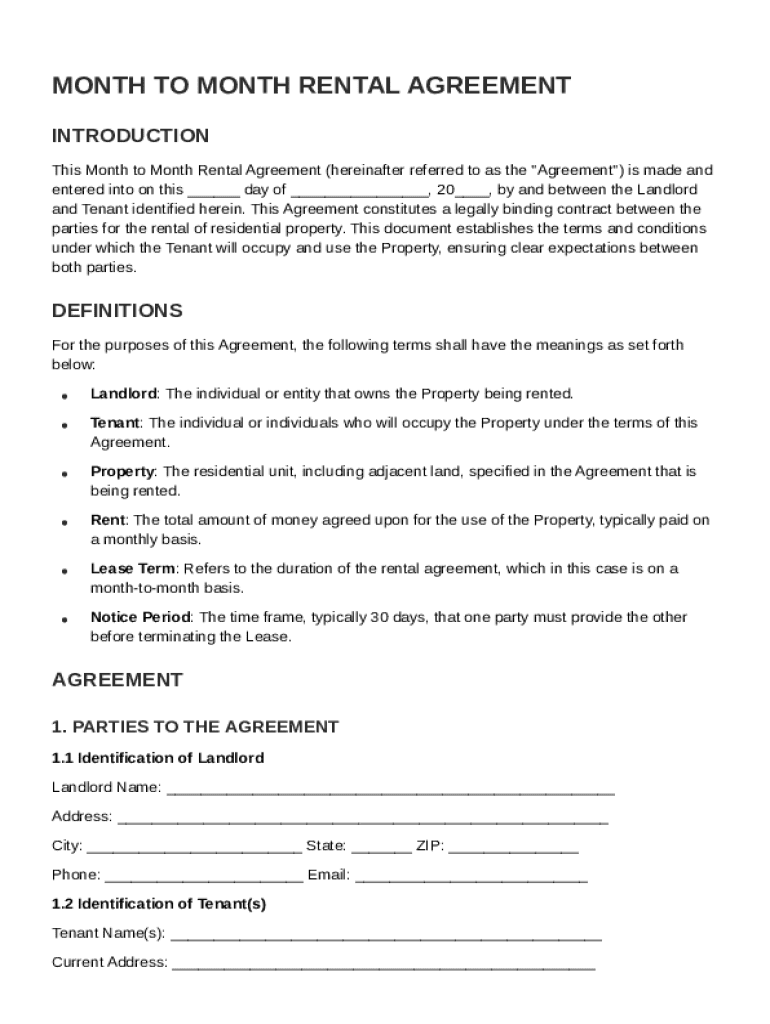







Definition & Purpose of the Month to Month Rental Agreement Template
A month to month rental agreement template is a legally binding document that establishes a contractual relationship between a landlord and tenant for the rental of residential property. This agreement is distinct due to its flexibility, allowing either party to terminate the contract with appropriate notice, typically 30 days. Its primary function is to outline the terms and conditions of the rental, providing clarity on the rights and duties of each party involved.
Key Characteristics
- Flexibility: Unlike standard leases, a month-to-month agreement supports short-term tenancy without a fixed expiration date.
- Termination Notice: Both parties must adhere to state-specific notice periods, often 30 days, to terminate the agreement.
- Periodic Updates: The agreement can be adjusted or renewed monthly, accommodating changes in circumstances or rental terms.
Practical Usage Examples
- Transition periods between long-term leases.
- Temporary housing needs, such as when relocating for work.
- Scenarios requiring flexibility due to tenant or landlord travel plans.
How to Use the Month to Month Rental Agreement Template
Utilizing this template involves a series of steps to ensure it is customized and enforceable under local law. The ease of modification and renewal is a key advantage for both parties.
Steps to Customize
- Download the Template: Obtain a template from a reliable source such as DocHub, ensuring compatibility and legal compliance.
- Enter Party Details: Fill in the names, addresses, and contact information of both landlord and tenant.
- Define Property Description: Clearly outline the rental property’s location, features, and included utilities.
- Set Rent Terms: Specify the rental amount, due date, and acceptable payment methods.
- Specify Security Deposits: Indicate the amount held as a security deposit and conditions for its return.
Integration Tips
- Use software like DocHub to input additional clauses or conditions directly into the document.
- Utilize cloud storage tools for easy access and sharing amongst involved parties.
Steps to Complete the Month to Month Rental Agreement Template
Completion of this form requires careful attention to detail to ensure all legal requirements are met, protecting both landlords and tenants.
Detailed Procedure
- Review Legal Requirements: Verify that the agreement aligns with local rental regulations and housing laws.
- Fill Out Sections: Complete each section according to the property specifics and negotiated terms.
- Sign and Date: Both parties should sign and date the document, establishing the start date of tenancy.
- Distribute Copies: Deliver copies to both parties and retain one for legal purposes.
Considerations for Special Cases
- If the property is located in a jurisdiction with unique rental laws, consult with a legal professional to amend terms accordingly.
- Incorporate any jointly agreed-upon amendments directly within the document to avoid conflicts.
Key Elements of the Month to Month Rental Agreement Template
Essentials within the rental agreement ensure that rights and strategic guidelines are established clearly.
Essential Inclusions
- Party Identification: Names and contact information for both landlord and tenant.
- Property Details: Comprehensive description of the rental premises.
- Rent and Payment Terms: Amount, due date, and payment procedures.
- Maintenance Duties: Responsibilities for repair and upkeep.
- Termination Clause: Notice period requirements for ending tenancy.
Recommended Additions
- Guest Policy: Define acceptable guest stays to avoid potential disputes.
- Pet Agreement: Include terms or prohibitions related to pet ownership within the property.
Legal Use of the Month to Month Rental Agreement Template
This agreement must meet local, state, and federal laws to be enforceable, providing protection for tenancy arrangements.
Compliance Requirements
- Federal Considerations: Must adhere to the Fair Housing Act and anti-discrimination laws.
- State Regulations: Often dictate specific terms such as notice periods and security deposit limits.
- Local Ordinances: May require additional disclosures or specific language regarding tenant rights.
Ensuring Validity
- Consider engaging with a legal advisor to review the agreement before signing.
- Confirm that all relevant clauses are included and use clear, understandable language throughout.
State-Specific Rules for the Month to Month Rental Agreement Template
Rental laws differ significantly across states, affecting various aspects of the lease agreement.
Common Variations
- Notice Periods: Some states require different lengths of notice for termination, typically ranging from 30 to 60 days.
- Security Deposit Limitations: Varying rules on the maximum deposit amount and deadlines for its return after tenancy.
- Habitability Standards: Specific requirements landlords must meet to ensure the property is livable, impacting maintenance clauses.
Practical Steps to Adapt
- Research and incorporate state-specific clauses to avoid violating local rental laws.
- Regularly review and update the agreement in line with any changes to state regulations.
Examples of Using the Month to Month Rental Agreement Template
Understanding practical implementations of this agreement offers insights into various usage contexts.
Case Studies
- Young Professionals: Renting a place together while deciding whether to relocate for work.
- Property Investors: Offering flexible rentals to accommodate varying tenant needs without lengthy commitments.
- Temporary Residences: Construction workers on short-term assignments.
Practical Insights
- Ideal for scenarios demanding high flexibility and short-term commitments.
- Offers landlords the agility to adjust rent or terms without binding long terms.
Who Typically Uses the Month to Month Rental Agreement Template
This agreement is ideal for specific groups who require rental flexibility without extensive legal obligations.


Common Users
- Students and Academics: Need for temporary housing solutions between semesters or research projects.
- Traveling Professionals: Workers on short-term contracts or consultancy roles requiring frequent relocation.
- New Residents: Individuals exploring different housing options before committing to a long-term lease.

Benefits for Each Group
- Students: Easier transition between living arrangements as academic schedules change.
- Professionals: Avoids long-term commitments while providing suitable, immediate housing.
- New Residents: Offers a chance to experience living in a new area before permanent relocation.




