






Definition and Meaning
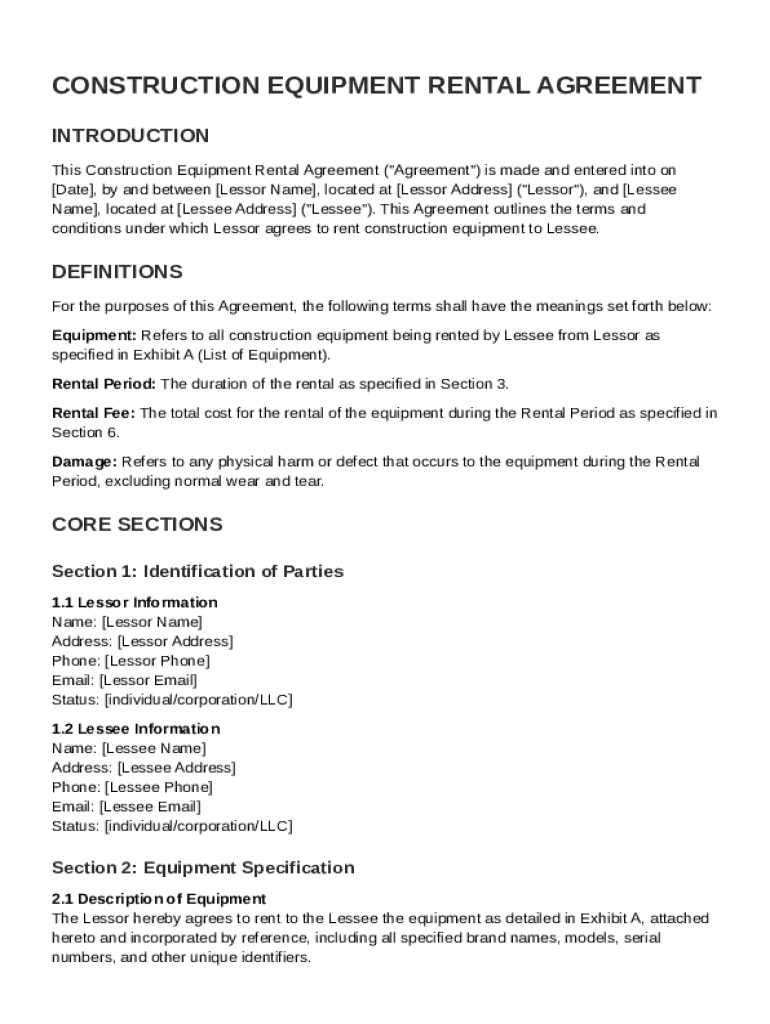
The Construction Equipment Rental Agreement Template is a legal document that establishes the terms and conditions under which construction equipment is rented from a Lessor to a Lessee. This agreement ensures that both parties have a clear understanding of their responsibilities, the rental terms, and the equipment involved. Common sections of this template include specifications of the equipment, rental duration, payment terms, and obligations of both parties.
Key Features of the Agreement
- Parties Involved: Clearly identifies the Lessor (equipment owner) and the Lessee (equipment user).
- Equipment Details: Describes the equipment being rented, including make, model, and serial number.
- Rental Period: Specifies the start and end dates of the rental agreement.
- Payment Terms: Outlines the rental cost, payment schedule, and any late fees.
- Insurance Requirements: Details the insurance coverage needed, often requiring the Lessee to have liability insurance.
Practical Examples
- Construction Companies: Often use this agreement for renting heavy machinery like excavators or cranes.
- Small Contractors: May rent smaller tools or specialized equipment for specific projects.
Steps to Complete the Construction Equipment Rental Agreement Template
Step-by-Step Guide
- Start with Identification: Enter the full legal names and contact information of both the Lessor and the Lessee.
- Specify the Equipment: List detailed information on the equipment, including any attachments or special features.
- Set Rental Terms: Define the rental period, including start and end dates, and conditions for extension options.
- Outline Financial Obligations: Clearly state the rental rate, payment frequency, accepted payment methods, and consequences for late payments.
- Include Insurance Details: Ensure insurance requirements are documented, specifying the type and extent of coverage needed.
- Address Maintenance and Care: Indicate which party is responsible for routine maintenance and repairs during the rental period.
- Signatures and Date: Ensure both parties sign and date the agreement to make it legally binding.
Common Considerations
- Condition Reports: Include a section for documenting the equipment’s condition before and after rental to avoid disputes.
- Termination Clause: Provide terms under which the agreement can be terminated early, such as breach of contract.
Important Terms Related to the Agreement
Key Terminology
- Lessor: The party who rents out the equipment.
- Lessee: The party who takes possession of the rented equipment.
- Indemnity: A clause where the Lessee agrees to compensate the Lessor for any losses or damages.
- Force Majeure: Conditions under which obligations may be suspended due to circumstances beyond control, like natural disasters.
Usage Scenarios
- Deposit: Often required upfront to secure the rental; terms should detail refund conditions.
- Fair Wear and Tear: Defines acceptable deterioration from use, distinct from damage due to misuse.
Key Elements of the Construction Equipment Rental Agreement Template
Core Components
- Agreement Scope: Defines what the agreement covers, including type and use of equipment.
- Obligations of Parties: Itemizes the duties and responsibilities of both the Lessor and the Lessee.
- Governing Law: Specifies which state’s laws govern the agreement, important for conflict resolution.
Real-World Applications
- Lessee’s Duty to Insure: It is common for the Lessee to be required to provide proof of insurance as part of the agreement.
- Title and Ownership: Reaffirms that ownership remains with the Lessor despite the Lessee’s possession of the equipment.
Legal Use of the Construction Equipment Rental Agreement Template
Compliance and Enforcement
- Legally Binding: Once signed, the agreement is enforceable in court, providing both parties adhere to documented terms.
- Amendments: Must be mutually agreed upon and documented in writing to be valid.
Considerations
- Dispute Resolution: Often includes a mediation or arbitration clause to address disagreements without litigation.
- Record Keeping: Storing a signed copy securely, possibly electronically, for future reference or in case of disputes.
Examples of Using the Construction Equipment Rental Agreement Template
Common Use Cases
- Large Scale Projects: Used by construction firms renting equipment for big infrastructural projects.
- Seasonal Rentals: Landscapers who need specific equipment like backhoes during peak seasons.
Unique Applications
- Shared Ownership Arrangements: In cases where equipment is rarely used, businesses might use these agreements to share costs and usage.
- Special Event Setups: For equipment like generators or mobile cranes needed for temporary events.
State-Specific Rules for the Agreement
Local Adaptations
- State Regulations: Rental agreements may need to comply with specific state laws regarding insurance and liability.
- Tax Implications: Some states impose taxes on rental income, affecting how agreements are structured.
Regional Variations
- Environmental Regulations: States with specific environmental laws might have additional requirements concerning equipment emissions and usage.
Who Typically Uses the Construction Equipment Rental Agreement Template


Intended Users
- Construction Companies: Regularly use rental agreements for cost-effective access to large-scale machinery.
- Event Coordinators: For temporary setups requiring specialized equipment not owned in-house.
- Landscaping Businesses: Frequently rent equipment for job-specific purposes, reducing capital expenditure.
Entity-Specific Benefits
- Startups and Small Businesses: Access expensive equipment without the high upfront purchase costs.
- Non-Profit Organizations: Use limited resources efficiently by renting rarely needed equipment.
Business Types That Benefit Most from the Agreement
Primary Beneficiaries
- General Contractors: Benefit from flexibility in equipment access, allowing them to tackle projects of varying scope and requirements.
- Seasonal Businesses: Optimize operational costs by renting rather than purchasing equipment needed during peak times.
Diverse Applications
- Independent Builders: Secure specialized equipment for unique projects, facilitating business growth.
- Educational Institutions: Rent equipment for specific courses or training programs, blending practical experience with theoretical learning.