







Definition and Meaning
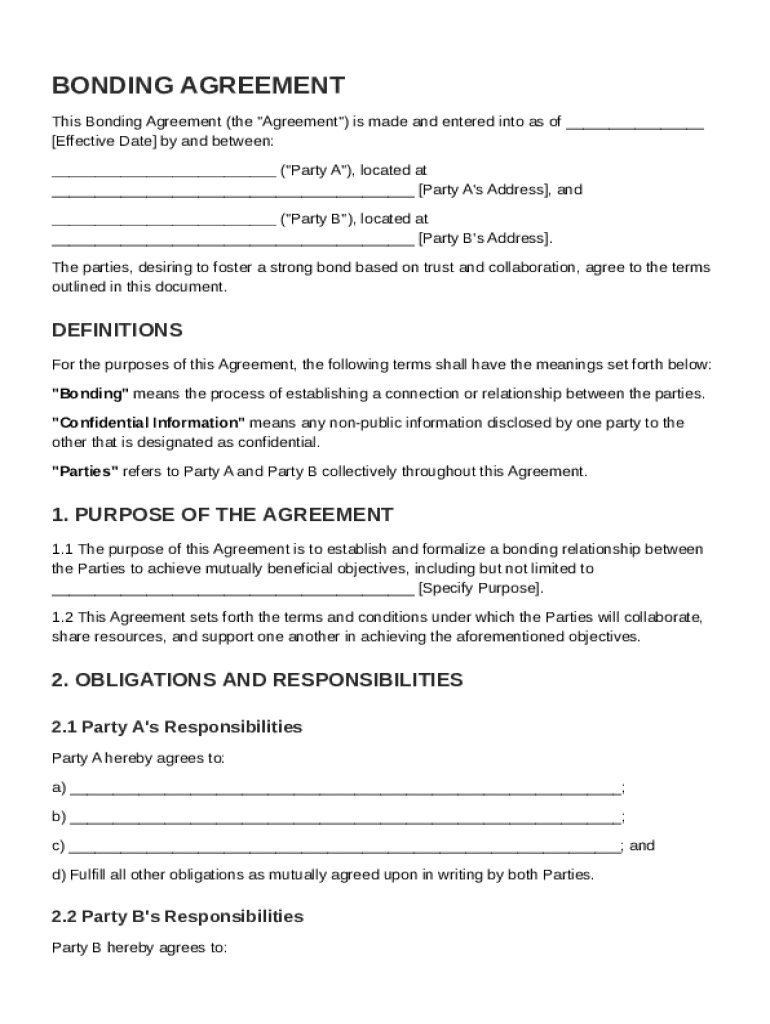
The Bonding Agreement Template is a standardized document designed to facilitate collaborative efforts between two parties, typically referred to as Party A and Party B. This template serves as a formalized framework that details various aspects of the partnership, including objectives, obligations, responsibilities, and anticipated duration. By clearly delineating roles and expectations, this agreement aims to establish a solid foundation of trust and cooperation while safeguarding both parties' interests.
Key Components of the Agreement
- Objectives: A clear articulation of the mutual goals both parties aim to achieve.
- Obligations and Responsibilities: Defined duties and responsibilities of each party, ensuring accountability.
- Duration: Specifies the timeframe or term of the agreement, outlining start and end dates.
- Rights and Confidentiality: Details the rights of each party and measures to protect confidential information.
- Conflict Resolution: Procedures in place for addressing disagreements or disputes, promoting harmonious collaboration.
How to Use the Bonding Agreement Template
Step-by-Step Instruction
-
Download and Explore: First, obtain the Bonding Agreement Template from a reliable source, such as the DocHub platform. Review its structure to familiarize yourself with its elements.
-
Identify Parties Involved: Clearly state the names and roles of Party A and Party B at the beginning of the document.
-
Articulate Objectives: Define the shared goals of the collaboration, aligning them with the broader mission of each party.
-
Detail Obligations: Enumerate the specific duties each party is expected to undertake, ensuring comprehensive clarity and alignment.
-
Protect Confidentiality: Include clauses that define the confidential information shared and ensure its protection.
Practical Application
Utilizing the template involves not only filling in the required fields but also ensuring that the document reflects the unique nature of each collaboration. This approach helps in customizing the template to suit specific scenarios and business needs while maintaining the fundamental structure.
Key Elements of the Bonding Agreement Template
Rights, Obligations, and Responsibilities
- Rights: Outline the entitlements of each party within the agreement context.
- Obligations: Clearly define what each party is required to perform or contribute.
- Responsibilities: Detail the tasks and decision-making powers designated to each party.
Conflict Resolution and Indemnification
- Conflict Resolution: Detail the mechanisms for resolving disagreements, including mediation or arbitration procedures.
- Indemnification: Stipulate indemnity clauses to protect each party from certain liabilities or damages during the agreement term.
Miscellaneous Provisions
These cover additional terms that don't fall under primary categories but are essential for covering unforeseen circumstances. Examples include amendments, waiver provisions, and assignability of the rights and obligations.
Steps to Complete the Bonding Agreement Template
Detailed Process
-
Initial Review: Familiarize yourself with all sections of the template.
-
Input Party Information: Fill out the personal or business information for both parties involved.
-
Define Scope and Terms: Clearly specify the goals and terms of the collaboration, including timelines and performance metrics.
-
Review Confidentiality Clauses: Ensure the confidentiality clauses are adequate and amend if necessary to suit your specific needs.
-
Sign and Witness: Both parties must sign the agreement, ideally in the presence of a witness or notary, to give it legal standing.
Who Typically Uses the Bonding Agreement Template


Common Users
- Businesses and Corporates: Often used in inter-company collaborations or partnerships.
- Individual Contractors: Useful for freelancers or independent contractors providing services to larger entities.
- Non-Profit Organizations: Employed when forming partnerships with other entities to achieve common social goals.

Industry Examples
- Technology: Companies working on joint software development projects.
- Construction: Subcontractors working with larger firms.
- Healthcare: Collaboration between clinics for shared research initiatives.
Legal Use of the Bonding Agreement Template
Ensuring Compliance
When employing the Bonding Agreement Template, understanding the legal implications and ensuring that the document complies with relevant laws (including contract law and confidentiality requirements) is crucial. Ensuring the template's alignment with existing laws enhances its enforceability in a court of law.
Formal Requirements
- Signatures: Must include signatures from authorized persons of both parties.
- Witnessing: Ideally, the agreement should be signed in the presence of a witness, enhancing its authenticity.
- Governing Law: Include a clause specifying which jurisdiction's laws will govern the agreement.
Important Terms Related to Bonding Agreement Template
Glossary of Terms
- Governing Law: Identifies the jurisdiction whose legal system will resolve any disputes.
- Indemnity: A promise to compensate for future losses or damages.
- Term of Agreement: Refers to the set duration for which the agreement is valid.
Examples of Using the Bonding Agreement Template
Case Studies and Scenarios
-
Joint Ventures: Two tech startups collaborating to develop a new app might use the template to outline their contributions and revenue sharing.
-
Subcontracting: A construction company might engage a subcontractor via this template to provide specific services while detailing deliverables and timelines.
-
Research Collaborations: Academic institutions might partner with private firms using this agreement to outline mutual goals and confidentiality measures related to shared data.




