
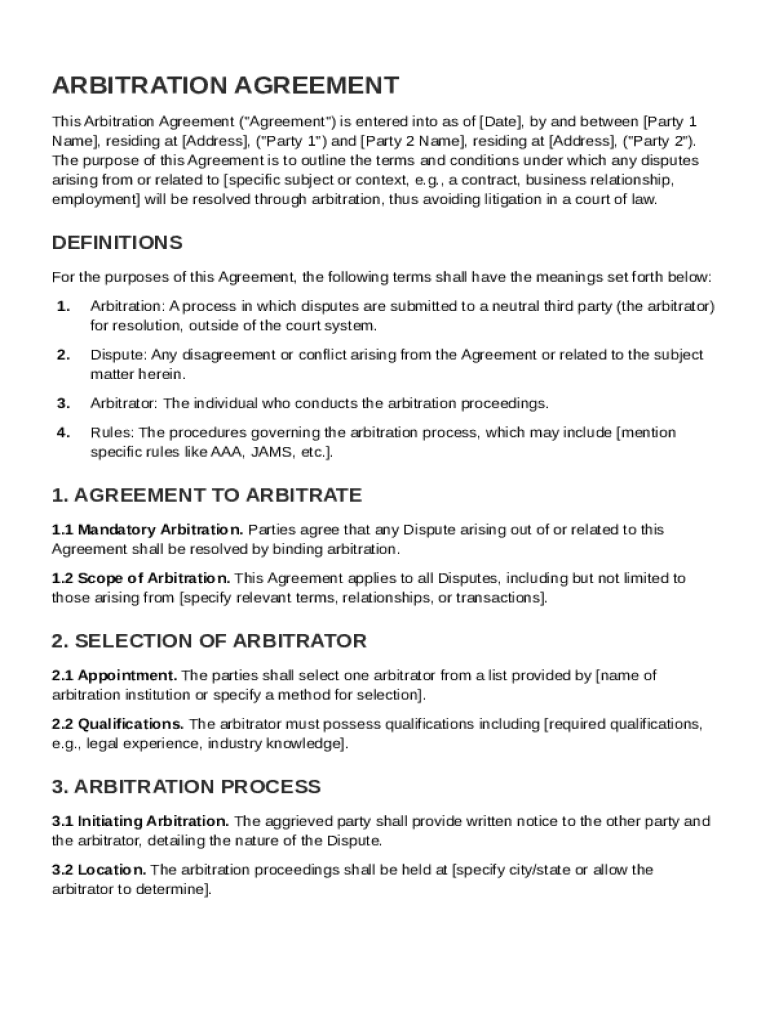







Definition and Meaning
An Arbitration Agreement is a legal contract between two parties that determines that any disputes arising between them will be resolved through arbitration, rather than traditional litigation. This binding agreement specifies the terms under which arbitration will occur, including the selection of an arbitrator, the arbitration process, and the finality of the arbitrator's decision. This approach provides a private, more streamlined path for dispute resolution, potentially saving time and costs associated with court proceedings.
Key Elements of the Arbitration Agreement Template
The Arbitration Agreement Template includes several critical components, such as:
- Parties Involved: Identification of the parties entering into the agreement.
- Scope of Arbitration: Defines what types of disputes will be covered under the agreement.
- Selection of Arbitrator: Describes how the arbitrator will be chosen, including any qualifications or associations they must have.
- Arbitration Process: Outlines the procedures to be followed, such as timelines, venue, and whether hearings will be oral or document-based.
- Costs and Fees: Details how the costs of arbitration, including arbitrator fees, will be divided between the parties.
- Confidentiality: Specifies any confidentiality obligations for the parties involved.
- Governing Law: Indicates which jurisdiction’s laws will govern the arbitration proceedings.
- Finality of Decision: Confirms that the arbitrator’s decision is binding and highlights any limitations on appealing the decision.
How to Use the Arbitration Agreement Template
To use the Arbitration Agreement Template, parties should proceed through the following steps:
- Download and Review the Template: Access the template from a trusted platform like DocHub, and carefully read through all sections.
- Customize the Agreement: Adjust the template to fit the specific needs of the parties involved. This includes inserting party names, defining the scope of arbitration, selecting applicable state laws, and other modifications as necessary.
- Consult with Legal Counsel: Before finalizing the agreement, parties should consider seeking advice from legal professionals to ensure clarity and compliance with legal standards.
- Execute the Agreement: Ensure all parties involved review the finished document and sign it appropriately to make it legally enforceable.
Important Terms Related to the Arbitration Agreement Template
Understanding certain key terms can aid in comprehending the nuances of an Arbitration Agreement:
- Arbitrator: A neutral third party chosen to resolve disputes between the contracting parties.
- Binding Arbitration: A process where the arbitrator’s decision is final and enforceable, with very limited options for appeal.
- Non-binding Arbitration: The arbitrator's decision is advisory and can be rejected or revised by the parties.
- Confidentiality Clause: A provision ensuring that details of the arbitration and its outcome are not disclosed to external parties.
- Jurisdiction: The legal authority under which arbitration is conducted and whose laws will be applied.
Steps to Complete the Arbitration Agreement Template
Completing the Arbitration Agreement Template involves a series of strategic steps to ensure accuracy and enforceability:
- Identify Parties: Enter the full names and addresses of the involved parties.
- Specify Scope: Clearly define which types of disputes are subject to arbitration.
- Select Arbitrator: Determine how an arbitrator will be selected and specify any qualifications.
- Outline Proceedings: Describe the structure of the arbitration process, including timelines and venue details.
- List Potential Costs: Allocate responsibility for expenses like arbitrator fees and administrative costs.
- Establish Confidentiality: Incorporate terms for maintaining the privacy of arbitration details.
- Define Governing Laws: Choose applicable state or federal laws to supervise the arbitration procedure.
- Finalize and Sign: Once all terms are agreed upon, both parties should sign the document in the presence of a witness or notary public if required.
Legal Use of the Arbitration Agreement Template
The legal application of an Arbitration Agreement Template mandates compliance with binding law agreements. Primarily, it facilitates a mutually agreeable resolution process for contract disputes, employment disagreements, and other potential conflicts. By choosing arbitration, parties consent to settle disputes outside court, often leading to quicker outcomes.
Examples of Using the Arbitration Agreement Template
Real-world applications of an Arbitration Agreement can be seen in various scenarios:
- Business Contracts: Companies often include arbitration agreements within contracts to address employment-related disputes or breach of contract issues.
- Consumer Agreements: Retailers may use these agreements to manage disputes over services or product delivery, ensuring a clear pathway to resolution.
- Construction Contracts: Due to the complex nature and potential for disagreements, construction projects frequently include arbitration agreements to swiftly handle claims or disputes related to timelines, quality, or cost overruns.
State-Specific Rules for the Arbitration Agreement Template
The execution and interpretation of Arbitration Agreements can vary markedly based on state laws. For example, some states mandate specific disclosures or protective measures for consumer arbitration clauses, while others may have different standards for evidence presentation or costs associated with arbitration. Thus, parties should be aware of and comply with these state-specific rules when drafting or entering an Arbitration Agreement.




