
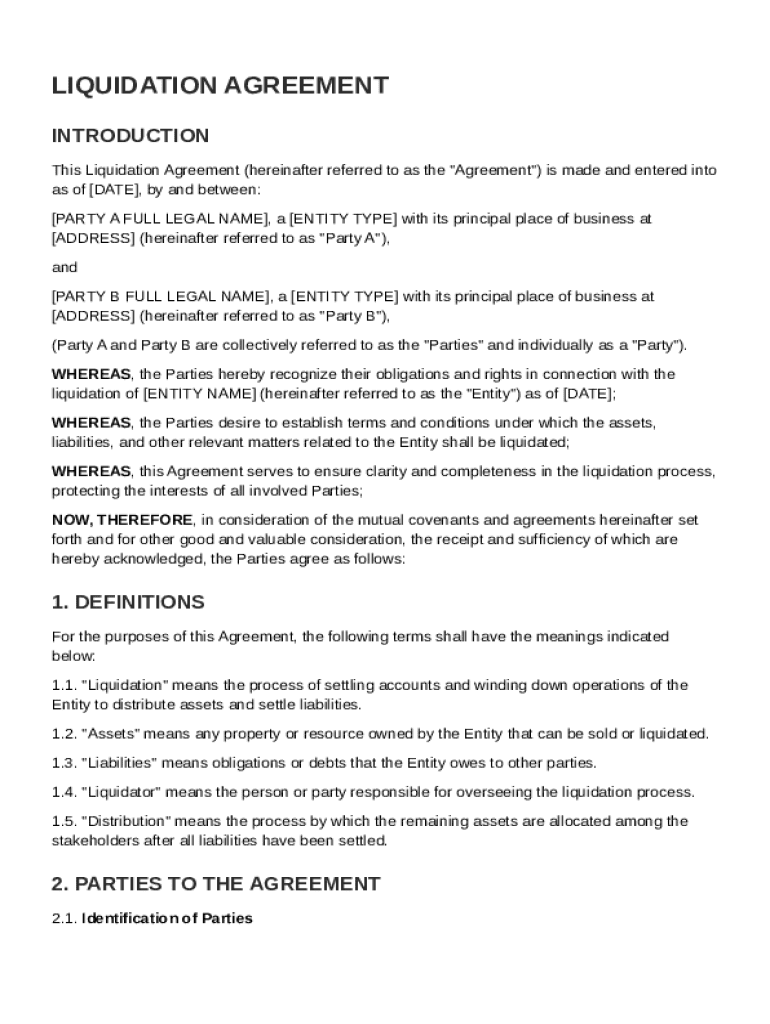







Definition & Meaning
A Liquidation Agreement Template is a formal document that outlines the detailed process for liquidating an entity, typically a business or partnership. This legal document serves to establish the terms and conditions under which the entity will wind down its operations, ensuring clarity and organization. It includes important definitions such as the roles and responsibilities of the parties involved, including designations like Party A and Party B, and the appointment of a liquidator. The agreement covers the processes related to the valuation of assets and liabilities, ensuring that all assets are appropriately managed. These agreements are crucial for legally documenting the steps taken during the liquidation process, protecting the interests of all parties involved. By providing a structured approach, it helps prevent disputes and misunderstandings.
Key Elements of the Liquidation Agreement Template
The Liquidation Agreement Template contains several critical sections that ensure a structured and legally compliant liquidation process. Key elements include:
- Appointment of Liquidator: This section details the criteria for appointing a liquidator responsible for overseeing the liquidation process.
- Asset Management: Guidelines for how assets will be identified, evaluated, and disposed of are laid out.
- Liabilities and Debt Settlement: Procedures for identifying and settling debts and obligations.
- Distribution of Remaining Assets: Instructions on how remaining assets will be divided after debts are settled.
- Legal Compliance: Ensures adherence to applicable laws and regulations.
Each component plays a pivotal role in facilitating a comprehensive liquidation while minimizing risks and complications.
Steps to Complete the Liquidation Agreement Template
Fulfilling the Liquidation Agreement Template involves several methodical steps:
- Assessment of Current Status: Review and understand the entity's current financial and operational standings.
- Selection of Liquidator: Appoint a suitable liquidator in accordance with the agreed terms.
- Asset and Liability Evaluation: Accurately evaluate and record the entity's assets and liabilities.
- Drafting the Agreement: Complete the draft based on the specific contexts and requirements using the template.
- Review for Legal Compliance: Ensure the draft adheres to legal standards and obtain any necessary legal counsel.
- Signatures and Approvals: Secure the signatures of all necessary parties and approvals as stipulated by the agreement.
This step-by-step procedure ensures transparency and legal compliance throughout the liquidation.
Important Terms Related to Liquidation Agreement Template
Understanding the terminology associated with Liquidation Agreements is essential for effective usage:
- Liquidator: An appointed individual or party responsible for executing the liquidation process.
- Creditor: An individual or entity owed money by the entity undergoing liquidation.
- Voluntary Liquidation: A process initiated by the agreement of the entity's owners or partners.
- Involuntary Liquidation: A process enforced by court order, generally due to insolvency issues.
- Distribution: The act of allocating remaining assets to rightful parties once debts are settled.
Grasping these terms aids in navigating the complexities of liquidation.
Who Typically Uses the Liquidation Agreement Template
The Liquidation Agreement Template is used by various entities including:
- Business Owners and Partners: Primarily used when dissolving company operations.
- Legal Professionals: For drafting and advising on the legality of the agreement.
- Financial Advisors: Ensures the financial implications are well understood and planned for.
- Creditors: Stakeholders interested in understanding how debts will be settled.
These stakeholders rely on the template for a smooth transition through the winding-up process.


Legal Use of the Liquidation Agreement Template
Legal compliance is paramount in liquidations. The Liquidation Agreement Template is designed to ensure the legality of the liquidation:
- Adherence to Local Laws: The agreement reflects applicable state and federal regulations.
- Documentation of Liquidation Process: Provides a comprehensive legal record of steps and decisions.
- Protection for Parties Involved: Safeguards the rights and obligations of all entities.
- Creditor Notification: Ensures creditors are informed and their claims are considered appropriately.
Legal scrutiny ensures the process withstands any legal challenges and fulfills professional standards.
State-Specific Rules for the Liquidation Agreement Template
Liquidation agreements must account for geographical variations in legal requirements. Important considerations include:
- State Law Variations: Recognizing differences in regulatory requirements across states.
- Tax Implications: Each state may have specific tax rules affecting asset distribution and liabilities.
- Filing Requirements: Varying procedures for filing or registering the liquidation as required by state law.
- Jurisdiction: Legal authority in the event of disputes may differ based on location.
Understanding these state-specific nuances guarantees that the agreement meets all local regulatory stipulations.
Business Types that Benefit Most from Liquidation Agreement Template
Various business structures can benefit from using the Liquidation Agreement Template:
- Limited Liability Companies (LLCs): Owners use this for dissolving their business structure.
- Corporations: Guides corporate liquidations where shares and stockholders are involved.
- Partnerships: Helps in situations where partners agree to dissolve their collaboration.
- Sole Proprietorships: While less commonly used, sole proprietors may utilize a simplified version for personal clarity.
Each of these business types requires a tailored approach to liquidation, which the template can accommodate uniquely.


