






Definition and Meaning of Land Tenancy Agreement Template
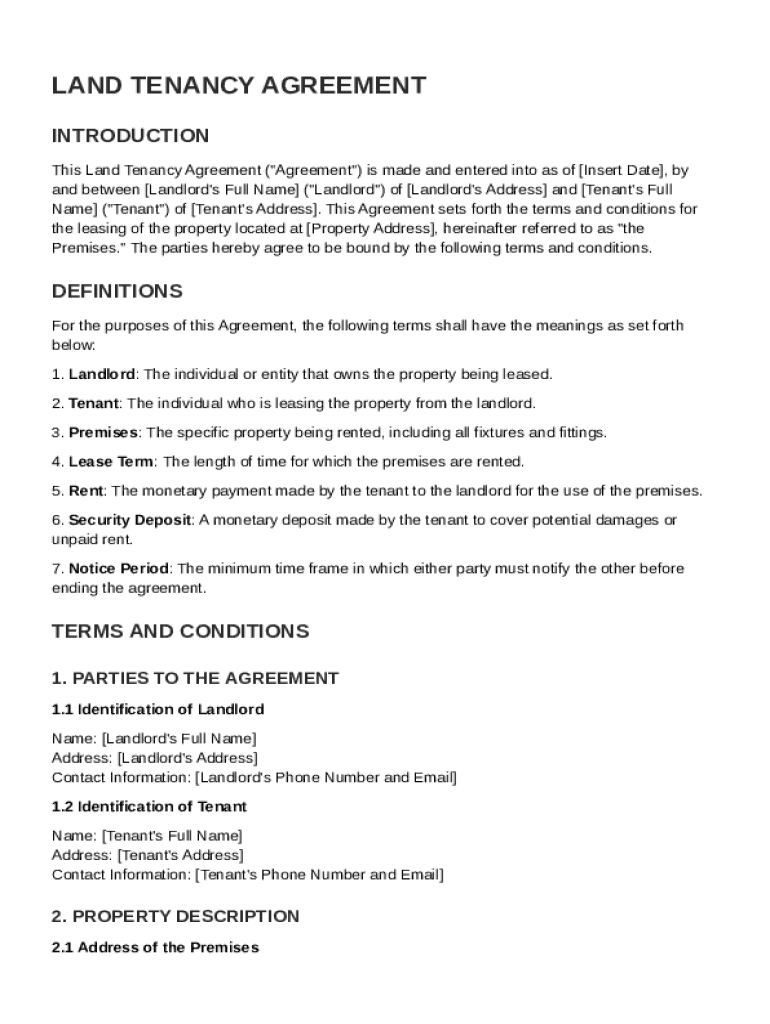
A Land Tenancy Agreement Template serves as a foundational document outlining the terms under which a property is leased. This template sets the parameters for the relationship between a landlord and a tenant, ensuring that both parties understand their obligations and rights. It typically encompasses several essential components:
- Lease Duration: Specifies the beginning and end dates of the tenancy.
- Rent Payment Terms: Details on rent amount, payment schedules, and accepted payment methods.
- Responsibilities: Clarity on the maintenance duties of both landlord and tenant.
- Security Deposits: Conditions under which deposits are held, refunded, or forfeited.
- Termination Clauses: Process for ending the lease, be it through expiration or eviction.
Through these elements, the template ensures compliance with local housing regulations and protects the involved parties' interests.
How to Use the Land Tenancy Agreement Template
Utilizing the Land Tenancy Agreement Template involves several straightforward steps aimed at customizing it to fit individual needs. Here's how to effectively employ the template:
- Download the Template: Access the document from a reputable source such as DocHub.
- Customize Content: Fill in specific details such as property address, names of landlord and tenant, and rent amount. Adjust clauses to match the specific property or agreements.
- Review Legal Requirements: Ensure the provisions comply with local laws and housing regulations. Consulting legal professionals can be beneficial.
- Add Signatures: Utilize an electronic signatures feature for convenient and legally binding agreements.
- Distribute Copies: Provide copies to both parties for their records, ensuring transparency and agreement.
This systematic approach simplifies the leasing process and helps prevent future disputes.
Key Elements of the Land Tenancy Agreement Template
A comprehensive Land Tenancy Agreement includes several critical elements that define its structure. These elements provide clarity and security for both the landlord and the tenant:
- Rental Terms: Details on rent amount, due dates, and late payment penalties.
- Parties Involved: Identification of landlord and tenant, including contact information.
- Property Description: Clear outline of the rented premises, sometimes including a layout or inventory.
- Maintenance and Repairs: Guidelines on who is responsible for specific repairs and maintenance tasks.
- Pet Policy: If applicable, rules regarding pet ownership.
- Use of Premises: Permissible activities within the property to avoid misuse.
These components ensure that both parties have a mutual understanding of the terms and can refer to the agreement in case of any issues.
Important Terms Related to Land Tenancy Agreement Template
Understanding the terminology used within a Land Tenancy Agreement Template is crucial for interpreting its clauses effectively. Here are some important terms and their implications:
- Lessee: The individual or entity renting the property (tenant).
- Lessor: The individual or entity leasing out the property (landlord).
- Premises: The property being leased, including all specific parts rented.
- Default: Failure to meet obligations such as missed payments.
- Quiet Enjoyment: The tenant's right to enjoy the property without disruption from the landlord.
These terms should be clearly defined within each agreement to prevent any misunderstandings.
Steps to Complete the Land Tenancy Agreement Template
Finalizing a Land Tenancy Agreement requires attention to detail to ensure no component is overlooked. Here is a step-by-step guide to complete the template:
- Fill Basic Information: Input names, addresses, and contact details of both parties.
- Detail Property Description: Include specifics about the premises for clarity.
- Insert Rental Terms: Define amount, due dates, and the manner of payment.
- Customize Terms and Conditions: Adjust standard terms to reflect mutual agreements.
- Review and Revise: Ensure all clauses meet legal standards and mutual agreement.
- Sign and Date: Both parties execute the agreement, ensuring legal enforceability.
- Distribute and Archive: Share copies and maintain a record for future reference.
This sequence ensures the completeness and legality of the agreement.
Examples of Using the Land Tenancy Agreement Template
The efficacy of a Land Tenancy Agreement can be demonstrated through various real-world scenarios, ensuring the template's versatility:
- Residential Leasing: In urban areas, landlords often utilize these agreements for apartment rentals, specifying rules regarding communal space usage.
- Commercial Rental: Businesses leasing office space can modify clauses to include conditions on renovations or signage.
- Student Housing: Often short-term, these leases might incorporate clauses on shared accommodations and facilities usage.
- Seasonal Rentals: For vacation properties, agreements might stipulate specific periods and seasonal rates.
Each scenario underscores the adaptability of the template to suit different leasing contexts.
Legal Use of the Land Tenancy Agreement Template
Ensuring the legal validity of a Land Tenancy Agreement Template is crucial. This involves aligning the document with legal stipulations and housing laws:
- Compliance with Local Law: Adapting terms and conditions to satisfy state and municipal regulations.
- Enforcement Clauses: Details on dispute resolution, such as mediation or court proceedings.
- Legally Binding: Ensuring all signatures are verifiable and the document's integrity is maintained.
- Rent Control Compliance: Understanding restrictions and regulations if located in rent-controlled areas.
Legal advisors can assist in drafting agreements that meet judicial scrutiny.
State-Specific Rules for the Land Tenancy Agreement Template
When drafting a Land Tenancy Agreement, it's vital to consider state-specific regulations, which could affect various components of the contract:
- Security Deposit Limits: Some states cap how much can be charged, what can be deducted, and the timeline for returning deposits.
- Disclosure Requirements: Certain jurisdictions require full disclosure on known property defects or lead-based paint information.
- Eviction Procedures: States vary in required notice periods and grounds for eviction.
- Legal Holidays and Rent Due Dates: Rules around rent collection on holidays or weekends can also differ.
Customizing agreements to comply with state requirements ensures their enforceability and fairness.