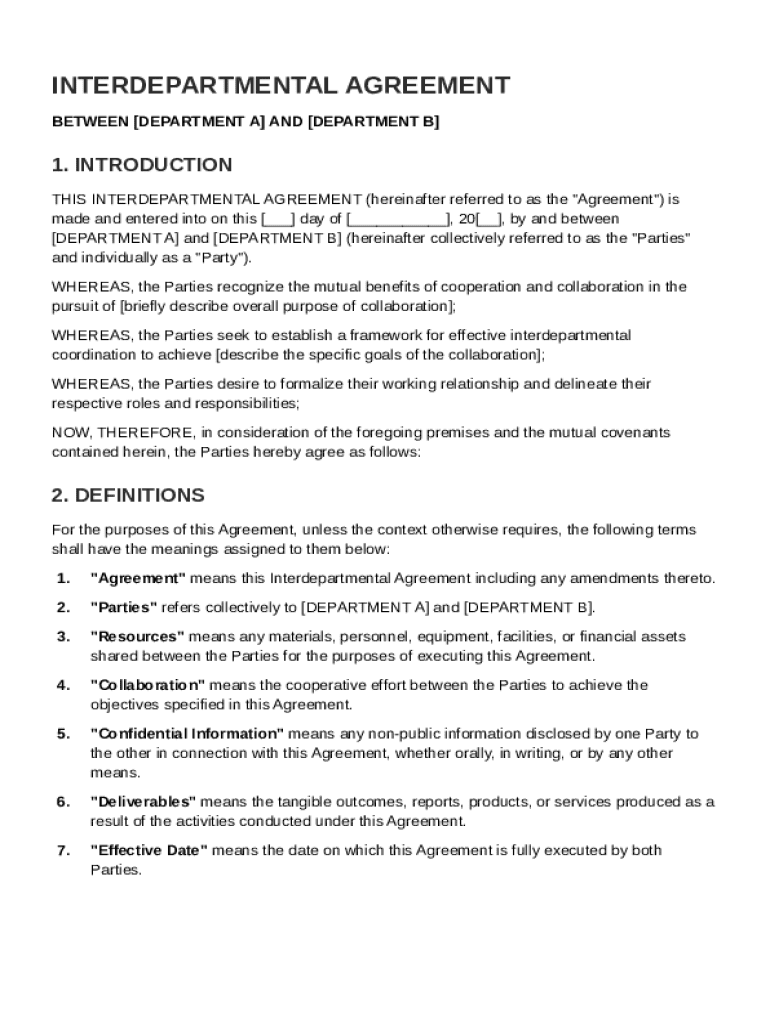







Definition and Purpose of the Interdepartmental Agreement Template
An Interdepartmental Agreement Template is a formal document that outlines the terms of collaboration between different departments within an organization. It is designed to facilitate cooperation and ensure that each department knows its roles and responsibilities, financial commitments, and communication protocols. By using this template, organizations can create a standardized approach to resource sharing and joint projects, ultimately leading to increased efficiency and effectiveness in achieving shared objectives. This template serves as a foundational tool for departments to navigate their collaborative efforts while ensuring compliance with organizational policies.
How to Use the Interdepartmental Agreement Template
Using the Interdepartmental Agreement Template involves several essential steps to ensure that all parties are clear about the agreement's terms. Here's a step-by-step guide to effectively utilizing this template:
-
Identify Participating Departments: Clearly specify which departments will be involved in the agreement. This is crucial for accountability.
-
Define Objectives: Outline the specific goals and objectives that the collaboration aims to achieve. This section should be comprehensive and align with organizational priorities.
-
Detail Roles and Responsibilities: Clearly delineate what each department is responsible for within the agreement, including leadership roles, task assignments, and deliverables.
-
Outline Financial Arrangements: Specify the financial commitments of each department, including budget allocations, funding sources, and any financial transactions that will take place.
-
Establish Communication Protocols: Define how and when departments will communicate to ensure all parties are aligned and informed about project progress.
-
Set Amendment Procedures: Provide guidelines for how the agreement can be amended if necessary, ensuring flexibility while maintaining structure.
Steps to Complete the Interdepartmental Agreement Template
Completing the Interdepartmental Agreement Template involves several critical steps that require input and agreement from all participating departments. Here's how to ensure the template is completed accurately:
-
Collaborative Input: Gather representatives from each department to collaboratively fill out the template. This ensures that all perspectives are included and that there is mutual understanding and agreement.
-
Review and Approval: Once the template is filled out, have all participating departments review its contents for accuracy and completeness. Obtain necessary approvals from departmental leaders.
-
Document Finalization: Make any required revisions based on feedback from departmental reviews, ensuring the document accurately reflects the agreed-upon terms.
-
Recording and Storage: Store the final, signed agreement in a central, accessible location for future reference. This might involve digital archiving or secure physical storage.
-
Implementation Monitoring: Use the agreement as a reference to monitor the progress of collaborative efforts against the defined objectives, roles, and responsibilities.
Key Elements of the Interdepartmental Agreement Template
The Interdepartmental Agreement Template comprises several key elements designed to capture all necessary details about departmental collaboration. These elements are integral to establishing a clear and enforceable agreement:
- Objective Statement: A succinct expression of the collaborative goals.
- Scope of Work: Detailed tasks and activities to be undertaken by each department.
- Resource Allocation: Specifics on budgetary and resource commitments.
- Roles and Responsibilities: Clear delineation of duties and accountability.
- Communication Protocols: Strategies for maintaining open and effective lines of communication.
- Amendment and Termination Clauses: Guidelines for modifying or concluding the agreement as necessary.
Who Typically Uses the Interdepartmental Agreement Template
The Interdepartmental Agreement Template is typically used by mid- to large-sized organizations where multiple departments frequently interact and collaborate on joint initiatives. Common users include:
- Project Managers: Often responsible for coordinating efforts across departments and ensuring project objectives are met.
- Department Heads: Use the template to formalize roles and responsibilities within collaborative efforts.
- Legal Advisors: Ensure that the agreement complies with organizational policies and legal requirements.
- Budget Analysts: Involved in defining and monitoring financial commitments as specified in the agreement.


Legal Considerations for Using the Interdepartmental Agreement Template
When using the Interdepartmental Agreement Template, it is crucial to consider its legal implications to maintain compliance with organizational and external legal standards:
- Compliance with Company Policies: Ensure the agreement aligns with internal policies and procedures.
- Confidentiality Clauses: Consider including provisions that protect sensitive information shared between departments.
- Liability and Indemnification: Address how liability will be handled and specify the extent of indemnification between departments.
- Dispute Resolution: Clearly state procedures for resolving disagreements, including mediation or arbitration routes.
Examples of Using the Interdepartmental Agreement Template
Utilizing real-world scenarios can better illustrate the application and benefits of the Interdepartmental Agreement Template:
- Joint Research Projects: For departments collaborating on research, the template helps outline shared objectives, data-sharing protocols, and joint funding responsibilities.
- Resource Sharing Initiatives: When departments share resources such as staff or equipment, the agreement details the terms of use, maintenance responsibilities, and cost-sharing models.
- Collaborative Development Programs: Used in scenarios where multiple departments jointly develop a new organizational program, outlining each department’s contribution and expected outcomes.
Important Terms Related to the Interdepartmental Agreement Template
Understanding the terminology commonly associated with the Interdepartmental Agreement Template can enhance clarity and ensure effective communication:
- MOU (Memorandum of Understanding): A non-binding agreement that outlines the terms and details of a preliminary partnership.
- Resource Allocation: The process of distributing resources among various projects or business units.
- Roles and Responsibilities Matrix: A tool used to define and document the roles and responsibilities of project team members across departments.
- Amendment Clause: A provision that specifies how the agreement can be modified after its initial execution.
By carefully utilizing these elements and insights, organizations can effectively leverage the Interdepartmental Agreement Template to enhance cooperation and achieve mutual objectives across departments.