






Definition & Meaning
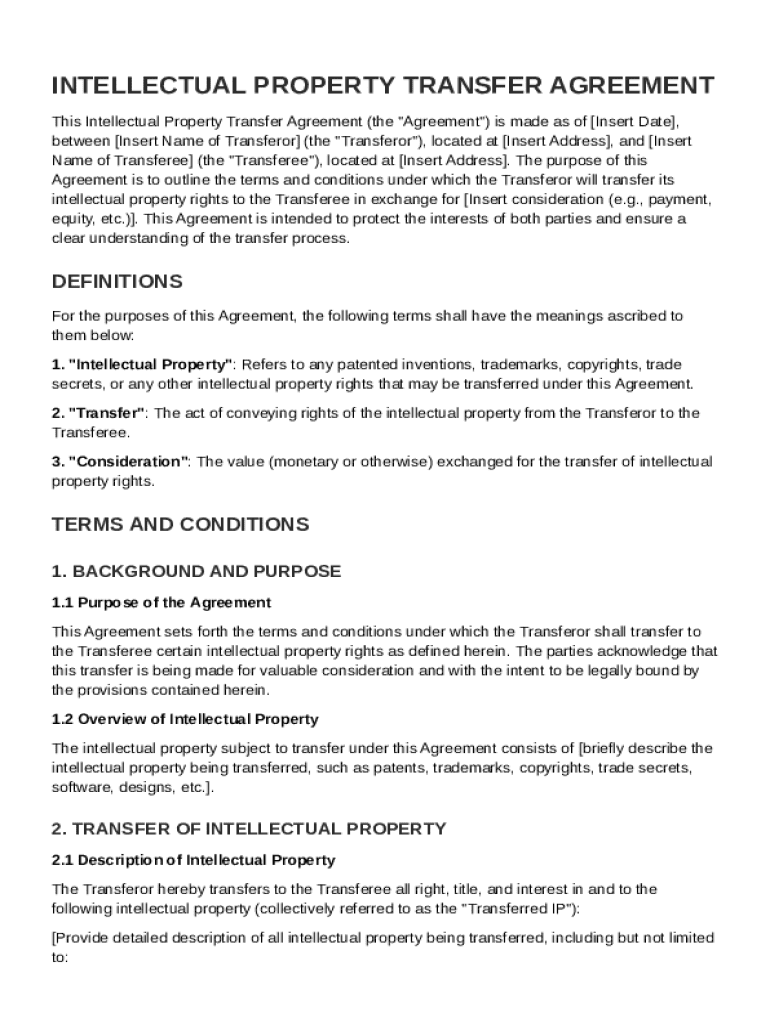
The Intellectual Property Transfer Agreement (IPTA) template is a legal document that facilitates the transfer of intellectual property rights from one party, known as the Transferor, to another, known as the Transferee. This agreement clearly outlines the terms and conditions under which the transfer occurs, including any consideration or compensation involved. The agreement provides a comprehensive overview of the scope of rights being transferred, ensuring that both parties have a mutual understanding of the transaction. By defining key terms, it helps prevent disputes and ambiguities regarding the transfer of rights.
Key Elements of the Intellectual Property Transfer Agreement Template
Identifying Information
- Parties Involved: Clearly identifies the Transferor and Transferee, including their legal names, business addresses, and contact information.
- Intellectual Property Details: Specifies the type of intellectual property being transferred, such as patents, trademarks, copyrights, or trade secrets. It includes registration numbers if applicable and any relevant descriptions.
Terms and Conditions
- Scope of Transfer: Defines the extent of rights being transferred, whether it is exclusive or non-exclusive, geographical territories involved, and any duration limits.
- Financial Considerations: Details the compensation or consideration agreed upon for the transfer, including payment terms, and any royalties or future financial obligations.
How to Use the Intellectual Property Transfer Agreement Template
Initial Preparation
- Gather Necessary Information: Before using the template, ensure you have all relevant details about the intellectual property and the parties involved.
- Customize the Template: Adapt the template to reflect the specifics of your transaction. Modify sections to suit the type of intellectual property and jurisdiction.
Execution Process
- Review Terms: Both parties should carefully read and understand all terms and conditions, seeking legal advice if necessary.
- Finalize and Sign: Once both parties agree on the terms, they should sign the document to make it legally binding. Ensure that each party receives a signed copy for their records.
Important Terms Related to Intellectual Property Transfer Agreement Template
- Transferor and Transferee: The parties between whom the transfer of rights is negotiated.
- Consideration: The value, often monetary, that is exchanged for the intellectual property rights.
- Warranties and Representations: Assurances from the Transferor that they hold the rights to transfer and that the intellectual property does not infringe on third-party rights.
- Confidentiality: Obliges both parties to keep sensitive information confidential, preventing unauthorized disclosure.
Steps to Complete the Intellectual Property Transfer Agreement Template
- Fill Out Party Information: Enter details of the Transferor and Transferee.
- Describe the Intellectual Property: Include comprehensive details about the property being transferred.
- Define the Scope: Clearly articulate the extent, restrictions, and limitations of the transfer.
- Detail Financial Arrangements: Accurately reflect agreed-upon financial considerations.
- Include Warranties: Draft any warranties and liabilities clauses to protect both parties.
- Set Governing Law: Indicate the jurisdiction under which the agreement will be interpreted and enforced.
- Finalize and Execute: Both parties should thoroughly review, sign, and secure copies of the agreement.
Legal Use of the Intellectual Property Transfer Agreement Template
This template serves as a safeguard in legal contexts by defining and formalizing the transfer of rights to prevent disputes and ensure compliance with relevant intellectual property laws. It encompasses various legal standards and can cater to a broad range of intellectual property types, ensuring that the transfer process is seamless and devoid of legal ambiguities. The agreement must be in compliance with applicable state and federal laws to uphold its enforceability.
Who Typically Uses the Intellectual Property Transfer Agreement Template


Typical Users
- Businesses and Corporations: Engaging in mergers, acquisitions, or joint ventures.
- Inventors and Innovators: Licensing or transferring new inventions or patented technologies.
- Artists and Creators: Transferring copyrights or the rights to original works.
- Academic Institutions: Involved in the commercialization of research or technology transfer.
Examples of Using the Intellectual Property Transfer Agreement Template
- Tech Startups: A tech startup acquiring patents from an inventor to develop new software solutions.
- Publishing Company: Acquiring book rights from an author for distribution and sale.
- Manufacturing Business: Licensing a trademark from another company to enhance brand credibility.
- Pharmaceutical Company: Acquiring the rights to a new drug formulated by a research lab for commercial production.
State-Specific Rules for the Intellectual Property Transfer Agreement Template
Legal Variations by State
Different states may have specific legal requirements regarding the transfer of intellectual property. Factors such as variations in contract law, requirements for notarization, and distinct statutes for types of intellectual property, influence how the agreement should be tailored.
- California: Additional clauses may be required to comply with specific state intellectual property laws.
- New York: May necessitate specific terms due to stricter contract and employment laws concerning intellectual property.
Ensuring adherence to state-specific rules enhances the legal robustness of the agreement, preventing any jurisdictional conflicts.