






Definition and Purpose of an Employment Contract Template
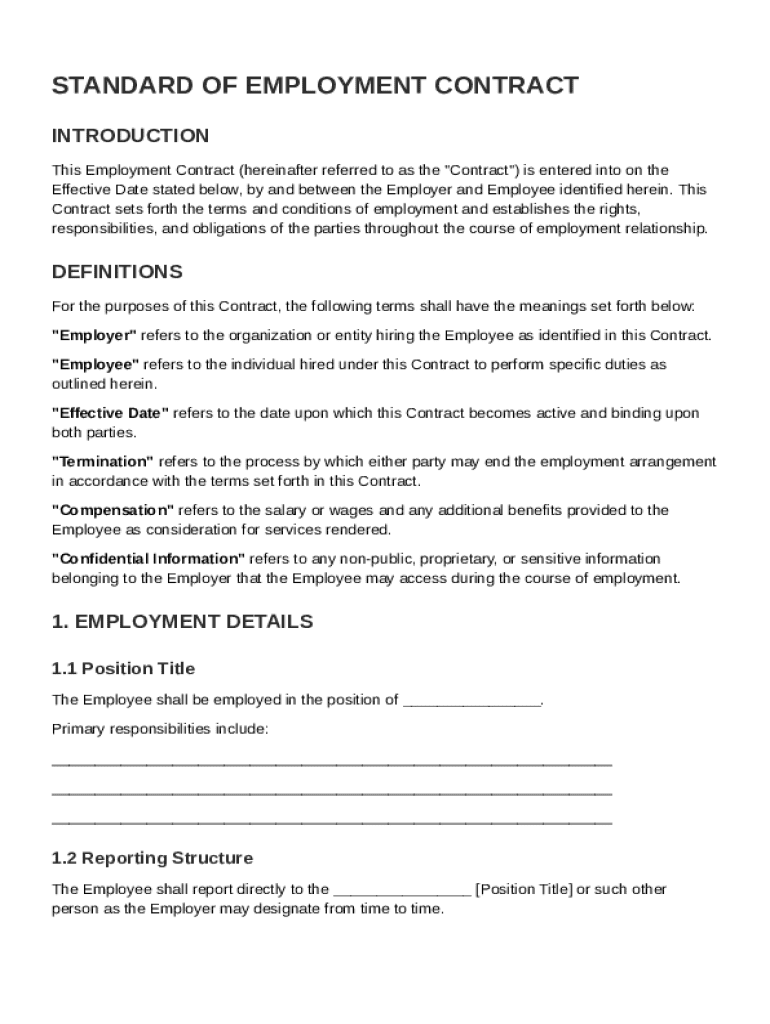
The Standard of Employment Contract Template serves as a formal agreement outlining the terms of employment between an employer and an employee. This document is essential for establishing the rights and responsibilities of each party in the relationship. It typically includes various crucial elements, such as job title, duties, compensation, and termination conditions. Employment contracts provide clarity on both legal and practical aspects, ensuring that both the employer's and employee's expectations are aligned right from the start of the employment period.
Key Components of the Template
- Position Title and Duties: Clearly defines the role the employee will assume, including specific responsibilities and reporting structure. This ensures both parties have a mutual understanding of the job expectation.
- Compensation and Benefits: Details related to salary, bonuses, benefits, and other financial aspects are included to prevent any misunderstandings regarding employee remuneration.
- Working Hours: Specifies the expected hours of work, including start and end times, and any overtime policies.
- Performance Standards: Establishes criteria for evaluating employee performance, including objectives and key targets.
- Confidentiality Obligations: Protects company information by outlining how sensitive information should be handled by the employee.
- Termination Terms: Describes conditions and processes for ending the employment relationship, including notice periods and exit procedures.
How to Use the Standard of Employment Contract Template
Using a template for an employment contract streamlines creating legally compliant documents without needing a fresh start each time a new hire is made. To use the template effectively:
- Review and Customize: Ensure the template matches the specific requirements of the position and complies with local laws.
- Complete Each Section: Fill in specific details for each section using the guidance noted in the template instructions.
- Legal Compliance Check: Consult with legal advisors to ensure the template complies with current employment laws and regulations.
- Employee Review: Allow the employee to review the contractual terms to address any questions or necessary adjustments.
Steps to Complete the Template
- Fill in Employer Details: Including company name, address, and contact information.
- Enter Employee Information: Such as name, address, and start date.
- Define Job Role and Expectations: Clearly outline the position and responsibilities within the organization.
- Establish Salary and Benefits: Specify the compensation package, including base salary and any additional benefits.
- Outline Employment Conditions: Detail working hours, location, and any prerequisites for employment.
- Review Confidentiality and Termination Clauses: Ensure understanding and agreement on these clauses prior to finalizing.
- Both Parties Sign: Once reviewed and agreed upon, both employer and employee should sign and date the document.
Legal Use of the Employment Contract Template
The use of a standardized template holds several legal implications, serving as a foundational legal document that is enforceable in a court of law. It must be carefully structured to:
- Align with Labor Laws: The template should conform to federal and state labor legal requirements to remain enforceable.
- Protect Company Interests: Clauses related to non-compete, non-solicitation, and confidentiality are critical for safeguarding intellectual property.
- Outline Dispute Resolution: Provide mechanisms for resolving disputes, such as mediation or arbitration, to avoid lengthy legal battles.
Important Terms to Understand
Basic Clauses
- "At-will Employment": Understanding that the employment relationship can be terminated at any time by either party.
- "Non-Compete Clause": Restrictions on the employee working in similar businesses post-employment with the company.
- "Probation Period": Initial employment phase during which the employee's performance is evaluated.
Who Typically Uses the Template
This template is commonly utilized by:
- Human Resource Professionals: To support standardized hiring processes.
- Small and Medium Enterprises (SMEs): Providing a cost-effective method for contractual agreements.
- Legal Advisors: For advising companies on contract composition and risk mitigation.
- Business Owners: Ensuring legal compliance and protecting business operations.


State-Specific Rules and Considerations
Employment contracts may vary depending on state laws in the U.S. Differences in employment termination rules, allowable work hours, and non-compete agreements are notable aspects that require tailored adjustments within the template. States may have distinct requirements that affect employment terms, including:
- California: Restrictions on non-compete agreements and specific employee notice requirements before termination.
- New York: Particular considerations regarding anti-discrimination clauses and employee rights.
- Texas: Policies around at-will employment should be carefully documented.
Examples of Using the Template
Corporate entities have leveraged the Standard of Employment Contract Template across various sectors to:
- Onboard New Employees: Streamlining the onboarding process by providing comprehensive employment terms upfront.
- Regularly Update Employment Terms: Businesses use the template to consistently update terms in case of role changes or promotions.
- Facilitate Legal Disputes: As a legal reference point during disagreements, it clarifies expected conduct and contractual obligations.
In summary, a Standard of Employment Contract Template is a potent tool for defining the framework within which an employee operates, effectively managing expectations and reducing the risk of disputes. Employing such templates is invaluable in achieving clarity, consistency, and compliance in employment practices.