






Definition & Meaning
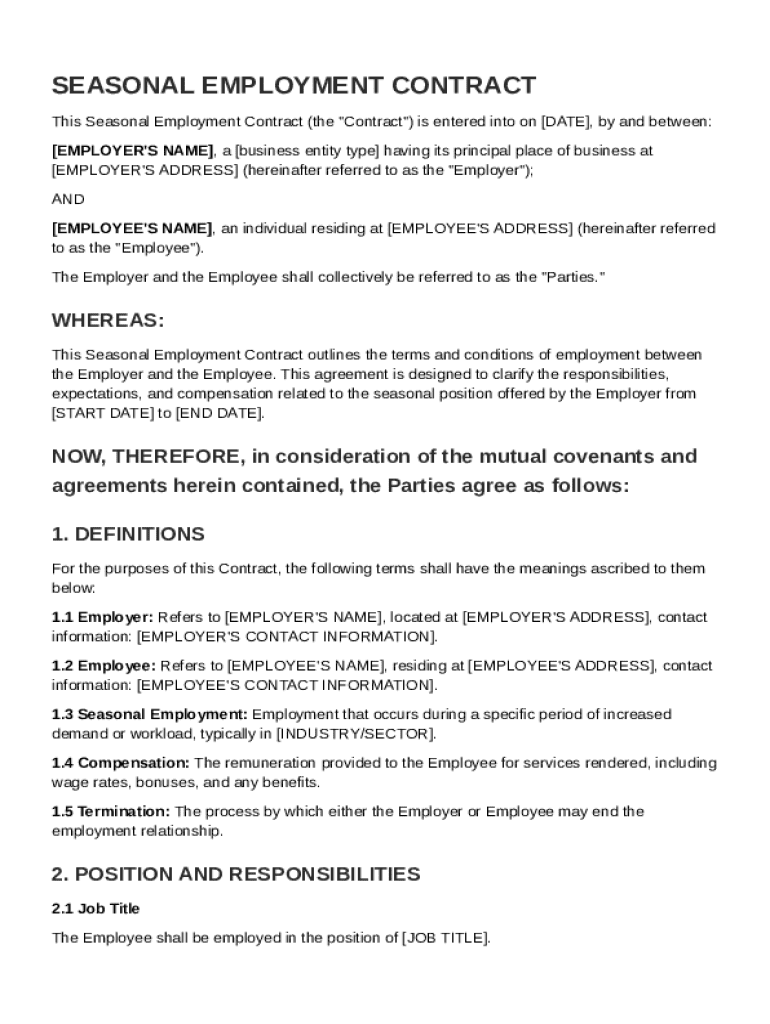
A Seasonal Employment Contract Template is a formal document that establishes the terms and conditions specific to seasonal employment. This type of contract outlines the employment duration, job responsibilities, compensation, benefits, employee obligations, and termination conditions. It ensures both the employer and employee have a clear understanding and agreement on the employment terms. Seasonal contracts are typically used in industries with trading volumes that fluctuate with the seasons, such as retail, agriculture, and tourism.
How to Use the Seasonal Employment Contract Template
Using a Seasonal Employment Contract Template involves several key steps. Firstly, determine the specific seasonal role for which the contract is being prepared. The role could be related to a particular industry like agriculture or retail. Next, customize the template by filling in essential details such as the employer's name, employee's name, job title, duration of employment, and compensation details. The template should be modified to include specific job duties and obligations. Finally, ensure that both parties review and sign the contract to make it legally binding.
Steps to Complete the Seasonal Employment Contract Template
- Identify Parties: Clearly state the names of the employer and employee along with their contact information.
- Specify Job Details: Outline the job title, department, and specific duties.
- Define Duration: Include the start and end dates of the employment period.
- Outline Compensation: Detail the payment method, frequency, and any additional benefits.
- List Obligations: Specify tasks and performance expectations for the employee.
- Include Termination Conditions: State the conditions under which the contract may be terminated prematurely.
- Finalize and Sign: Both parties should review the contract, make any necessary adjustments, and sign.
Key Elements of the Seasonal Employment Contract Template
The template consists of several critical elements aimed at providing clarity and protection to both parties involved:
- Job Responsibilities: A detailed description of the duties and responsibilities expected from the employee.
- Employment Duration: Clearly defined start and end dates for the seasonal position.
- Compensation and Benefits: Information on salary, hourly wage, or stipend, along with additional benefits like health insurance or holiday pay.
- Confidentiality Agreements: Any clauses that restrict the employee from sharing company secrets.
- Governing Law: The jurisdiction under which the contract is governed, typically based on the employer's location.
- Termination Clause: Conditions that allow for the cancellation of the contract before the specified end date.
Legal Use of the Seasonal Employment Contract Template
Legally, the Seasonal Employment Contract Template binds the employer and employee to follow certain statutes and rights pertinent to seasonal work. A well-constructed contract meets compliance standards set by labor laws in the United States, covering minimum wage requirements, overtime rules, and workers' compensation. Employers are obligated to provide this documentation, ensuring that seasonal employees understand their rights and responsibilities. It's crucial that the contract adheres to federal and state labor regulations to avoid any potential legal disputes.
Important Terms Related to Seasonal Employment Contract Template
Understanding the key terms associated with a Seasonal Employment Contract provides clarity:
- Employee Obligations: The necessary tasks and behaviors expected from the employee during their tenure.
- Employer Obligations: Responsibilities the employer holds, such as timely compensation and workplace safety.
- Confidentiality Clause: A section preventing the disclosure of sensitive company information.
- Non-Compete Clause: Restricts the employee from joining rival businesses within a specified timeframe.
State-Specific Rules for the Seasonal Employment Contract Template
Different states may impose unique rules that affect how seasonal contracts should be structured. For instance, variations in minimum wage, overtime pay, and worker safety regulations are prevalent. Employers must stay informed of both federal guidelines and state-specific laws to ensure compliance. It is advisable to consult legal counsel experienced in labor laws within the given state to refine the seasonal employment contract appropriately.
Who Typically Uses the Seasonal Employment Contract Template
Industries that rely on an ebb and flow of seasonal demand or tourism often use these contracts. Common users include:
- Agricultural Businesses: Seeking workers for planting or harvest seasons.
- Retailers: Hiring extra staff for holiday rush periods.
- Hospitality Services: Engaging personnel during peak travel seasons.
- Event Planning Companies: Filling temporary positions for large events.


Examples of Using the Seasonal Employment Contract Template
The Seasonal Employment Contract finds application in various real-world scenarios. For instance, a ski resort might employ seasonal workers for the winter session, providing a detailed contract outlining work hours, job duties, and remuneration. Similarly, a farm could use the template to hire temporary workers for the harvest period. These examples illustrate the flexibility and specificity the template offers to employers needing seasonal staffing solutions.