






Definition & Meaning
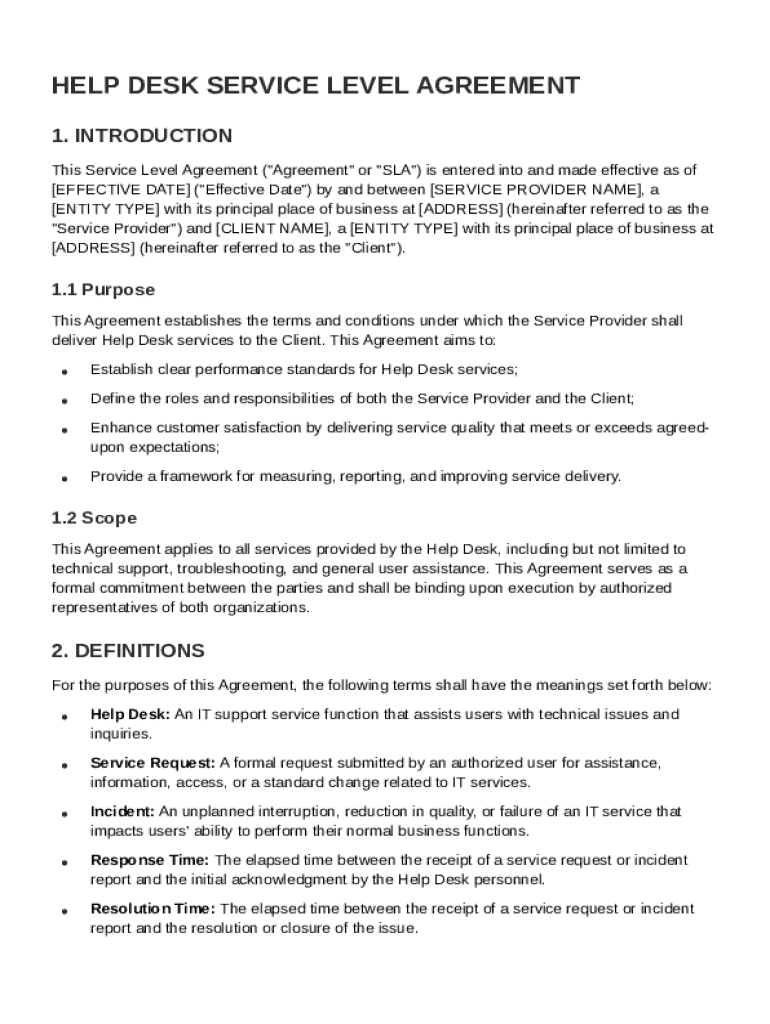
A Help Desk Service Level Agreement (SLA) Template is a formal document that outlines the terms, conditions, and performance standards between a service provider and a client regarding help desk services. It aims to enhance service quality by defining roles, responsibilities, and expectations on both sides. Through clear communication, this SLA optimizes customer satisfaction by detailing the scope of included services, operating hours, and the incident management process. For example, the SLA might specify that all critical issues must be addressed within four hours.
Components of a Help Desk SLA
- Services Included: Defines exact support services covered by the agreement, such as ticket management.
- Excluded Services: Lists services not covered to set clear boundaries.
- Operating Hours: Specifies when help desk support is available.
- Support Channels: Outlines how clients can reach support, like phone or email.
Key Elements of the Help Desk Service Level Agreement Template
The foundation of an effective SLA lies in its detailed components, which provide structure and clarity.
Performance Metrics
These metrics help gauge how well services are being delivered. They include:
- Response Time: Time taken to acknowledge a request.
- Resolution Time: Duration for solving support issues.
- First Contact Resolution Rate: How often problems are solved on the first attempt.
Roles and Responsibilities
Define clear roles to avoid confusion and ensure accountability:
- Service Provider: Responsible for delivering support and maintenance.
- Client: Obligated to report issues promptly and provide necessary access for issue resolution.
How to Use the Help Desk Service Level Agreement Template
Utilizing the SLA effectively involves understanding its sections and customizing it to your needs.
Adapting the Template
- Review Standard Terms: Understand the default terms included in the template.
- Customization: Modify sections like operating hours to align with your service model.
- Approval and Signatures: Both parties should agree on the terms and provide signatures.
Practical Applications
- New Service Initiatives: When launching new products requiring dedicated support.
- Managing Expectations: Using the SLA to clearly communicate what clients can expect.
Steps to Complete the Help Desk Service Level Agreement Template
Completing this template requires methodical steps to ensure all details are covered.
- Identify Requirements: Determine services, support levels, and customer expectations.
- Draft the Agreement: Use the template to include all relevant sections.
- Review Legal Provisions: Ensure all clauses comply with applicable laws.
- Finalize Terms: Make necessary adjustments based on initial client feedback.
- Sign the Document: Authorized representatives sign the SLA to make it effective.
Who Typically Uses the Help Desk Service Level Agreement Template
Various entities engage with SLAs to formalize their support arrangements.


Common Users
- Large Corporations: Often require comprehensive support for extensive IT infrastructures.
- SMEs: Small to medium enterprises seeking affordable, reliable help desk support.
- IT Service Providers: Organizations offering outsourced help desk services to clients.

Legal Use of the Help Desk Service Level Agreement Template
SLAs must adhere to legal standards to be enforceable and provide protection for both parties.
Compliance and Regulation
- Data Protection Laws: Ensure that the SLA complies with data privacy regulations like GDPR.
- Liability Clauses: Clearly define the limits of liability for service disruptions.
- Termination Conditions: Include specific clauses on how and when the SLA can be terminated.
Examples of Using the Help Desk Service Level Agreement Template
Various scenarios illustrate how SLAs can enhance operational efficiency.
Real-World Scenarios
- Outreach Campaigns: An online retailer uses an SLA to manage increased queries during a sale.
- Software Launch: A tech company ensures support availability post-launch with a robust SLA.
State-Specific Rules for the Help Desk Service Level Agreement Template
State regulations can influence how SLAs are crafted and enforced.
Navigating State Differences
- Consumer Protection Laws: States may have unique requirements concerning consumer rights.
- Business Regulations: Variations in standard contract law can affect SLA provisions.
Adhering to state-specific rules ensures your SLA remains compliant and effective across different locales.
Important Terms Related to the Help Desk Service Level Agreement Template
Understanding key terms is crucial for comprehending and implementing the SLA.
Relevant Terminology
- Uptime Guarantee: The percentage of time services are guaranteed to be operational.
- Service Credits: Compensations provided for failure to meet specific SLA terms.
These terms help ensure all parties have a mutual understanding of the agreement's commitments.
Versions or Alternatives to the Help Desk Service Level Agreement Template
Alternative approaches and updates can offer flexibility and alignment with industry best practices.
Exploring Variants
- Industry-Specific SLAs: Tailored SLAs focusing on niche requirements (e.g., healthcare or education).
- Simplified Agreements: For those seeking straightforward arrangements without comprehensive details.
Choosing the appropriate version optimizes alignment with organizational needs and customer expectations.