






Definition & Meaning
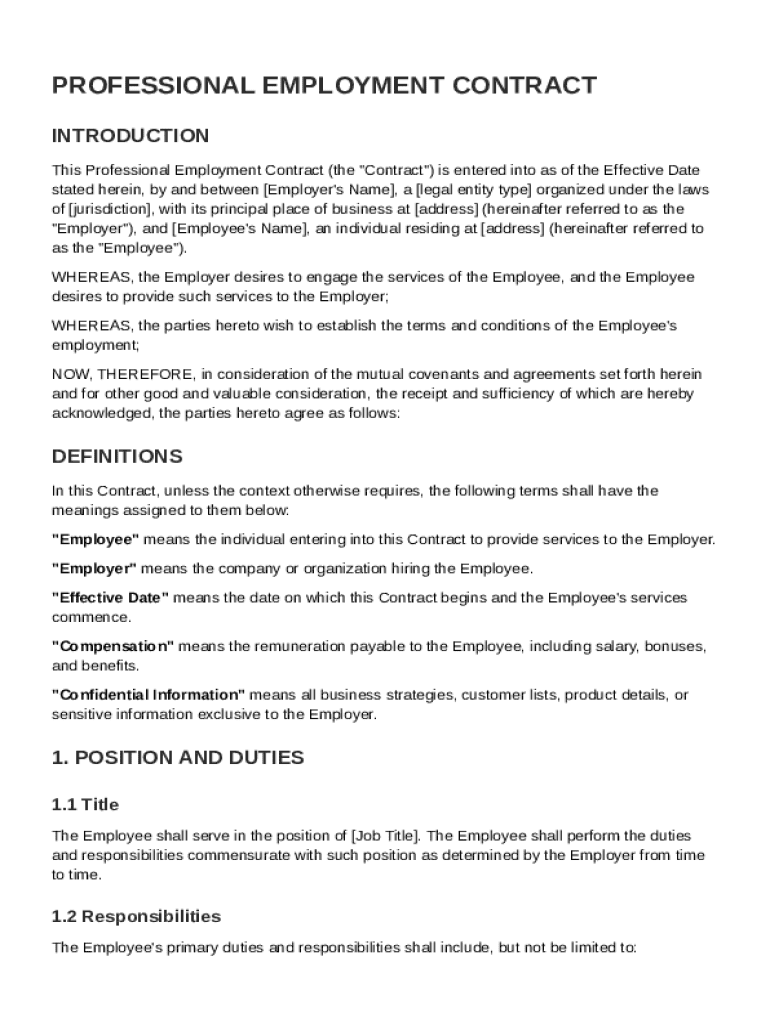
A Professional Employment Contract Template is a standardized document used to outline the terms and conditions of employment between an employer and an employee. It serves as a legal framework that clearly defines the roles, responsibilities, and expectations of both parties. This type of contract is crucial for establishing a mutual understanding and for protecting the rights of both the employer and the employee throughout the employment period. The template typically includes sections such as job position, salary, benefits, confidentiality agreements, and termination conditions. By using a well-structured template, employers can ensure that all necessary legal components are covered, facilitating a smoother employment relationship.
Key Elements of the Professional Employment Contract Template
To effectively safeguard the interests of both parties involved, a Professional Employment Contract Template comprises various essential elements:
- Position and Duties: Clearly delineates the job title, responsibilities, and tasks expected of the employee.
- Compensation and Benefits: Outlines the salary, bonuses, and any additional benefits such as health insurance or retirement plans.
- Confidentiality Obligations: Includes clauses that protect sensitive company information and restrict disclosure to unauthorized parties.
- Non-compete Agreement: Prohibits the employee from engaging in business activities that compete with the employer during and after employment.
- Termination Conditions: Specifies the conditions under which the employment may be terminated by either party, including notice periods and severance terms.
These elements ensure clarity and prevent potential disputes, fostering a professional and transparent working relationship.
How to Use the Professional Employment Contract Template
Using the Professional Employment Contract Template effectively involves several strategic steps:
- Customize the Template: Begin by tailoring the template to fit the specific needs of your organization. Ensure that it reflects the company's policies and the specific role being filled.
- Detail Specific Terms: Clearly outline the terms of employment, including job description, work schedule, and salary structure. Be precise and include all relevant details.
- Review Legal Compliance: Consult with legal professionals to verify that the contract complies with current employment laws and regulations to mitigate legal risks.
- Discuss with the Employee: Before finalizing, discuss the contract terms with the prospective employee to ensure mutual understanding and agreement.
- Finalize and Execute: Once both parties agree on the terms, finalize the contract and ensure it is signed and dated by both the employer and the employee, making it legally binding.
Legal Use of the Professional Employment Contract Template
Employers must adhere to several legal considerations when utilizing the Professional Employment Contract Template:
- Compliance with Labor Laws: The contract must comply with federal, state, and local employment laws, such as those concerning minimum wage, overtime, and anti-discrimination.
- Inclusion of Mandatory Clauses: Ensure that mandatory clauses, such as those related to employee rights and employer obligations, are included.
- Modification of Terms: Any modifications to the contract after execution must be documented and signed by both parties to be legally binding.
- Use of Electronic Signatures: Electronic signatures are legally binding under the ESIGN Act, allowing for secure and efficient contract finalization.
These legal considerations help protect both parties and ensure that the contract is enforceable in a court of law.
Important Terms Related to Professional Employment Contract Template
Understanding key terms within the Professional Employment Contract Template is vital for employers and employees:
- Probation Period: A designated time frame at the start of employment during which the employer evaluates the employee's performance.
- Severance Pay: Compensation provided to an employee upon termination of employment under specific conditions.
- At-Will Employment: An employment arrangement where either party can terminate the employment relationship at any time without cause.
- Intellectual Property Rights: Terms concerning the ownership of creations or inventions developed during the course of employment.
These terms provide clarity and set clear expectations, reducing the potential for misunderstandings.
State-Specific Rules for the Professional Employment Contract Template
Employment laws can vary significantly from state to state, impacting the content of a Professional Employment Contract Template:
- Minimum Wage Laws: Each state sets its own minimum wage, which must be adhered to within the contract.
- Right-to-Work Laws: States have varying rules about whether employees can be required to join a union.
- Non-Compete and Non-Solicitation Clauses: The enforceability of these clauses varies across states, with some having restrictions or outright bans.
For employers in the United States, it is essential to tailor contracts to comply with state-specific regulations to ensure legality and enforceability.
Examples of Using the Professional Employment Contract Template
Practical scenarios demonstrate how the Professional Employment Contract Template can be utilized:
- Startup Companies: New businesses can use templates to quickly establish employment terms with growing teams while ensuring legal coverage.
- Corporate Restructuring: During company restructuring, updated contracts can clarify new roles, responsibilities, and pay scales for affected employees.
- Remote Work Arrangements: Contracts can set expectations and conditions specific to remote work, such as technology use and communication protocols.
These examples highlight the versatility and importance of using a comprehensive employment contract template in diverse business situations.
Steps to Complete the Professional Employment Contract Template
Completing a Professional Employment Contract Template involves several clear steps:
- Gather Necessary Information: Collect all relevant details about the employer, employee, and job role.
- Fill in the Template: Enter the specific terms of employment, customizing sections as needed.
- Consult with a Legal Advisor: Ensure all legal requirements are met and the contract language is clear.
- Review with the Employee: Conduct a thorough review of the contract with the employee, addressing any questions or concerns.
- Finalize and Sign: After agreement, both parties should sign the contract to formalize the employment relationship.
These steps ensure that the contract is completed accurately, legally sound, and mutually accepted.