Definition and Meaning
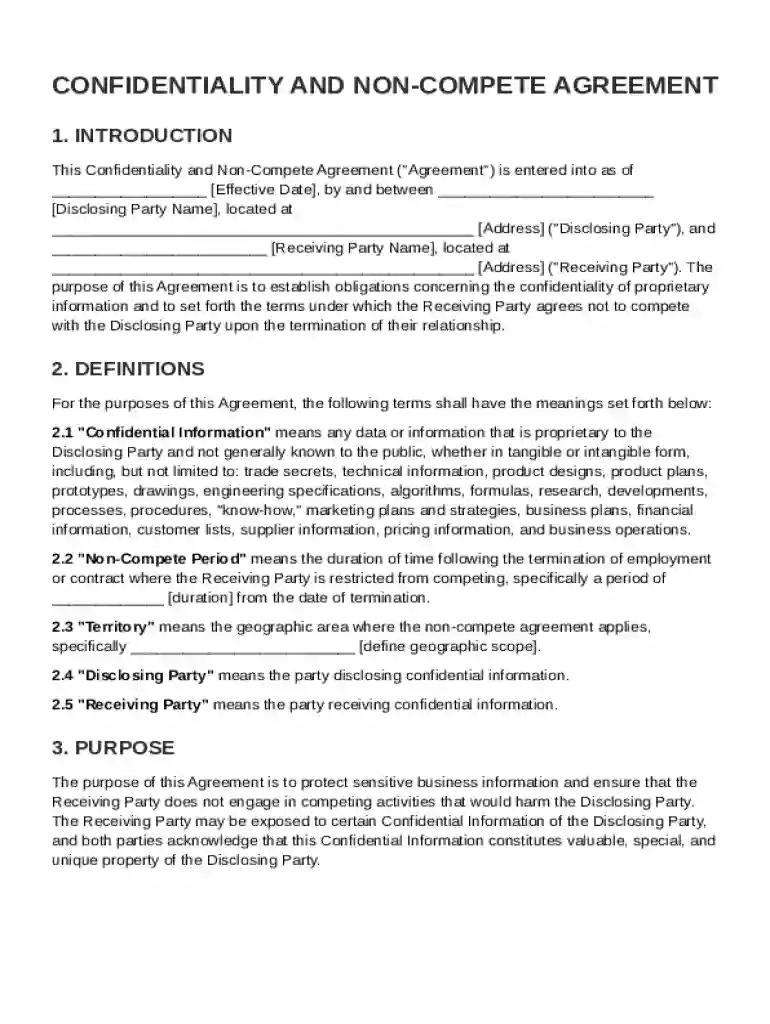
A Confidentiality and Non-Compete Agreement is a legal document used to protect proprietary information shared between parties and to restrict competition within specified boundaries. The agreement outlines the obligations of the receiving party (typically an employee, contractor, or business partner) to maintain the confidentiality of the disclosing party's business information. It includes definitions of what constitutes confidential information and sets the terms under which this information can be used or disclosed. Beyond confidentiality, it specifies conditions under which the receiving party is restricted from competing with the disclosing party.
Key Components of Confidentiality
- Proprietary Information: This section details what information is considered proprietary, including trade secrets, financial data, client lists, and any other sensitive business material.
- Confidentiality Obligations: The receiving party's duty not to disclose certain information to unauthorized individuals or entities is outlined here.
- Exceptions: Circumstances under which information may be disclosed, such as legal obligations or information that becomes publicly available through no fault of the receiving party.
Non-Compete Clause
- Duration and Geographic Scope: Specifies how long the receiving party must refrain from entering into competition and the geographical area covered by the restriction.
- Compensatory Elements: May include compensation provided to the receiving party in consideration of their agreement to the non-compete terms, which can enhance the agreement's enforceability.
Key Elements of the Confidentiality and Non-Compete Agreement Template
This agreement includes several critical sections to ensure the protection of business interests and compliance with legal standards.
Obligations and Restrictions
- Non-Disclosure Obligations: Clear stipulations about what information must remain undisclosed even after the termination of the contract.
- Non-Solicitation Provisions: Prevent the receiving party from enticing or soliciting employees or clients away from the disclosing party.
Legal Recourse
- Remedies for Breach: Outlines potential legal actions and remedies available to the disclosing party if the agreement is violated, including injunctive relief or damages.
- Governing Law: Specifies which state's laws will govern the agreement, often reflecting where the business is based or the location of the receiving party.
How to Use the Confidentiality and Non-Compete Agreement Template
Using this template effectively involves several steps to customize it to fit specific needs.
Preparation and Customization
- Identify Needs: Determine the scope of information needing protection and the level of competition that is a concern.
- Template Adaptation: Adjust the template to reflect specific details such as the duration, geographic scope, and any unique business requirements.
- Review and Revise: Enlist legal counsel to review and ensure the agreement meets jurisdictional requirements and business goals.
Steps to Complete the Confidentiality and Non-Compete Agreement Template
Completing the agreement involves strategic preparatory steps.
Detailed Completion Process
- Gather Information: Collect all necessary data about the parties involved and the proprietary information that needs protection.
- Drafting: Fill in the template with precise details regarding the duration, obligations, and any compensation involved.
- Review: Have stakeholders review the drafted agreement to ensure understanding and mutual consent.
Execution
- Signatures: Ensure both parties sign the agreement, with provisions for notorial execution if required.
- Storage: Store the signed agreement securely, making it accessible for reference in case of future disputes.
Common Use Cases
- Businesses Hiring Employees: Companies use this to protect trade secrets when hiring new employees or terminating current ones.
- Partnerships and Joint Ventures: Partners entering into strategic collaborations use these agreements to protect shared business interests.
- Consultants and Contractors: Firms often require service providers to sign confidentiality agreements to safeguard sensitive project information.
Legal Use of the Confidentiality and Non-Compete Agreement Template
Understanding the legal implications is key to effective deployment.
Enforcement and Limitations
- Enforceability: These agreements must comply with state laws, which can vary significantly, particularly concerning non-compete clauses.
- Limitations: Courts may limit overly broad non-compete clauses, demanding reasonableness in duration and geographical reach to uphold enforceability.
State-Specific Rules for the Confidentiality and Non-Compete Agreement Template
Variations by State
Different states have distinct rules governing the enforceability of non-compete agreements.
- California: Generally prohibits non-compete clauses, making confidentiality agreements more critical.
- Florida: Recognizes and enforces non-compete clauses if they are reasonable in time, area, and line of business.
Examples of Using the Confidentiality and Non-Compete Agreement Template
Real-world instances can provide context for the application of this template.
Case Studies
- Tech Startups: Use these agreements to maintain competitive advantage by protecting algorithms and software development processes.
- Healthcare Firms: Protect patient lists and operational methodologies by mandating confidentiality among medical staff and consulting professionals.
By understanding the nuances of a Confidentiality and Non-Compete Agreement, businesses can better protect their interests and ensure compliance with legal standards relevant to their operations.