
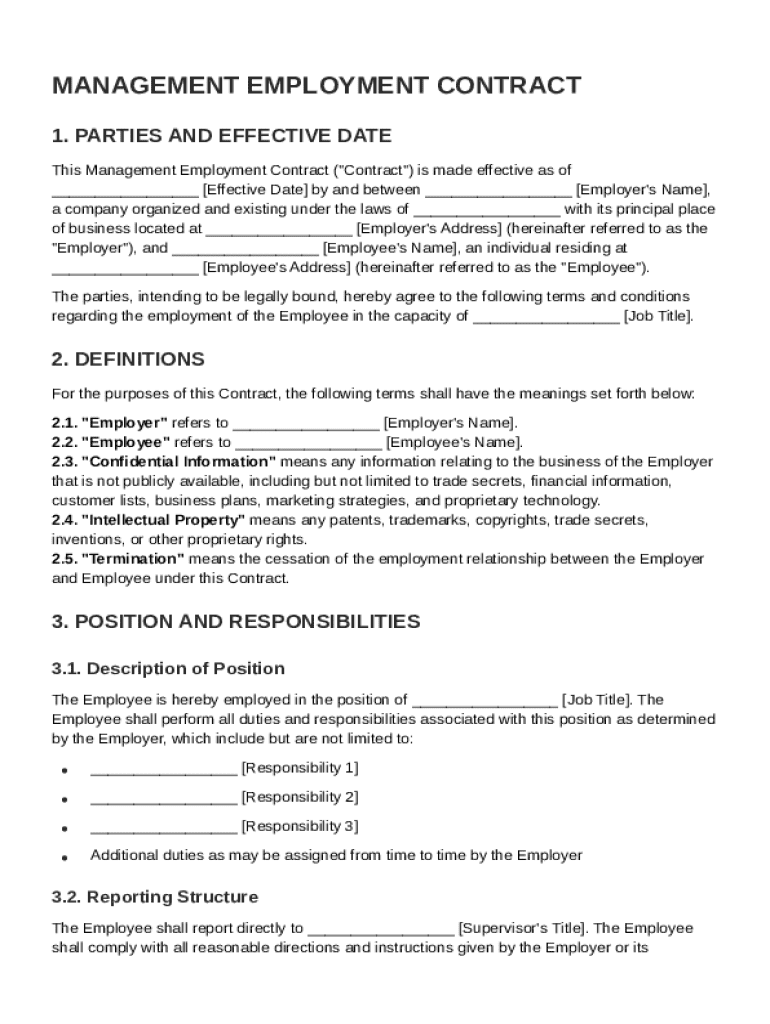







Definition & Meaning
A Management Employment Contract Template is a structured document that outlines the terms and conditions of employment between an employer and a managerial employee. This template serves as a foundational tool for defining key aspects of the employment relationship, including responsibilities, compensation, and legal obligations. A well-organized management contract typically contains precise definitions of involved parties, the scope of work, compensation details, and various clauses such as non-compete agreements and termination protocols. The utility of a management employment contract lies in its capacity to establish mutual understanding and set clear expectations, ensuring both legal compliance and operational clarity.
Key Elements of the Management Employment Contract Template
The Management Employment Contract Template encompasses several critical elements essential for delineating the employment terms effectively. These key components include:
- Parties Involved: Clearly defined sections identify the employer and employee, including their legal names and respective roles within the organization.
- Job Responsibilities: Descriptions of the duties and expectations associated with the managerial role, ensuring alignment between employer and employee.
- Compensation and Benefits: Detailed information regarding salary, bonuses, benefits, and any performance-based incentives, providing transparency and mutual understanding.
- Confidentiality Obligations: Clauses that safeguard sensitive company information through confidentiality agreements, protecting intellectual property and trade secrets.
- Non-Compete & Non-Solicitation Clauses: Terms that prevent employees from engaging in competitive activities or soliciting company clients post-employment.
- Termination Conditions: Specifies the grounds for termination, notice periods, and potential severance arrangements, detailing the exit process for both parties.
- Dispute Resolution: Outlines the mechanisms for resolving conflicts, typically favoring mediation or arbitration to minimize litigation risks.
How to Use the Management Employment Contract Template
To effectively utilize the Management Employment Contract Template, follow these steps:
-
Review the Template: Begin by examining the entire template to understand its structure and components. Familiarize yourself with each section to know what information is required.
-
Customize for Specific Roles: Tailor the template to reflect the specific managerial position being covered. Modify the job responsibilities, compensation, and any role-specific requirements.
-
Consult with Legal Experts: Engage a legal professional to review the template, ensuring all terms align with federal and state laws. This step helps safeguard against legal liabilities.
-
Discuss with Candidate: Present the draft contract to the prospective employee, allowing them to review and negotiate terms. Encourage open dialogue to address any concerns.
-
Finalize the Contract: Incorporate any agreed-upon modifications and obtain signatures from both parties. Ensure all conditions are clearly documented and accessible to involved parties.
Steps to Complete the Management Employment Contract Template
Completing the Management Employment Contract Template involves a systematic approach to ensure accuracy and completeness:
-
Gather Required Information: Collect all necessary details about the employer, employee, and job role. This includes legal names, job titles, and salary figures.
-
Fill Out Each Section: Methodically complete each part of the template, inserting specific information where required. Pay particular attention to legal terms and conditions.
-
Clarify Terms and Conditions: Define ambiguous terms and outline specific conditions related to the role, ensuring clarity for both parties.
-
Review the Document Thoroughly: Double-check entries for accuracy and consistency. Verify that all critical sections, like compensation and benefits, align with organizational policies.
-
Get Legal Approval: Submit the completed contract to a legal advisor for review and approval, ensuring compliance with applicable laws.
-
Final Signatures: Once approved, obtain signatures from the employer and employee, formalizing the contract's terms.
Legal Use of the Management Employment Contract Template
The legal use of a Management Employment Contract Template hinges on adherence to applicable employment laws and regulatory standards. Legal considerations include:
- Compliance with Labor Laws: Ensure the template aligns with state and federal employment laws, such as wage standards and anti-discrimination statutes.
- Inclusion of Mandatory Clauses: Incorporate legally required provisions, like dispute resolution mechanisms and necessary disclosures.
- Confidentiality and Non-Disparagement Clauses: Include appropriate clauses to protect business interests, safeguarding proprietary information and enterprise reputation.
Consulting with an employment attorney can further guarantee that the contract is legally sound and capable of withstanding potential disputes.
State-Specific Rules for the Management Employment Contract Template
Employment laws can vary significantly from state to state, affecting the application of a Management Employment Contract Template. Key considerations include:
- Employment At-Will Provisions: Some states uphold "at-will" employment, permitting termination without cause. Ensure the contract reflects the applicable state doctrine.
- Non-Compete Enforceability: States differ in their stance on non-compete agreements. Tailor clauses to comply with local laws to avoid invalidation.
- Minimum Wage and Benefits Regulations: State-specific guidelines may dictate minimum benefits standards. Confirm compensation and benefits packages meet regional requirements.
Regularly reviewing state laws helps maintain the template's relevancy and effectiveness, ensuring continued legal compliance.
Who Typically Uses the Management Employment Contract Template
This template is predominantly used by businesses and organizations seeking to formalize managerial roles. Typical users include:
- Human Resource Departments: HR professionals orchestrate the drafting and implementation of employment contracts, ensuring alignment with company policies.
- Business Owners: Entrepreneurs and executives utilize these templates to secure skilled management talent and establish clear role expectations.
- Legal Counsel: Attorneys and legal teams draft and review contractual terms to fortify employment agreements legally.
Understanding the various stakeholders involved in using the Management Employment Contract Template helps enhance its application and relevance.


Examples of Using the Management Employment Contract Template
Practical scenarios where a Management Employment Contract Template is employed:
- New Manager Onboarding: When an organization hires a new department head, the template provides a clear framework for employment terms, streamlining the onboarding process.
- Contract Renegotiation: Used to update terms for existing managers, addressing revised responsibilities or compensation packages due to company growth or restructuring.
- Mergers and Acquisitions: During business acquisitions, these templates standardize contractual terms for retaining or integrating managerial talent from acquired entities.
Concrete examples highlight the template's versatility and essential role in diverse employment scenarios, assisting businesses in maintaining structured managerial employment practices.




