






Definition and Meaning
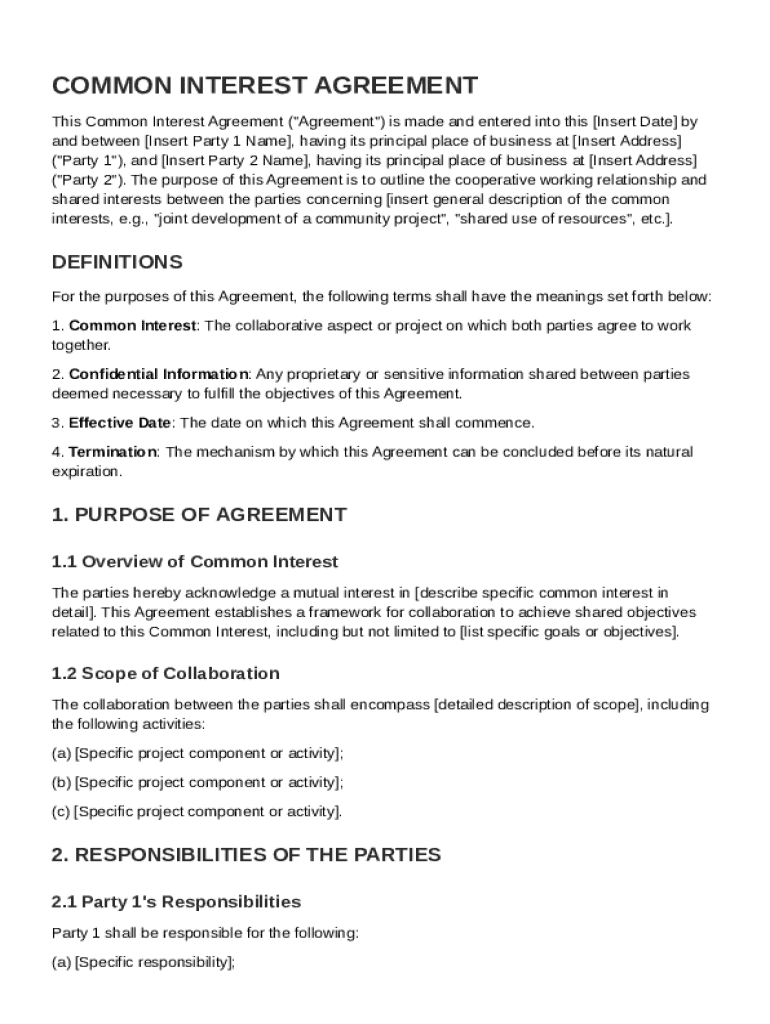
The Common Interest Agreement is a legal framework designed to facilitate collaboration between two or more parties sharing mutual interests. It delineates the terms under which the parties agree to cooperate on specific projects or objectives. Core components include shared responsibilities, financial arrangements, confidentiality obligations, intellectual property rights, and mechanisms for dispute resolution. By establishing clear guidelines, this agreement aims to safeguard the interests of all parties involved, ensuring a smooth collaborative experience.
Key Elements of the Common Interest Agreement Template
A comprehensive Common Interest Agreement Template typically includes several critical elements:
- Identifying Information: Includes names and addresses of all parties involved.
- Purpose and Scope: Defines the objectives of the collaboration and the scope of the agreement.
- Confidentiality Clauses: Outlines measures to protect sensitive information shared between parties.
- Financial Arrangements: Details how costs and profits are to be shared.
- Intellectual Property Rights: Specifies ownership rights over joint and individual contributions.
- Dispute Resolution: Provides methods for resolving disagreements to avoid potential conflicts.
- Termination Provisions: Describes conditions under which the agreement can be terminated.
How to Use the Common Interest Agreement Template
Utilizing the Common Interest Agreement Template is a practical process that ensures clarity and mutual understanding:
- Review the Template: Familiarize yourself with the template structure and sections.
- Customize Content: Modify elements to reflect the specific needs and conditions of your collaboration, such as project goals and party responsibilities.
- Consult Legal Experts: Seek guidance from legal professionals to ensure compliance with local laws and address any complex legal terms.
- Finalize and Sign: Once all parties agree on the terms, sign the document to formalize the agreement.
Steps to Complete the Common Interest Agreement Template
To effectively complete the template, follow these steps:
- Information Gathering: Collect detailed information about all participating parties and the nature of the collaboration.
- Define Terms: Clearly articulate the objectives, roles, and responsibilities of all parties involved.
- Draft Clauses: Include specific clauses that protect each party's interests, such as confidentiality and intellectual property rights.
- Review and Revise: Thoroughly review the template for accuracy and completeness. Make necessary revisions to address any oversights.
- Obtain Signatures: Secure signatures from all parties involved to validate and enforce the agreement.
Legal Use of the Common Interest Agreement Template
The legal validity of a Common Interest Agreement depends on its adherence to jurisdictional norms and regulations:
- Compliance with Laws: Ensure the agreement complies with federal, state, and local laws where the agreement is executed.
- Inclusion of Necessary Clauses: Ensure all legally required clauses are included and properly phrased.
- Execution Requirements: Follow statutory requirements for execution, such as notarization or witness signatures, if applicable.
Who Typically Uses the Common Interest Agreement Template
This template serves various entities and individuals seeking to align goals for mutual benefit:
- Business Partners: Corporations and small businesses collaborating on joint ventures.
- Research Institutions: Universities and laboratories working together on research projects.
- Government and NGOs: Public agencies and non-profits cooperating to address community issues.
- Technology Firms: Companies developing shared technologies or platforms.


Important Terms Related to Common Interest Agreement Template
Understanding key legal terms within the agreement is crucial for effective implementation:
- Confidentiality: The obligation to maintain the secrecy of proprietary information.
- Indemnification: Protection against loss or damages claimed by third parties.
- Force Majeure: Conditions that relieve parties from obligations due to unforeseeable events.
- Jurisdiction: The legal authority under which the agreement is governed and disputes are resolved.
Examples of Using the Common Interest Agreement Template
Real-world applications of the Common Interest Agreement Template illustrate its effectiveness:
- Joint Research Projects: Universities creating joint initiatives to explore new scientific fields.
- Technology Development: Tech companies pooling resources to develop innovative software solutions.
- Public-Private Partnerships: Governments and private companies collaborating on infrastructure projects.
Providing structure and legal clarity, the Common Interest Agreement Template serves as a vital tool for fostering successful cooperative efforts across various sectors.