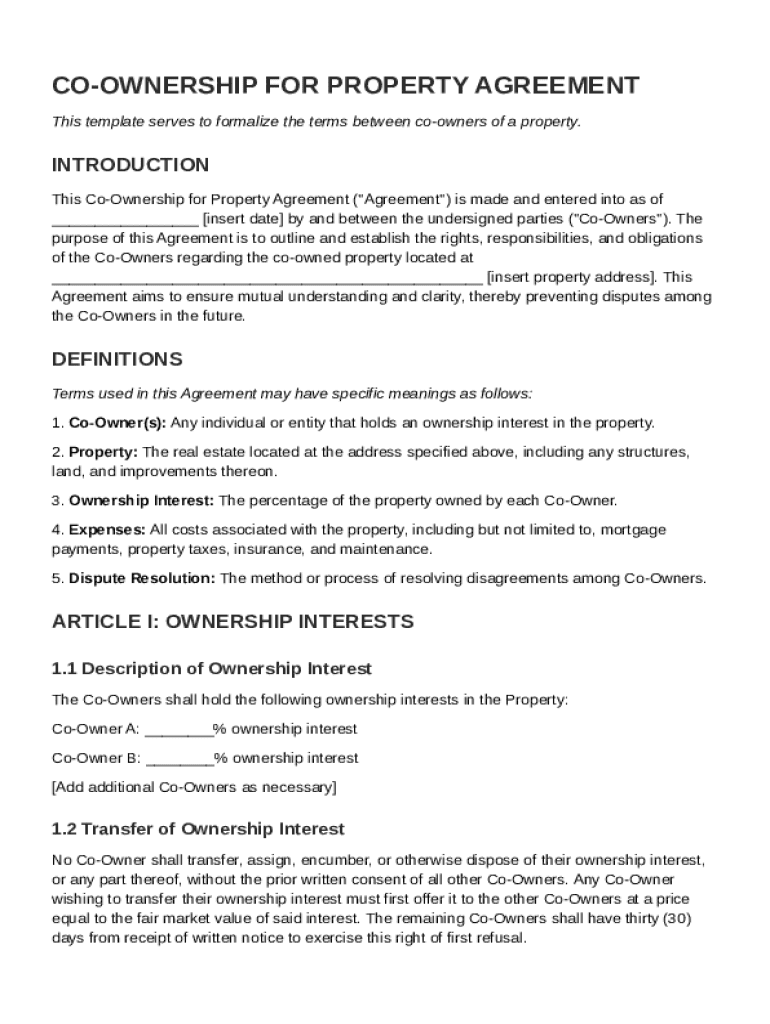







Definition & Meaning
A Co-Ownership for Property Agreement is a legal document designed to outline the rights, responsibilities, and obligations of individuals who jointly own a property. It typically includes a comprehensive set of terms that co-owners must adhere to, ensuring mutual understanding and cooperation. This agreement covers aspects like ownership shares, financial contributions, maintenance responsibilities, and procedures for selling or transferring ownership. By providing a structured framework, it helps prevent disputes and ensures that all parties are clear about their roles and expectations.
Key Elements of the Co-Ownership for Property Agreement Template
The template for a Co-Ownership for Property Agreement generally includes several essential components to ensure clarity and fairness among the co-owners. These elements include:
- Ownership Shares: Specifies the proportion of ownership each party holds, which could be equal or based on individual contributions to the purchase price.
- Financial Responsibilities: Details the financial obligations of each owner, such as mortgage payments, property taxes, insurance, and ongoing maintenance costs.
- Property Management: Outlines how decisions regarding the management and upkeep of the property will be made, including choosing a property manager if necessary.
- Use and Occupancy: Defines how the property can be used and by whom, addressing issues like primary residence, rental arrangements, or vacation usage.
- Sale or Transfer Procedures: Provides guidelines for selling or transferring ownership shares, including the process for valuing the property and offering first right of refusal to other co-owners.
- Dispute Resolution: Establishes a method for resolving conflicts, such as mediation or arbitration, to avoid lengthy legal proceedings.
How to Use the Co-Ownership for Property Agreement Template
Using the Co-Ownership for Property Agreement Template involves several steps to ensure all necessary provisions are addressed:
- Download the Template: Access the template from a reliable source, ensuring it includes all essential sections pertinent to co-ownership.
- Customize the Document: Tailor the template to reflect the unique circumstances and agreements among the co-owners, modifying sections as needed.
- Review Legal Terms: Carefully review any legal language to ensure it aligns with your intentions and complies with local laws.
- Consult with Legal Professionals: Before finalizing, have a legal expert review the document to ensure it is legally sound and enforceable.
- Sign the Agreement: Once all parties are in agreement, sign the document formally, making it legally binding.
Practical Tips:
- Ensure all parties fully understand each section of the agreement.
- Consider future scenarios to preemptively address potential conflicts.
- Regularly review the agreement to ensure it remains relevant and up-to-date.
Steps to Complete the Co-Ownership for Property Agreement Template
Completing the Co-Ownership for Property Agreement Template involves a structured process:
- Identify Co-Owners: Clearly list all parties involved in the property ownership.
- Define Ownership Percentages: Agree on and document the percentage of ownership each party will hold.
- Outline Financial Contributions: Specify the financial commitments from each owner, including initial investments and ongoing expenses.
- Detail Roles and Responsibilities: Assign specific roles, such as maintenance duties or decision-making authority, to each co-owner.
- Draft Dispute Resolution Procedures: Create a plan for resolving disagreements, indicating preferred methods like mediation.
- Review and Revise: Thoroughly go over the agreement to ensure accuracy and fairness before seeking legal advice.
- Finalize the Document: After reviewing, have each party sign the agreement, making it legally enforceable.
Important Terms Related to Co-Ownership for Property Agreement Template
Understanding the key terms often used in a Co-Ownership for Property Agreement is crucial for clarity:
- Tenancy in Common: A form of co-ownership where each party owns a separate share of the property, which can be unequal.
- Joint Tenancy: A type of co-ownership giving parties equal shares with rights of survivorship.
- Right of Survivorship: A provision where the surviving co-owner automatically absorbs a deceased owner’s share.
- Maintenance Costs: Ongoing expenses related to the upkeep of the property.
- First Right of Refusal: A contractual right for existing co-owners to purchase additional shares before they are offered to third parties.
State-Specific Rules for the Co-Ownership for Property Agreement Template
The legal framework for property co-ownership can vary significantly across different states. Key state-specific rules include:
- Property Taxes: Different states may have varying regulations on how property taxes are assessed and divided among co-owners.
- Recording Requirements: Some states require co-ownership agreements to be filed with local land records offices to be enforceable.
- Homestead Exemptions: Certain states offer exemptions that affect property taxes and ownership rights.
- Eviction and Foreclosure Laws: Regulations around the eviction of a co-owner or the foreclosure process can differ among states, impacting co-ownership dynamics.
It is essential to consult local legal guidelines to ensure the agreement is compliant with state laws.
Examples of Using the Co-Ownership for Property Agreement Template
Real-world examples illustrate the practical applications of a Co-Ownership for Property Agreement:
- Family Co-Ownership: Siblings may use this agreement to jointly purchase and manage a family vacation home, defining who handles bookings, maintenance, and financial management.
- Investment Partnerships: Two or more investors could use the agreement to share ownership of rental properties, outlining responsibilities for property management, tenant relations, and income distribution.
- Friends Sharing a Condo: Friends deciding to share the costs and benefits of owning a condo can use this template to establish clear boundaries and shared responsibilities.
Legal Use of the Co-Ownership for Property Agreement Template
The legal use of this template ensures co-ownership arrangements are recognized and enforceable by law:
- Validity: Ensure all parties sign the agreement in the presence of a witness or notary, as required by state law.
- Compliance: The agreement must comply with relevant real estate laws and co-ownership regulations in the jurisdiction where the property is located.
- Documentation: Properly document all aspects of the agreement, including amendments, to maintain a clear legal record.
By adhering to these legal guidelines, co-owners can ensure their agreement is both fair and lawful.