






Definition & Meaning
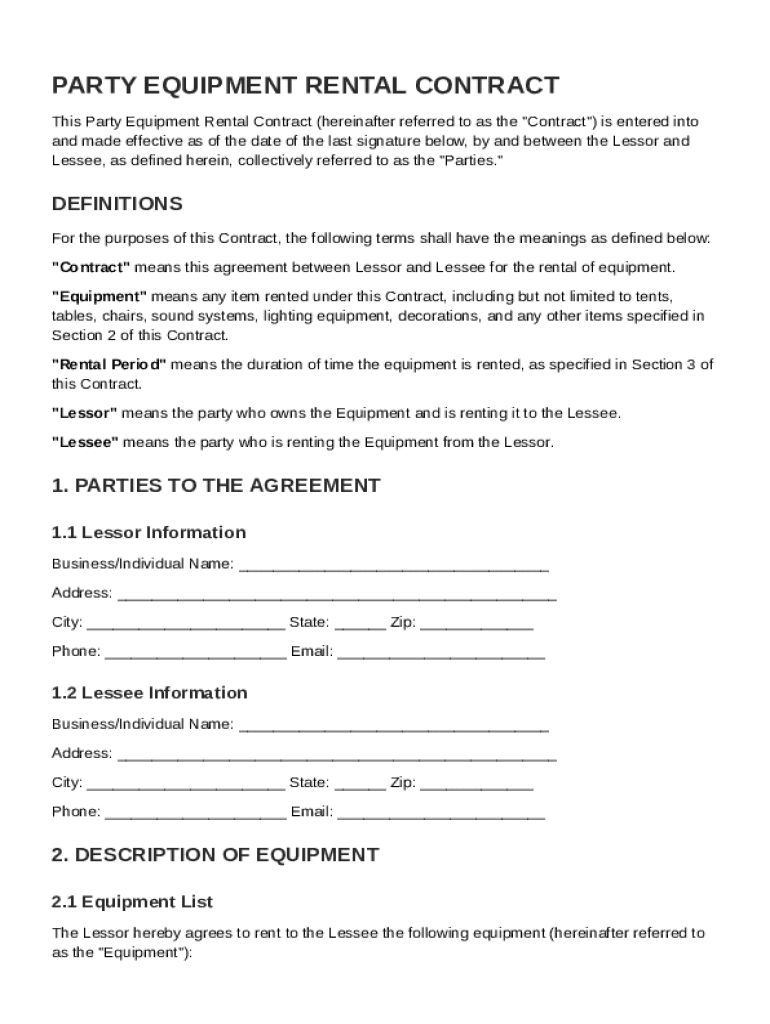
The Party Equipment Rental Contract is a legal document establishing the terms between a lessor (owner) and a lessee (renter) for renting party equipment. It governs the rental period, payment obligations, and responsibilities of each party concerning the equipment's care, usage, and return. This contract outlines all pertinent terms, including cancellation policies, insurance requirements, and dispute resolution mechanisms. It serves as a protection for both the owner and the renter by setting clear expectations and responsibilities.
How to Use the Party Equipment Rental Contract Template
-
Download or Access Online: Retrieve the template from a document management platform such as DocHub. This provides options for editing and customizing the blank contract.
-
Edit and Customize: Input specific details relevant to your rental agreement, including equipment type, rental duration, and payment terms.
-
Specify Terms: Clearly define the conditions under which the equipment is rented, including usage instructions and return conditions.
-
Review and Share: Ensure all contractual details are accurate before sharing the document with the lessee. Make modifications as needed based on feedback.
-
Get Signatures: Use an electronic signature platform to collect signatures from all parties involved. This ensures the contract is legally binding.
Steps to Complete the Party Equipment Rental Contract Template
-
Input Parties' Information:
- Full names and contact details of the lessor and lessee.
-
Describe Equipment:
- Detailed listing of all party equipment being rented. Include any specific attributes or conditions.
-
Set Rental Terms:
- Define the rental start and end dates, payment schedule, and any additional fees or deposits required.
-
Outline Responsibilities:
- Specify care instructions and conditions for the equipment return.
-
Include Legal Clauses:
- Incorporate legal language covering liability, indemnification, and termination rights.
-
Add Signatures:
- Ensure all parties sign the contract electronically or physically as per the chosen method.
Key Elements of the Party Equipment Rental Contract Template
- Rental Agreement Details: Core information about the duration and scope of the rental.
- Payment Terms: Clearly outlined costs, due dates, and penalties for late payments.
- Liability and Insurance: Specifications on who assumes risk and proof of insurance where applicable.
- Cancellation Policy: Conditions under which cancellation is allowed and any associated fees.
- Governing Law: Jurisdiction applicable to the contract, often the location of the lessor.
Who Typically Uses the Party Equipment Rental Contract Template
- Event Planners: To ensure smooth rental processes for events such as weddings, corporate functions, or festivals.
- Small Businesses: Party rental companies providing equipment on a short-term basis.
- Individual Customers: Private parties who require equipment for personal celebrations, such as birthdays or anniversaries.


Legal Use of the Party Equipment Rental Contract Template
This template is legally recognized under U.S. contract law and provides a lawful framework for both parties. The contract should comply with state-specific requirements, which may include details on licensing, insurance, and safety regulations. It is advisable to review the template with a legal professional to ensure all local legal requirements are met, particularly if modifications are made to the template text.
State-Specific Rules for the Party Equipment Rental Contract Template
-
Rental Laws: States may have unique laws regarding equipment rental, influencing contract terms like repossession rights and liability waivers.
-
Taxes and Fees: Varying state regulations can impose specific taxes or fees on rental services.
-
Insurance Requirements: Some states may mandate liability insurance coverage for equipment rentals.
Digital vs. Paper Version
The availability of both digital and paper versions of the Party Equipment Rental Contract Template allows for flexibility in execution. The digital version enables electronic editing and signing, often benefiting those who prefer streamlined online processes. Conversely, a paper version may be more suitable for parties who value traditional hardcopy documents or operate in settings where digital access is limited.