






Definition and Purpose of the Weekly Rental Agreement Template
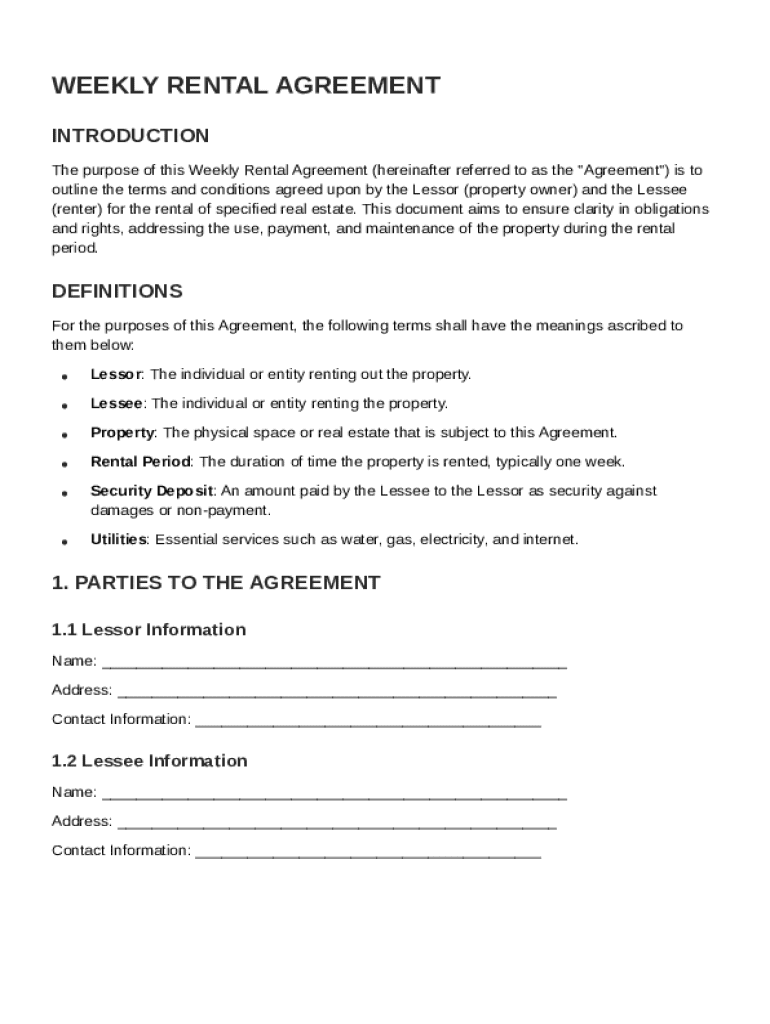
A Weekly Rental Agreement Template is a structured document that outlines the terms and conditions between a landlord (lessor) and a tenant (lessee) for the rental of a property on a weekly basis. The template serves to standardize and simplify the contract formation process, ensuring both parties have a clear understanding of their rights and responsibilities. It is particularly useful for short-term or vacation rentals, allowing both parties to have clarity without the commitment of a long-term lease.
Components of the Agreement
- Definitions of Terms: Clarifies specific terms used within the agreement, such as "Lessor," "Lessee," "Property," and "Rental Period."
- Parties Involved: Identifies both the landlord and tenant with full names and contact details.
- Property Description: Provides details about the rental unit, including address and descriptions of the dwelling's features.
- Rental Terms: Specifies the agreed rental rate, due dates for payment, and the accepted payment methods.
How to Use the Weekly Rental Agreement Template
The Weekly Rental Agreement Template provides a convenient framework for setting up rental arrangements efficiently. It can be edited and customized to suit the specific needs of both the landlord and the tenant.
Steps for Utilization
- Select and Download the Template: Choose a template that matches your requirements and save it to your device.
- Customize the Content: Adjust the text fields, insert relevant data such as party names and property information, and personalize any additional clauses.
- Review the Agreement: Both parties should thoroughly review the terms to ensure mutual understanding and agreement.
- Sign the Document: Both landlord and tenant affix their signatures, either electronically or manually, to make the agreement binding.
Legal Use of the Weekly Rental Agreement Template
As an essential tool for setting legal boundaries, the Weekly Rental Agreement Template provides a written record of agreed terms, which can be crucial in legal disputes or misunderstandings.
Key Legal Aspects
- Enforceability: The template adheres to applicable rental laws and ensures that agreements are legally binding.
- Dispute Resolution: Includes clauses for resolving potential disputes, helping avoid court proceedings with mediation steps.
- Compliance with Local Laws: It ensures compliance with state-specific landlord-tenant regulations, minimizing risks of legal conflicts.
Key Elements of the Weekly Rental Agreement Template
The Weekly Rental Agreement Template consists of several critical sections that must be completed to fulfill its purpose effectively.
Critical Sections
- Duration of Tenancy: Clearly states the start and end dates of the weekly rental period.
- Security Deposit: Details any security deposit required, its purpose, and conditions for return.
- Cancellation Policy: Specifies terms under which either party can terminate the agreement and any penalties involved.
- Rights and Obligations: Outlines responsibilities for maintenance, repairs, and general property upkeep for both parties.
State-Specific Rules for the Weekly Rental Agreement Template
Rental laws can vary significantly by state, so it is essential to tailor the agreement according to local regulations. This adaptation ensures that contracts are enforceable and fair.
Considerations per State
- Landlord Disclosure Requirements: Different states have unique requirements regarding disclosures that must be included in rental agreements.
- Rent Control Laws: Some regions have rent control laws that may affect how rent increases can be handled within the agreement.
- Habitability Standards: State-specific rules determine the mandatory conditions for a property to be deemed habitable, impacting landlord responsibilities.
Steps to Complete the Weekly Rental Agreement Template
Completing the Weekly Rental Agreement Template involves several steps that ensure all necessary legal and personal details are accurately recorded.
Detailed Completion Instructions
- Enter Personal Details: Input the full names and contact information of both parties.
- Describe the Property: Include the full address and any relevant details or identifiers of the rental property.
- Set Rental Terms: Fill in weekly rent amounts, due dates, and duration of the agreement.
- Include Specific Clauses: Add any additional terms or specific conditions agreed upon by both parties.
- Review for Errors: Double-check the document for accuracy and completeness before signing.
- Execute the Agreement: Both the landlord and tenant sign the document to make it legally binding.
Important Terms Related to the Weekly Rental Agreement Template
Understanding specific terminology associated with rental agreements is crucial for interpreting and drafting the document correctly.
Essential Terms
- Rent Due Date: The specific day each week when the rent payment is expected.
- Subleasing: A clause that determines whether the tenant can sublet the property and under what conditions.
- Occupancy Limits: Specifies the maximum number of individuals allowed to live on the premises during the rental period.
- Tenant Default: Details the consequences and procedures if a tenant fails to comply with the terms of the agreement.
Examples of Using the Weekly Rental Agreement Template
Practical examples highlight how the Weekly Rental Agreement Template can be applied in real-world contexts, demonstrating its flexibility and utility.
Practical Use Cases
- Vacation Rentals: Ideal for short-term housing arrangements during holiday seasons, allowing property owners to manage frequent turnover efficiently.
- Temporary Work Assignments: Employees on short-term contracts or relocations benefit from the flexibility provided by weekly rentals.
- Student Housing: Suitable for students needing accommodation during specific academic terms, offering a convenient timeframe that aligns with their studies.
By fully exploring each aspect of the Weekly Rental Agreement Template, users can maximize the benefits and ensure compliance and satisfaction for both landlords and tenants.