






Definition & Meaning
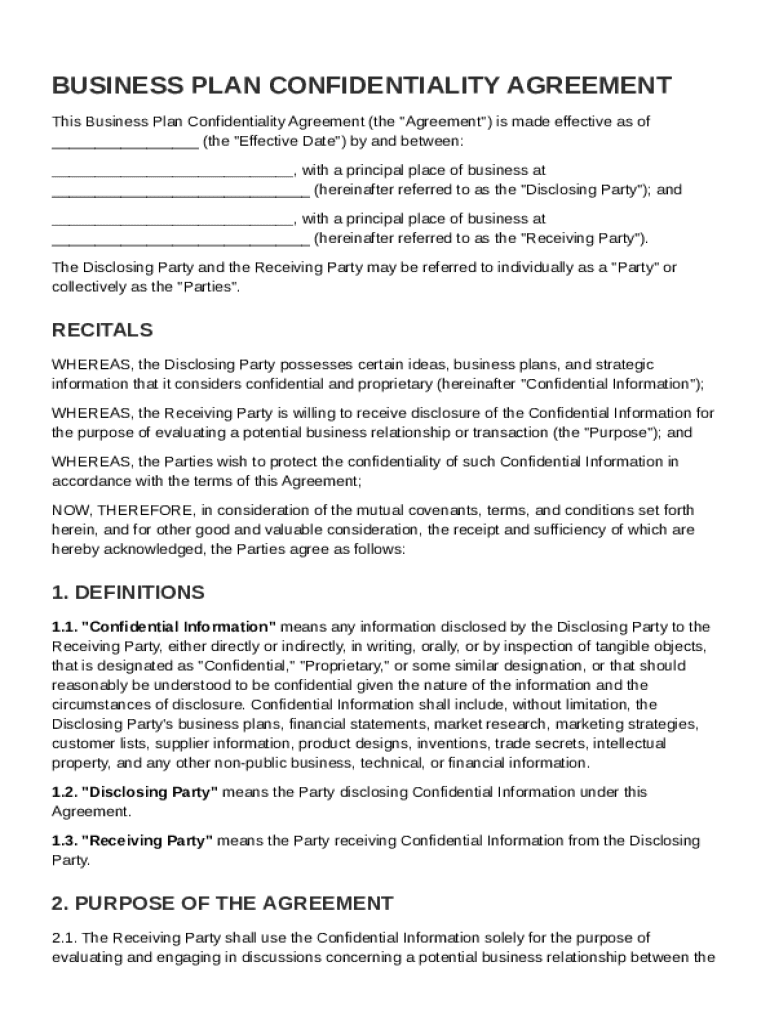
A Business Plan Confidentiality Agreement Template is a document that establishes a formal understanding between two parties — the Disclosing Party and the Receiving Party — regarding the handling of confidential information. This template is primarily used when the Disclosing Party wants to share sensitive business insights with the Receiving Party for purposes such as evaluating a potential partnership or investment. The template helps ensure that all disclosed information is legally protected from unauthorized use or sharing. It delineates what constitutes "Confidential Information," such as business strategies, financial data, and proprietary technologies, and sets norms for its handling.
How to Use the Business Plan Confidentiality Agreement Template
To effectively use a Business Plan Confidentiality Agreement Template, begin by identifying both parties involved. Clearly state the names and contact details of the Disclosing Party and the Receiving Party. Then, specify the exact nature of the confidential information being shared. This clarity will help to avoid any disputes regarding what is covered under the agreement. Next, outline the obligations of the Receiving Party, such as maintaining confidentiality and not using the information for personal gain. It is also essential to define the terms for the duration of the agreement and any conditions under which the confidentiality obligations might be terminated. Lastly, review the completed template with all involved parties to make any necessary amendments before signing.
Key Elements of the Business Plan Confidentiality Agreement Template
- Scope of Confidential Information: Define what constitutes confidential information. This could include financial records, client lists, business strategies, or product designs.
- Obligations of Receiving Party: Outline the duties of the Receiving Party, such as measures they must take to maintain confidentiality and restrictions on information use.
- Duration of Confidentiality: Specify how long the confidentiality terms are in effect, which might extend beyond the tenure of the business relationship.
- Exclusions from Confidentiality: List any types of information not considered confidential, such as publicly available data.
- Return or Destruction of Information: After the agreement ends, detail the procedures for returning or destroying the confidential information.
- Governing Law: Indicate which state’s laws will govern the agreement, which is crucial if disputes arise.
Important Terms Related to the Business Plan Confidentiality Agreement Template
- Non-Disclosure Agreement (NDA): Another term often used interchangeably with confidentiality agreements, emphasizing the non-disclosure aspect.
- Proprietary Information: Information that is unique to the company and gives it a competitive edge.
- Breach of Contract: A failure to meet the terms agreed upon in the confidentiality agreement.
- Intellectual Property (IP): Refers to creations of the mind, like designs or inventions covered under the agreement.
- Signatory: Parties who sign the agreement, thereby agreeing to adhere to its terms.
Steps to Complete the Business Plan Confidentiality Agreement Template
- Prepare the Information: List all relevant details about the parties and the information being disclosed.
- Draft the Agreement: Use the template to write out the terms, clearly articulating each party’s obligations and the extent of their confidentiality.
- Review Legalities: Ensure that the agreement is compliant with state and federal laws and consider having a legal expert review the document.
- Amend if Necessary: Discuss the agreement with the other party and make any necessary changes for clarity or precision.
- Execute the Document: Once finalized, both parties sign and date the document to make it legally binding.
- Store Safely: Keep a copy of the signed agreement in a secure location for future reference.
Examples of Using the Business Plan Confidentiality Agreement Template
- Investor Meetings: When a startup meets with potential investors, the template can protect sensitive business plans and projections.
- Mergers and Acquisitions: Companies involved in merger discussions use the agreement to exchange strategic data securely.
- Vendor Engagements: Businesses often share proprietary methods with vendors under these agreements to ensure competitive processes are protected.
Legal Use of the Business Plan Confidentiality Agreement Template
In the U.S., a Business Plan Confidentiality Agreement Template is enforceable under contract law, provided it adheres to legal standards. Both parties need to consent to the terms voluntarily without any form of coercion. The agreement must clearly indicate what is protected and outline the consequences of any breach. U.S. courts respect these agreements, provided they are reasonable in scope and duration. Note that they cannot override public policy, such as obliging illegal actions or protecting information that should legally be disclosed.
State-Specific Rules for the Business Plan Confidentiality Agreement Template
While confidentiality agreements are fairly standard across the U.S., some states have specific rules:
- California: Known for robust employee rights, California prohibits agreements that restrict an employee’s ability to work elsewhere after leaving a job.
- New York: Requires specific language for agreements involving trade secrets to be enforceable.
- Texas: Enforces agreements only if they contain reasonable limitations on time, geographical area, or scope of activity to be restrained.
These state-specific nuances underscore the importance of tailoring the template to comply with regional laws.