
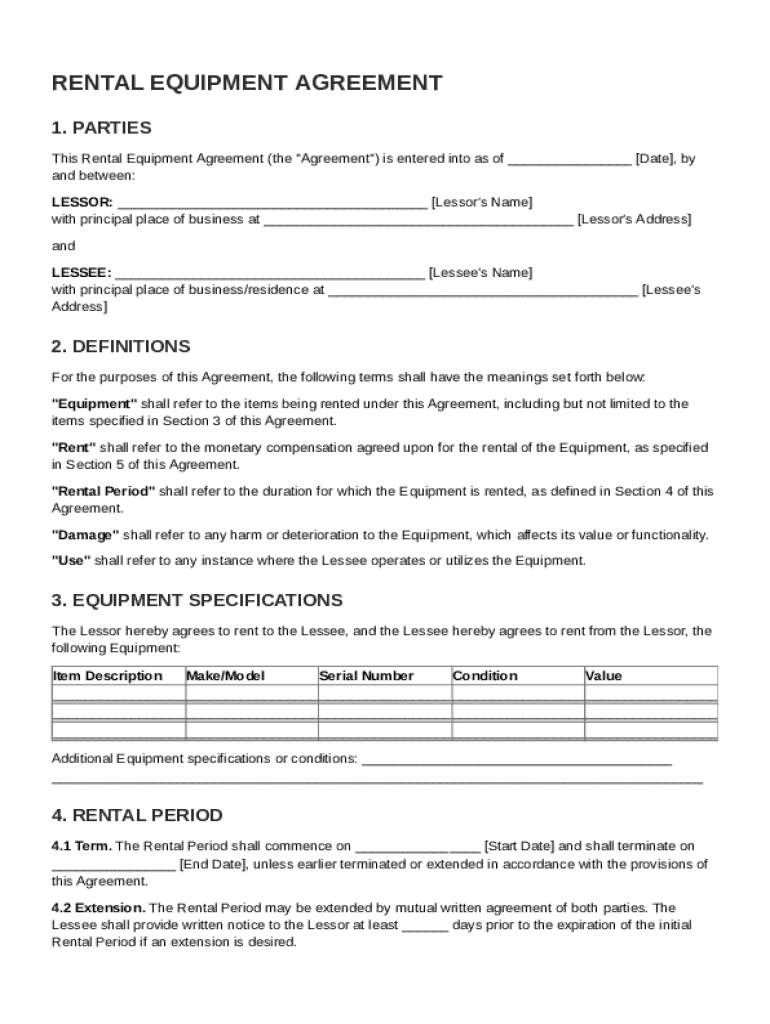







Definition and Meaning
The Rental Equipment Agreement Template is a formal document that outlines the terms and conditions under which equipment is rented from a lessor to a lessee. This agreement serves to define the responsibilities, rights, and obligations of both parties involved in the rental transaction. The template covers important aspects such as rental duration, payment terms, and maintenance responsibilities, ensuring clarity and protection for all parties involved.
Primary Components
- Lessor and Lessee Identification: Names and contact details of both the equipment owner (lessor) and the renter (lessee) are specified.
- Description of Equipment: Detailed identification of the equipment being rented, including any serial numbers, make, model, or other distinguishing characteristics.
Purpose
The main goal of the Rental Equipment Agreement Template is to offer a structured framework for the rental arrangement, ensuring both parties are aware of their duties. This document serves as a preventive measure against potential disputes and provides a legal recourse if terms are violated.
How to Use the Rental Equipment Agreement Template
Utilizing the Rental Equipment Agreement Template is straightforward, offering an efficient way to establish clear rental terms.
Steps for Utilization
- Review and Edit: Begin by carefully reviewing the pre-filled sections of the template and edit to fit the specific equipment and rental terms.
- Input Details: Enter the necessary information regarding the equipment, rental period, and parties involved, ensuring accuracy and completeness.
- Specify Terms: Clearly outline payment terms, including any deposits required, rental fees, and schedule for payments.
Additional Tips
- Customization: Tailor the template by adding clauses specific to unique circumstances, such as special maintenance requirements or use limitations.
- Clarity: Maintain straightforward language to avoid misunderstandings.
Steps to Complete the Rental Equipment Agreement Template
Filling out the Rental Equipment Agreement Template involves several key steps to ensure a comprehensive and legally binding document.
Key Steps
- Identify Parties: Clearly state the names and contact information of both the lessor and lessee.
- Describe Equipment: Provide a clear and thorough description of the equipment, including relevant details like serial numbers or models.
- Set Terms and Conditions: Outline the rental period, payment obligations, and maintenance responsibilities.
- Include Legal Clauses: Add clauses regarding insurance, liability, termination conditions, and dispute resolution.
- Review and Sign: Ensure both parties review the document thoroughly, make any necessary corrections, and provide signatures to signify agreement.
Verification
- Double-Check Details: Confirm that all contact information and equipment details are accurate.
- Witness or Notarization: Consider having an external party witness the signing process for additional legal safeguarding.
Key Elements of the Rental Equipment Agreement Template
A well-drafted Rental Equipment Agreement Template incorporates several critical elements to uphold its intent.
Vital Parts
- Definitions: Establish clear definitions for key terms used throughout the agreement to avoid ambiguity.
- Rental Period: Clearly define the start and end dates of the rental period.
- Payment Terms: Detail rental rates, payment schedules, and penalties for late payment.
- Maintenance and Use: Describes the responsibilities of both lessor and lessee in terms of upkeep and permissible usage.
- Insurance Requirements: Specify any insurance obligations to cover potential damages or losses.
Legal Standard
- Governing Law: State the jurisdictional laws that govern the agreement, often based on the lessor's business location.
- Dispute Resolution: Outline procedures for resolving disagreements, potentially via arbitration or mediation.
Legal Use of the Rental Equipment Agreement Template
The Rental Equipment Agreement Template serves several lawful functions beyond its primary intent of defining rental terms.
Legal Framework
- Contractual Security: Provides a legally enforceable agreement outlining each party's rights and obligations, ensuring accountability.
- Risk Management: By specifying insurance and liability clauses, the agreement mitigates risk for both parties.
Compliance Considerations
- Local Regulations: The template should comply with state-specific regulations or industry standards to maintain validity.
- Formal Requisites: Ensure the document is signed, dated, and potentially notarized to meet legal standards.
Important Terms Related to Rental Equipment Agreement Template
Understanding specific terms within the Rental Equipment Agreement Template is crucial to its effective use.
Key Definitions
- Lessor: The party who owns the equipment and is renting it out.
- Lessee: The party who rents the equipment for a specified duration.
- Indemnity: A clause protecting one party from financial loss or damages due to specific actions or defaults by the other party.
- Lien: A legal right or interest that gives the lessor the ability to reclaim the equipment in case of non-compliance.
Clauses and Covenants
- Confidentiality: Ensures that proprietary information associated with the equipment cannot be disclosed by the lessee.
- Force Majeure: Covers scenarios where unforeseen events prevent the fulfillment of contractual obligations.
Who Typically Uses the Rental Equipment Agreement Template
The Rental Equipment Agreement Template is commonly used across various sectors that involve equipment leasing.


Typical Users
- Construction Companies: Often lease heavy machinery or specialized tools for projects to manage operational costs.
- Event Planners: Use these agreements for renting audiovisual equipment, seating arrangements, or lighting for events.
- Film Production Companies: Rent cameras, lighting, and sound equipment for temporary use in projects.
Business Context
- Small Businesses: Utilize rental agreements to avoid large capital investments in equipment.
- Startups: Select rental agreements to provide flexibility as they scale their operations.
State-Specific Rules for the Rental Equipment Agreement Template
While the Rental Equipment Agreement Template provides a general framework, some state-specific rules must be considered.
Regional Considerations
- Contractual Requirements: Certain states may require additional information or specific disclosures within the agreement.
- Tax Regulations: Rental transactions might be subject to different tax obligations, varying by state.
- Consumer Protection Laws: Some states have specific laws protecting consumer rights related to rental agreements.
Ensuring Compliance
- Legal Counsel: Consult local legal professionals to tailor the template to meet state-specific requirements.
- Regular Updates: Periodically review and update the template to align with changing regulations.




