




Definition and Meaning of the Authorized Reseller Reseller Agreement Template
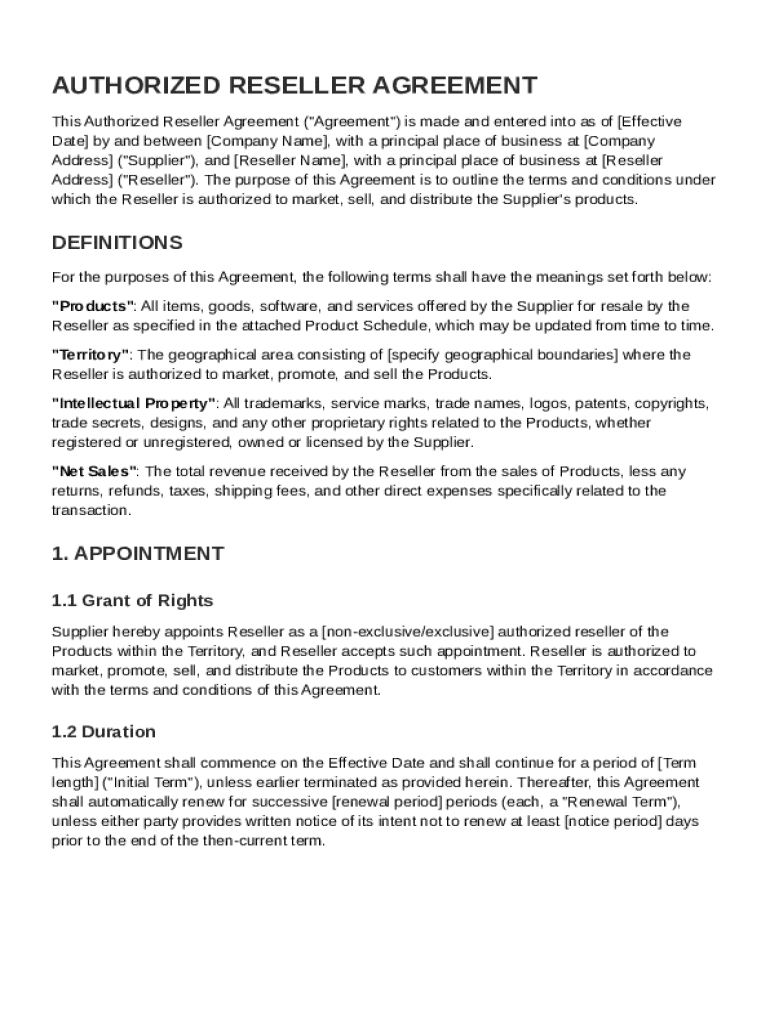
An Authorized Reseller Agreement Template is a legal document that outlines the relationship between a supplier and a reseller. It specifies the terms and conditions under which the reseller can market, sell, and distribute the supplier's products within a specific territory. This agreement also includes definitions of key terms, roles and responsibilities of both parties, pricing structures, and dispute resolution procedures. Its purpose is to foster a collaborative environment while safeguarding the interests of both the supplier and the reseller.
How to Use the Authorized Reseller Reseller Agreement Template
The use of the Authorized Reseller Agreement Template involves several steps to ensure it suits the needs of both parties involved. First, modify the document to reflect the specific terms of your business relationship. This includes customizing sections on product listings, pricing models, and territory allocations. Next, review the agreement in collaboration with legal counsel to ensure compliance with applicable laws. Finally, both parties should formally agree on the terms by signing the document, thus establishing a legally binding contract.
Steps to Complete the Authorized Reseller Reseller Agreement Template
- Identify the Parties Involved: Clearly specify the legal names and contact details of both the supplier and the reseller.
- Define Product Offerings: List out the products or services to be sold, including any restrictions or exclusivity clauses.
- Set Pricing and Payment Terms: Outline the agreed-upon pricing structures, payment schedules, and financial obligations.
- Establish Territory and Market: Clearly define the geographical areas and market segments where the reseller is authorized to operate.
- Outline Responsibilities: Specify the roles and responsibilities each party is expected to fulfill.
- Include Confidentiality Clauses: Protect sensitive information with appropriate confidentiality obligations.
- Dispute Resolution Terms: Agree on mechanisms for resolving potential disputes, such as arbitration or mediation.
- Review and Sign: Both parties must review, accept, and sign the document to render it legally enforceable.
Key Elements of the Authorized Reseller Reseller Agreement Template
- Parties and Term: Identifies the supplier and reseller and states the duration of the agreement.
- Products and Services: A detailed list of items being marketed or sold.
- Territory Definition: The specific geographic location where the reseller may operate.
- Exclusivity and Limitations: Terms that specify exclusive rights or other limitations.
- Pricing and Payments: Defines the financial terms including price points, billing cycles, and payment methods.
- Intellectual Property Rights: Provisions to protect the supplier’s brand and product rights.
- Confidentiality and Non-Disclosure: Clauses to protect sensitive business information.
- Termination Clauses: Conditions under which the agreement can be ended by either party.
- Indemnification: Defines how each party is protected against possible legal claims.
Legal Use of the Authorized Reseller Reseller Agreement Template
The legal validity of the Authorized Reseller Agreement Template is governed by contract laws applicable in the jurisdiction where it is executed. The agreement must clearly outline the terms and obligations to ensure enforceability. Both parties should have the capacity to enter into the agreement, and there must be clear acceptance of the terms. It is recommended that this template be reviewed by legal professionals to align with any state or federal requirements, particularly in highly regulated industries.
Who Typically Uses the Authorized Reseller Reseller Agreement Template
This template is widely used by suppliers and manufacturers who rely on third-party distributors to market their products. It is equally applicable to technology firms seeking local partners for product distribution or retailers expanding into new territories. Additionally, businesses involved in franchise models may utilize this agreement to establish relationships with new franchisees.

State-Specific Rules for the Authorized Reseller Reseller Agreement Template
Rules and requirements might vary from state to state, affecting key elements such as liability clauses and non-compete agreements. Some states have particular statutes governing franchise and dealer relationships, which might impose additional obligations or rights not present in the general template. To ensure compliance, it is advisable to consult with legal counsel familiar with the state-specific legislation where the agreement is to be executed.
Business Types That Benefit Most from the Authorized Reseller Reseller Agreement Template
- Manufacturing Companies: Firms producing goods that want to extend market reach through local resellers.
- Technology and Software Vendors: Companies seeking partners to license, distribute, or service technology products.
- Retail Chains and Franchises: Businesses expanding operations via franchise models or store networks.
- Wholesale Distributors: Entities supplying products to retail businesses, seeking formal agreements to outline operational terms.
- Consumer Goods Manufacturers: Producers of household goods looking for markets beyond direct sales channels.
Examples of Using the Authorized Reseller Reseller Agreement Template
- Consumer Electronics: A smartphone company entering new markets could use the agreement template to form relationships with local distributors.
- Software-as-a-Service (SaaS) Providers: A SaaS company could finalize partnership terms with resellers to increase cloud-based service subscriptions.
- Apparel and Fashion Lines: Clothing brands partnering with regional shops to expand sales footprint through authorized resellers.
Versions or Alternatives to the Authorized Reseller Reseller Agreement Template
While the Authorized Reseller Agreement Template is comprehensive, businesses might also consider alternatives like exclusive distributorship agreements or general partnership contracts, depending on their particular needs. These alternatives can offer differing levels of control, exclusivity, and shared responsibilities, potentially better aligning with unique business strategies and goals.