






Definition and Meaning
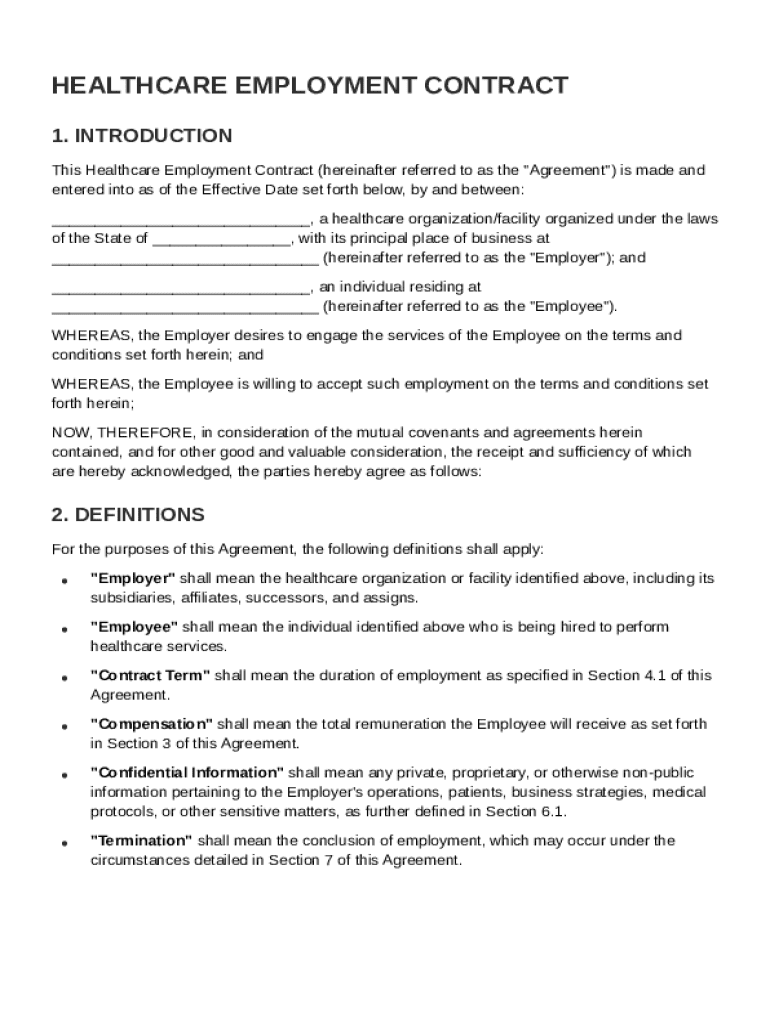
The Healthcare Employment Contract Template is a legal document used to define the terms and conditions of employment between a healthcare organization and an individual employee. This template establishes the obligations, rights, and responsibilities of both parties in a healthcare-specific setting. Its primary purpose is to ensure that all medical professionals and healthcare practitioners comply with industry regulations while protecting sensitive patient and business information. The contract includes clauses that cover multiple aspects of employment, including job roles, compensation, benefits, and confidentiality agreements, thereby safeguarding both parties’ interests throughout the employment period.
Key Elements of the Healthcare Employment Contract Template
This contract encompasses various clauses essential for a comprehensive understanding of the employment terms. These elements typically include:
- Employment Details: Describes the position, duties, location, and terms of employment.
- Compensation and Benefits: Lists salary, bonuses, health insurance, and other employee benefits.
- Working Hours: Specifies standard working hours, on-call duties, and overtime regulations.
- Confidentiality Obligations: Ensures the protection of patient data and proprietary business information.
- Termination Conditions: Outlines procedures for voluntary and involuntary termination, including notice periods.
- Dispute Resolution: Provides mechanisms for resolving disagreements, including arbitration and mediation.
- Governing Law: Specifies the legal jurisdiction under which the contract operates.
- Miscellaneous Provisions: Includes clauses on amendments, severability, and entire agreement.
How to Use the Healthcare Employment Contract Template
To effectively utilize this template, follow these guidelines:
- Review the Template: Begin by thoroughly reading the template to understand its structure and content.
- Customize Sections: Tailor the terms to fit specific job roles and organizational policies. This might involve altering clauses to align with state laws or company standards.
- Legal Review: Consult with a legal professional to ensure that all contract terms comply with current regulations and protect both employer and employee interests.
- Finalize Details: Complete any remaining fields, such as employment dates or compensation specifics.
- Distribute to Parties: Share the completed contract with all relevant parties for review and discussion.
- Signatures: Ensure both employer and employee sign the document once all terms have been agreed upon and finalized.
Steps to Complete the Healthcare Employment Contract Template
Completing the Healthcare Employment Contract Template involves several important steps:
- Populate Basic Information: Enter names, addresses, and other identifying information for the Employer and Employee.
- Define Role and Responsibilities: Detail the employee’s role, job description, and specific responsibilities.
- Specify Compensation Packages: Include comprehensive information on pay structures, including base salary, performance bonuses, and benefits.
- Include Confidentiality Clauses: Draft sections to cover nondisclosure agreements, particularly focusing on patient and company data protection.
- Outline Employment Duration: Clearly state the duration of employment, including start and end dates if applicable.
- Finalize and Distribute: Conduct a final review to ensure accuracy before distributing the contract for signing.
Important Terms Related to Healthcare Employment Contracts
Understanding the terminology used in these contracts is crucial:
- Confidentiality Agreement: A legal contract ensuring that sensitive information is not disclosed.
- Non-compete Clause: Restricts employees from working with direct competitors or starting a competing business.
- At-Will Employment: The condition that an employer can terminate the employment at any time, with or without cause.
- Arbitration: A form of dispute resolution where an arbitrator is appointed to make legally binding decisions.
- Indemnity Clause: Provisions where one party agrees to compensate for loss or damage incurred by another party.
State-Specific Rules for Healthcare Employment Contracts
Healthcare employment contracts are subject to state-specific regulations, affecting several aspects:
- State Employment Laws: Individual states may have unique laws concerning employment terms and worker rights.
- Licensing Requirements: Healthcare professionals must comply with state-specific licensure and certification standards.
- Non-Compete Enforceability: Varies by state, with some jurisdictions having more stringent views on enforceability.
Legal Use of the Healthcare Employment Contract Template
The legal use of these contracts requires compliance with statutory obligations and:
- Ensuring Compliance: Adhering to federal and state employment laws, such as the Fair Labor Standards Act.
- Regular Updates: Periodically reviewing and updating the contract to reflect changes in laws and regulations.
- Avoiding Legal Disputes: Clearly articulated terms prevent potential legal conflicts by setting clear expectations and obligations.
Examples of Using the Healthcare Employment Contract Template
These templates are used by various professionals within the healthcare industry:
- Physicians and Surgeons: Contracts include terms regarding patient interactions, clinical responsibilities, and research roles.
- Nurses and Medical Assistants: Define roles related to patient care duties and administrative responsibilities.
- Healthcare Executives: Executive contracts typically include performance incentives, confidentiality clauses, and stock options.
Using these examples helps demonstrate how this template can be tailored to diverse roles within the healthcare sector, offering comprehensive coverage for various employment scenarios.