






Definition and Purpose of the Medical Assistant Employment Contract Template
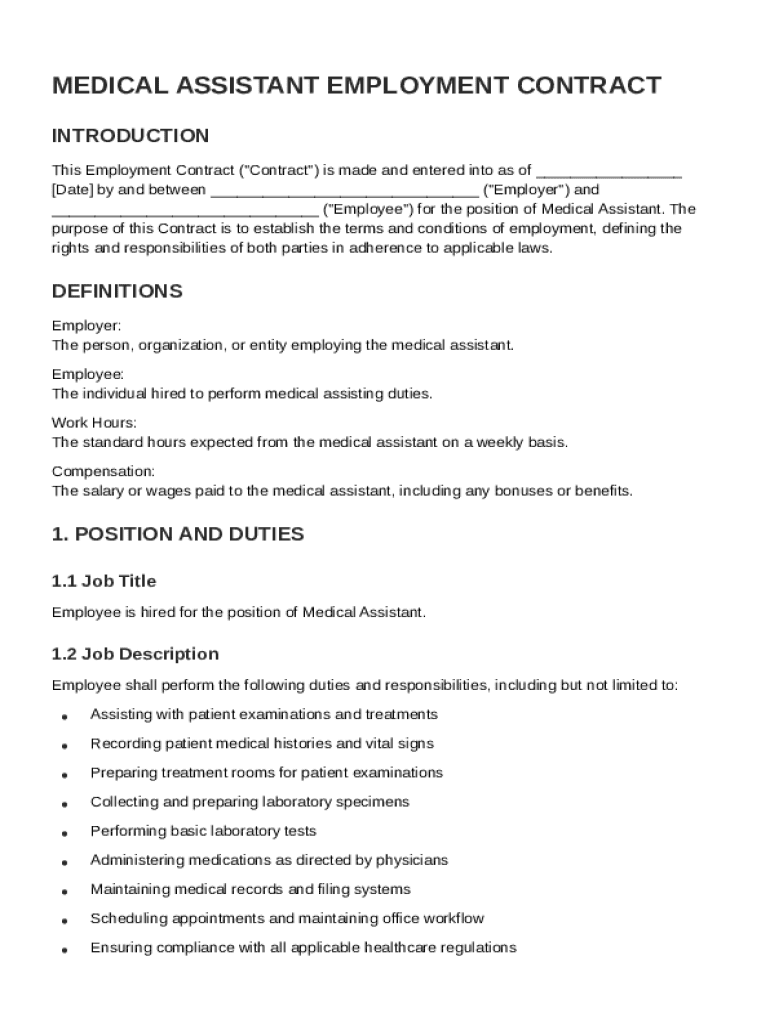
A Medical Assistant Employment Contract Template is a structured document designed to formalize the employment relationship between healthcare employers and medical assistants. This contract sets out the responsibilities, obligations, and expectations of both parties, ensuring clarity and reducing the potential for disputes. Employers and employees both benefit from a written agreement that covers vital aspects such as job duties, compensation, work hours, and termination procedures. This template is particularly crucial in maintaining compliance with healthcare regulations and upholding the standards of professional conduct within the industry.
Key Elements of the Medical Assistant Employment Contract Template
The Medical Assistant Employment Contract Template includes several essential sections to ensure comprehensive coverage of the employment relationship:
-
Roles and Responsibilities: This section outlines the specific duties and responsibilities of the medical assistant, ensuring that both parties have a clear understanding of job expectations.
-
Compensation and Benefits: Details regarding salary, bonuses, benefits, and other forms of remuneration are specified here. It is important to define the salary basis, overtime eligibility, and any additional compensation structures.
-
Work Hours and Schedule: The contract should specify expected work hours, including any on-call or overtime requirements. It is crucial to align with state and federal labor laws to avoid legal issues.
-
Performance Evaluation: Criteria and processes for evaluating the employee’s performance are detailed in this section. It may include periodic reviews, feedback mechanisms, and consequences of underperformance.
-
Termination Conditions: Outlines the scenarios and processes for terminating the employment relationship, whether by employee resignation or employer dismissal. It should also cover notice periods and severance details if applicable.
-
Confidentiality and Data Protection: With the sensitivity of medical information, confidentiality agreements are critical. This section requires the employee to safeguard patient information and comply with HIPAA regulations.
Steps to Complete the Medical Assistant Employment Contract Template
-
Review the Template Carefully: Begin by thoroughly reading the entire document to understand all terms and conditions. Pay particular attention to sections that require specific details.
-
Customize Information and Terms: Modify sections to reflect the specific agreement between the employer and employee. This includes inserting employee names, specific job roles, and customizing compensation structures.
-
Seek Legal Review: Before finalizing the employment contract, it is advisable to have a legal professional review it. This ensures compliance with relevant employment laws and regulations.
-
Employee and Employer Signatures: Once both parties agree to the terms, they should sign the document. Each party should retain a copy for their records.
-
Regular Updates: Employment contracts should be revisited periodically to ensure terms remain relevant and compliant with changing laws and organizational needs.
Legal Use and Compliance of the Medical Assistant Employment Contract Template
The use of the Medical Assistant Employment Contract Template must align with federal and state employment laws. This contract complies with the Fair Labor Standards Act (FLSA) and state-specific regulations where applicable. Employers should ensure all legal requirements are met, such as minimum wage laws, overtime rules, and workplace safety regulations. It also includes confidentiality clauses that comply with the Health Insurance Portability and Accountability Act (HIPAA), safeguarding patient data privacy and security.
State-Specific Rules and Differences
States may have unique regulations that affect employment contracts. For example, some states have specific laws governing overtime, meal breaks, and termination policies. Employers should tailor the template to include any state-specific requirements. Consulting with a legal expert familiar with local laws can ensure that the contract abides by all relevant state regulations, reducing the risk of legal challenges.
Importance of Using the Medical Assistant Employment Contract Template
This template provides numerous advantages for both employers and medical assistants:
-
Clarity and Transparency: It ensures that both parties clearly understand the expectations and obligations, reducing potential disputes and misunderstandings.
-
Legal Protection: By formally outlining the employment terms, both parties gain legal protection in case disagreements arise.
-
Compliance: It helps maintain compliance with healthcare industry standards and employment laws.
-
Professionalism: Utilizing a formal contract elevates the employment process and establishes a professional relationship between employers and employees.
Examples of Effective Use Cases for the Contract Template
Real-world scenarios illustrate the usefulness of the contract template:
-
Temporary Staffing Situations: Clinics often employ medical assistants on a temporary basis. A well-crafted employment contract can set clear expectations around the specific duration of employment and duties.
-
Transition to Full-time Roles: When transitioning a part-time employee to a full-time role, the contract template helps redefine terms, pay, and role expectations.
-
Dispute Resolution: In cases where disputes arise, having a detailed contract provides a basis for resolving misunderstandings concerning employment terms.
Alternatives and Versions to Consider
While the Medical Assistant Employment Contract Template is a comprehensive tool, other versions or alternatives might suit different needs:
-
Employee Handbooks: For broader organizational rules and guidelines not specific to an individual employee.
-
Freelancer Agreements: For independent contractors who require different terms than a standard employment contract.
-
State-specific Templates: Some states may offer templates tailored to meet local legal requirements, and these might be more appropriate for certain employers.
Employers should assess their specific needs and choose the template or alternative that best serves those considerations.