






Definition & Meaning
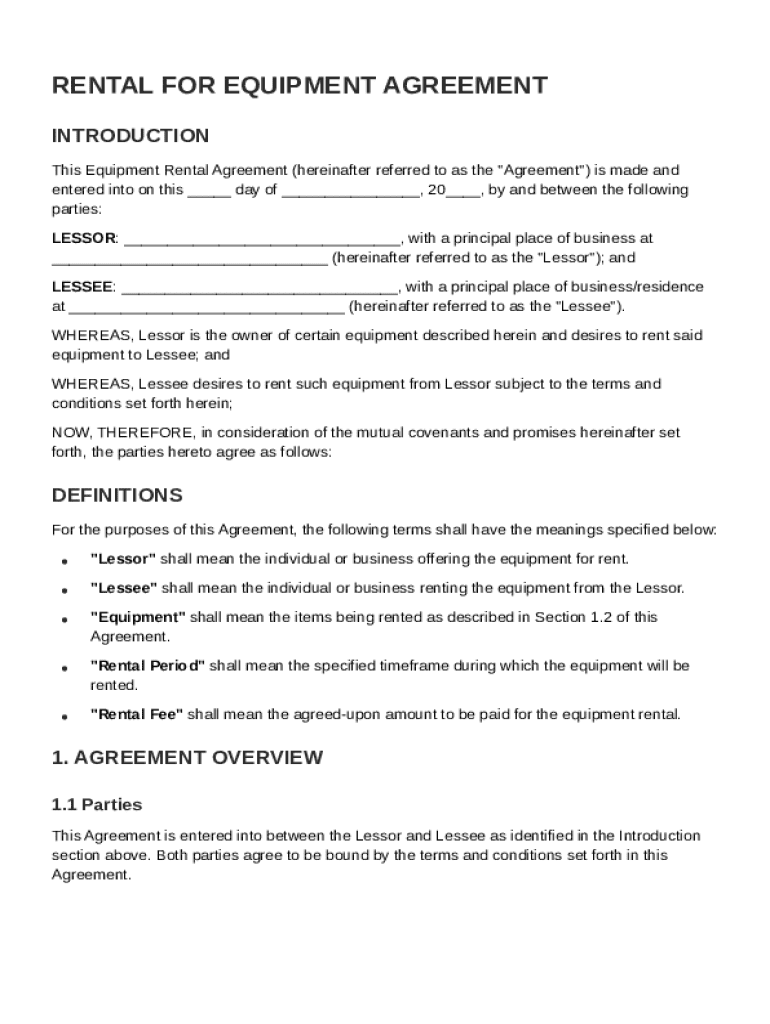
The Rental for Equipment Agreement Template is a legal document used to outline the terms and conditions for renting equipment from a lessor to a lessee. This agreement specifies the rights and responsibilities of both parties involved in the transaction. It includes critical aspects such as the type of equipment being rented, the rental duration, and the financial terms. By detailing each party's obligations, the agreement helps prevent misunderstandings and disputes, ensuring clear communication and mutual understanding. It is a vital tool for businesses and individuals that lease equipment, providing a structured format to safeguard interests and establish liability and insurance prerequisites.
Key Elements of the Rental for Equipment Agreement Template
This template includes crucial sections that ensure both lessor and lessee have a comprehensive understanding of their commitments. Key elements typically found in the agreement include:
- Parties Involved: Identification details of the lessor and lessee, including names and contact information.
- Equipment Description: A detailed description of the equipment being leased, covering specifications and unique identifiers.
- Rental Term: The start and end dates of the rental period, along with any extension clauses.
- Payment Terms: Details about rental fees, payment schedule, and penalties for late payments or damages.
- Responsibilities: Obligations of both parties regarding the maintenance and operation of the equipment.
- Liability and Insurance: Information on insurance requirements, liability coverage, and indemnity provisions.
- Termination Conditions: Terms under which the agreement can be terminated prematurely by either party.
How to Use the Rental for Equipment Agreement Template
Using the template involves a series of steps ensuring all necessary information is captured accurately:
- Download the Template: Acquire the template from a trusted source, such as a legal advice website or a document management platform.
- Review the Content: Thoroughly read through the entire document to understand each section and ensure it aligns with your rental needs.
- Fill in the Details: Input the specific information relevant to your transaction, such as party names, equipment details, and payment terms.
- Consult with Legal Counsel: If necessary, seek legal advice to ensure compliance with applicable laws and regulations.
- Review and Revise: Double-check the completed form for any errors or omissions and revise as needed.
- Finalize the Agreement: Both parties should review and sign the document, acknowledging their acceptance of the terms.
Steps to Complete the Rental for Equipment Agreement Template
Completing this template requires attention to detail to ensure all terms are clear and enforceable:
- Prepare Documentation: Gather all necessary information regarding the equipment and the lease terms.
- Personalize the Template: Customize the template with specific details, such as lessee name and equipment model number.
- Assign Roles and Responsibilities: Clearly define the duties and obligations for both parties within the agreement.
- Include Legal Clauses: Add clauses related to liability, insurance requirements, and indemnifications.
- Determine Financial Terms: Specify the payment amount, schedule, and penalties for late payments.
- Review Agreement Terms: Go through each section to ensure that no crucial details are missed.
- Sign and Date: Both parties must sign and date the agreement to make it legally binding.
Legal Use of the Rental for Equipment Agreement Template
Utilizing the Rental for Equipment Agreement Template in a legally compliant manner ensures all interactions between the lessor and lessee are properly documented and enforceable. To ensure legal validity:
- Compliance with State Laws: Check that the agreement aligns with local state regulations, which may impose specific requirements on rental agreements.
- Proper Identification: Both parties should be correctly identified, with accurate and complete personal or company information.
- Insurance and Indemnity: Include clauses that protect both parties from liability for damages or loss, outlining who is responsible for maintaining insurance.
- Dated and Signed: Ensure the document is dated correctly and signed by both parties in the presence of witnesses, if necessary.
Why Should You Use a Rental for Equipment Agreement Template
The use of a Rental for Equipment Agreement Template offers several advantages:
- Clarity: Outlines precise terms, reducing the risk of disputes or misunderstandings during the rental period.
- Legality: Provides a legal foundation for resolving conflicts, with terms established to protect the interests of both parties.
- Efficiency: Streamlines the lease process by providing a ready-to-use, comprehensive framework that simplifies negotiations.
- Security: Ensures that both parties understand their rights and responsibilities, as well as liability and insurance expectations.
- Flexibility: Easily customizable to meet the specific needs of different types of rental situations, such as short-term leases or high-value equipment.
Important Terms Related to the Rental for Equipment Agreement Template
Several critical terms are associated with the Rental for Equipment Agreement Template, each bearing significant legal implications:
- Lessor: The party who owns the equipment and grants the right of use to the lessee.
- Lessee: The person or entity renting the equipment from the lessor.
- Security Deposit: An upfront payment made by the lessee to cover potential damage or non-compliance with payment terms.
- Indemnity: A clause that obliges one party to compensate the other for any harm or loss.
- Breach of Contract: An instance where one party fails to fulfill their obligations as stipulated in the agreement.
State-Specific Rules for the Rental for Equipment Agreement Template
Different states have unique requirements and guidelines that impact the drafting and execution of rental agreements:
- Governing Law Clauses: Most agreements include a clause specifying the state laws that will govern the contract, typically the state where the rental takes place.
- Disclosure Requirements: Some states require specific disclosures, such as information on the equipment's maintenance history or safety features.
- Notice Periods: States may have differing rules regarding notice periods for termination or amendment of the agreement.
- Security Deposit Regulations: Local laws might dictate how security deposits are to be handled, including maximum amounts and refund timelines.
- Enforcement and Remedies: State laws vary on the remedies available for breach of contract, affecting how disputes are resolved.