






Definition and Meaning
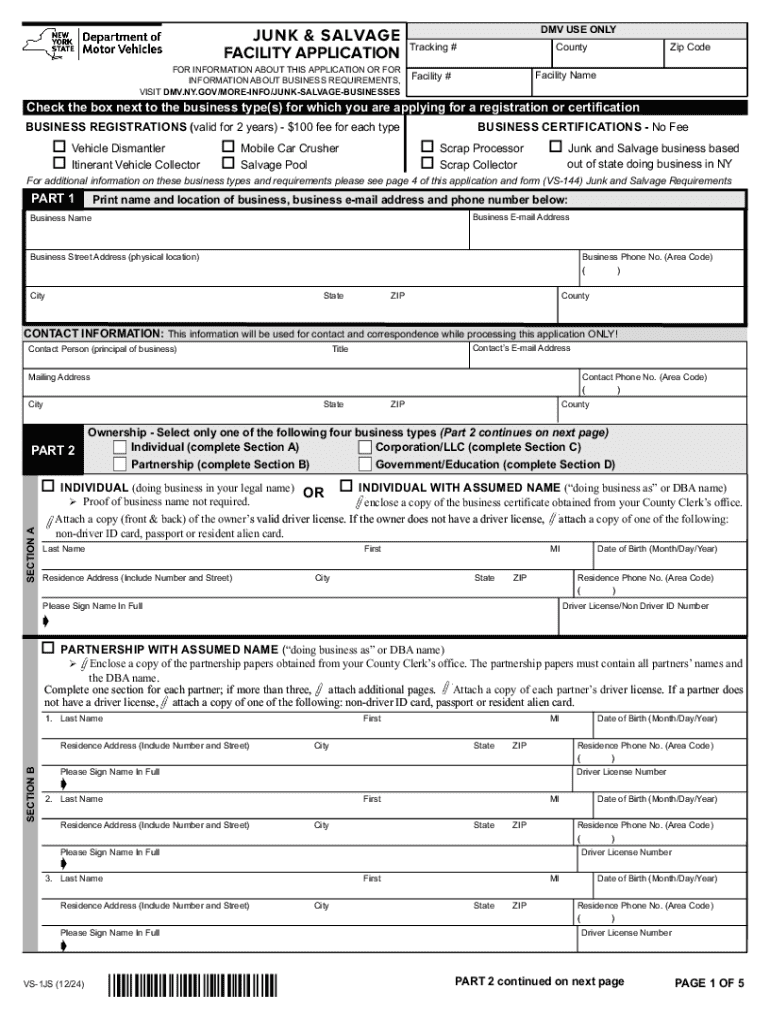
The "Junk and Salvage Facility Application" is a specialized form used to register or certify businesses involved in junk and salvage operations. This application enables companies engaged in activities such as vehicle dismantling, recycling, or scrap processing to legally operate within a designated state, ensuring compliance with regulatory standards. In particular, the application is critical for businesses in New York State, where specific regulations govern these operations.
Key Elements of the Junk and Salvage Facility Application
The application contains several essential sections designed to gather comprehensive information about the applicant and their business operations. Key components include:
- Business Ownership Details: Applicants must provide information about the owners, including names, addresses, and percentage of ownership.
- Contact Information: Accurate contact details are required to facilitate communication between the regulating authority and the business.
- Business Type Specification: Applicants must specify the kind of junk and salvage business they operate, such as vehicle dismantlers or scrap processors.
Each of these elements is vital to ensure that the application is processed correctly and efficiently.
Steps to Complete the Junk and Salvage Facility Application
The process of completing the application involves several steps intended to ensure accuracy and completeness:
- Gather Required Information: Collect business ownership and contact information, as well as details specific to the type of business.
- Complete the Form: Fill out all sections of the application carefully, ensuring all required fields are completed.
- Submit Supporting Documentation: Attach necessary documents, such as proof of ownership, compliance certificates, and any other required paperwork.
- Review and Verify: Before submission, review the application for accuracy, verifying that all information is correct.
Following these steps helps to minimize errors and avoid application rejection.
Required Documents
Several documents are required to accompany the application to provide a comprehensive view of the business. These may include:
- Proof of Ownership: Documentation such as articles of incorporation or partnership agreements.
- Compliance Certificates: Documents confirming adherence to local, state, and federal regulations relevant to the business type.
- Financial Statements: Recent financial records to verify the business’s operational capacity.
Having these documents ready ensures a smooth application process.
State-Specific Rules for the Junk and Salvage Facility Application
Each state may have unique regulations and requirements for junk and salvage facilities. For instance, New York State has distinct provisions that applicants must meet, including specific environmental and safety standards. Understanding these rules is crucial, as non-compliance can lead to application denial or revocation of business permits.
- Environmental Compliance: Businesses must demonstrate measures to mitigate environmental impact.
- Safety Regulations: Adherence to safety protocols concerning the handling of hazardous materials is mandatory.
Staying informed about these state-specific rules is essential for operational success.
Form Submission Methods
Applicants can typically submit the Junk and Salvage Facility Application through various channels, depending on state preferences:
- Online Submission: Digital platforms provide a convenient way to fill out and submit applications electronically.
- Mail: Physical submissions via mail require careful packaging and tracking to ensure timely delivery.
- In-Person: Some jurisdictions allow in-person submissions at designated offices, which can expedite the processing time.
Choosing the appropriate submission method based on business needs is important for timely application handling.
Penalties for Non-Compliance
Failure to submit a complete and accurate Junk and Salvage Facility Application can result in significant penalties:
- Fines and Fees: Monetary penalties may be imposed for incomplete or inaccurate information.
- Revocation of Business Licenses: Non-compliant businesses risk having their operational licenses revoked, halting business activities.
- Legal Consequences: Persistent non-compliance can lead to legal action, affecting the business’s reputation and financial standing.
Ensuring compliance with all application requirements is critical to avoid these severe consequences.
Application Process and Approval Time
The timeframe for processing and approving the Junk and Salvage Facility Application can vary, typically ranging from a few weeks to several months:
- Initial Review: The initial review of submitted applications checks for completeness and accuracy, usually taking a few weeks.
- Detailed Evaluation: A more thorough evaluation might be needed, particularly if additional documentation is requested.
- Final Approval: Once all criteria are met, final approval is granted, permitting the business to commence or continue operations.
Applicants should schedule their submission well in advance of any planned operational changes to accommodate potential delays.
By understanding and addressing these comprehensive elements of the Junk and Salvage Facility Application, businesses can streamline the registration process, maintain compliance, and reduce the risk of operational disruptions.