






Definition and Meaning
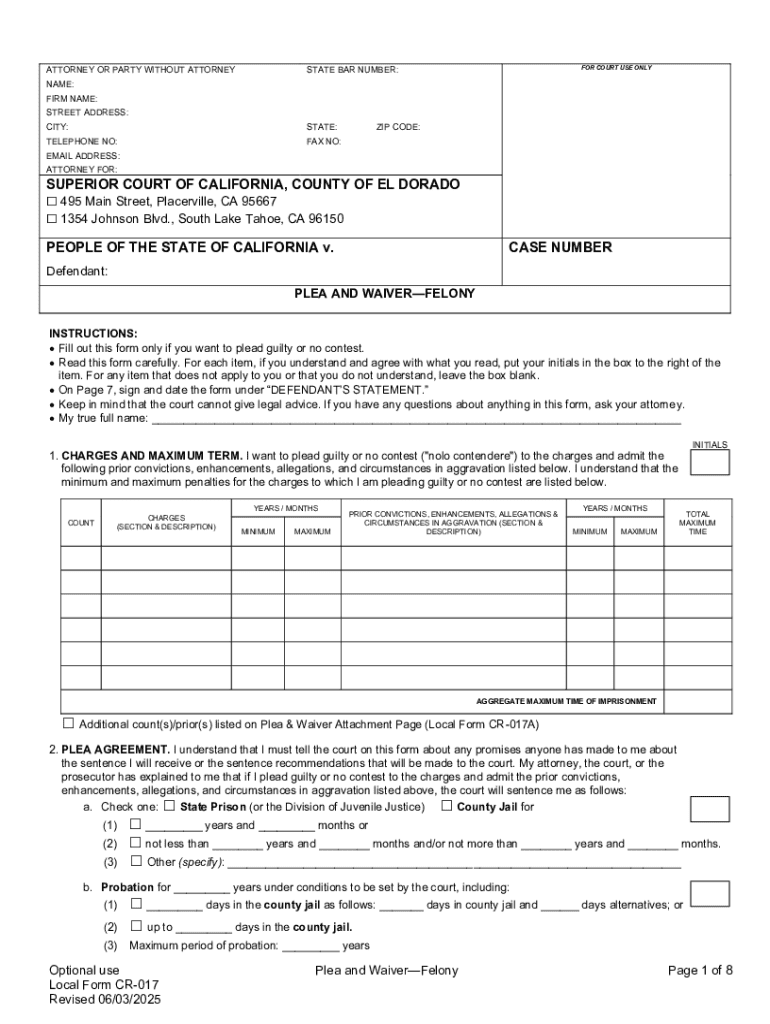
In the context of federal court proceedings, "San Diego Attorney for Plea Negotiations" refers to legal professionals who specialize in negotiating plea deals for defendants facing charges in federal courts located in San Diego. These attorneys work closely with federal prosecutors to reach an agreement that may involve the defendant pleading guilty to a lesser charge or receiving a reduced sentence. The aim is to avoid the uncertainties of a trial while achieving the best possible outcome for the client. The process involves understanding federal statutes, guidelines, and the intricacies of each case.
Steps to Complete the San Diego Attorney for Plea Negotiations in Federal Court
-
Initial Consultation: Begin by consulting with a San Diego attorney who specializes in federal plea negotiations. This initial meeting is crucial for understanding the charges, potential penalties, and exploring any available defenses.
-
Case Assessment: The attorney will assess the details of the case, reviewing evidence and identifying any weaknesses in the prosecution’s arguments. This step is vital for formulating a negotiation strategy.
-
Client Interview: Conduct interviews with the client to gather comprehensive background information. Understanding the client’s perspective and any mitigating factors helps in crafting persuasive arguments during negotiations.
-
Negotiation Strategy Development: Based on the case assessment and client interviews, the attorney will develop a tailored negotiation strategy. This involves deciding on the charges to negotiate and the sentencing recommendations to propose.
-
Engagement with Prosecutors: The attorney will engage in direct negotiations with federal prosecutors, presenting arguments for a reduced sentence or lesser charges. These discussions require a nuanced understanding of both federal law and the specifics of the case.
-
Finalizing the Plea Agreement: Once an agreement is reached, the attorney will ensure all terms are clearly defined and documented. This includes verification of any commitments from both parties, such as recommended sentencing ranges.
-
Court Presentation: The plea agreement is presented to the court for approval. The attorney will advocate for the acceptance of the agreement, emphasizing the fairness and mutual benefits of the negotiated terms.
Key Elements of the San Diego Attorney for Plea Negotiations in Federal Court
-
Charges and Penalties: Analysis of the charges filed and the potential penalties. This involves understanding the federal sentencing guidelines applicable to the case.
-
Plea Bargaining Options: Identification of possible plea bargaining approaches, including charge reductions, sentence recommendations, or special conditions.
-
Mitigating Factors: Exploration of factors that may reduce culpability or justify a more lenient sentence, such as the defendant's background, the nature of the offense, and any cooperation with authorities.
-
Legal Rights and Waivers: Explanation of the defendant's rights throughout the plea process, and any rights that may be waived as part of the plea agreement.
Who Typically Uses the San Diego Attorney for Plea Negotiations in Federal Court
Defendants facing federal charges that carry severe penalties often seek out experienced attorneys in San Diego for plea negotiations. These individuals may include:
-
Corporate Executives: Facing charges related to financial fraud or regulatory violations.
-
Healthcare Professionals: Involved in cases of medical billing fraud or malpractice.
-
Individuals Charged with Drug Offenses: Related to federal drug trafficking or distribution cases.
Seeking experienced legal representation can significantly impact the outcome, ensuring the defendant's interests are adequately protected while navigating the complex federal legal system.


Important Terms Related to San Diego Attorney for Plea Negotiations in Federal Court
-
Plea Agreement: A mutually agreed-upon resolution between defendant and prosecutor that involves the defendant pleading guilty in exchange for certain concessions.
-
Federal Sentencing Guidelines: A set of rules that establish a uniform policy for determining the sentences for federal crimes, including factors that can increase or decrease sentence length.
-
Mitigating Circumstances: Factors that may lessen the severity of a sentence, often considered during plea negotiations.
-
Charge Bargaining: Negotiation aimed at reducing the number or severity of charges in exchange for a guilty plea.
Legal Use of the San Diego Attorney for Plea Negotiations in Federal Court
Plea negotiations are a legitimate and often strategic legal process in federal court cases. Attorneys are tasked with ensuring that:
-
Rights are Maintained: The defendant’s constitutional rights are upheld throughout negotiations.
-
Informed Decisions are Made: Defendants are fully informed of the implications of a plea agreement, ensuring voluntary and knowledgeable consent.
-
Judicial Approval is Obtained: Any plea agreement must be carefully vetted and approved by the presiding judge, ensuring it aligns with the public interest and justice.
Examples of Using the San Diego Attorney for Plea Negotiations in Federal Court
-
Case Study #1: A business owner charged with tax evasion consulted a San Diego attorney. Through effective plea negotiations, the charge was reduced to failure to file a return, resulting in a lighter sentence and reduced financial penalties.
-
Case Study #2: A healthcare executive facing charges related to Medicare fraud successfully negotiated a plea to a lesser charge. This led to a cooperative agreement with authorities, mitigating potential jail time.
-
Case Study #3: An individual facing a first-time federal drug charge negotiated a plea for a lesser offense, leading to a sentence of probation rather than imprisonment.
By leveraging legal expertise, defendants can often achieve more favorable outcomes when navigating the complexities of federal court systems.