






Definition & Context of the Regular City Council Meeting - November 21, 2011
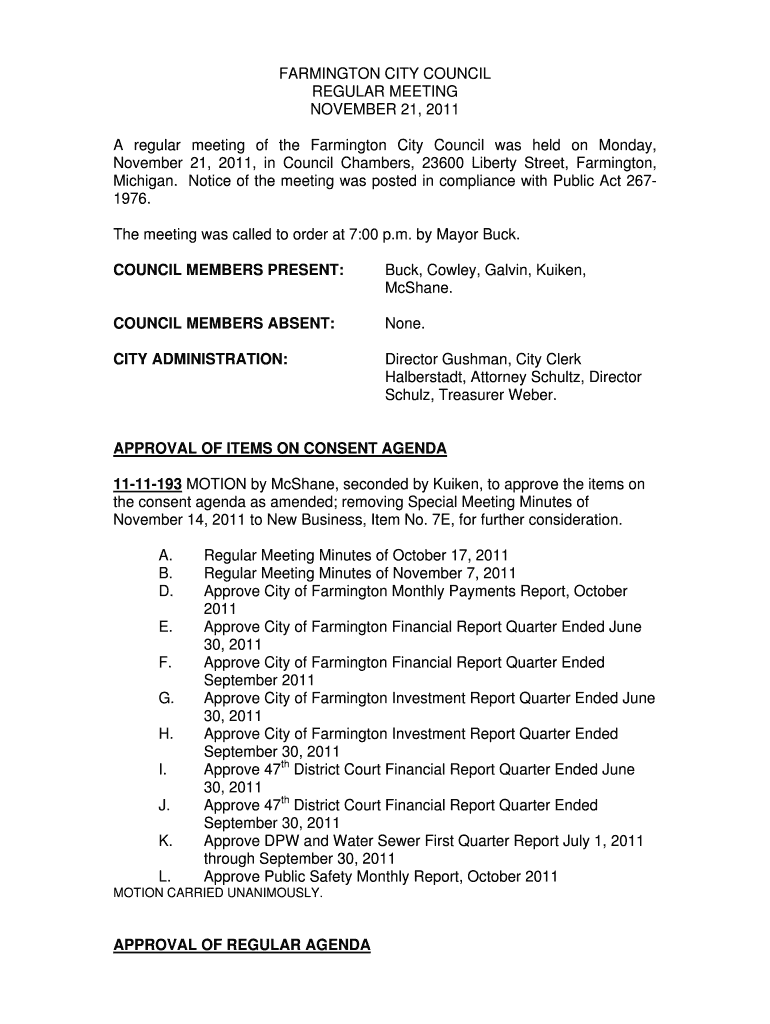
The "Regular City Council Meeting - November 21, 2011," refers to the official minutes and proceedings of the Farmington City Council session held on that date. These meetings are critical in municipal governance, acting as a forum where city leaders discuss and decide on matters affecting the community. The minutes serve as an official record, documenting the attendance, discussions, decisions, and actions taken during the session. They hold significant value for legal, historical, and administrative purposes, ensuring transparency and accountability within local government.
How to Use the Minutes from the Meeting
The minutes from the "Regular City Council Meeting - November 21, 2011," can be used by various stakeholders:
- Residents: Residents can reference the minutes to understand decisions affecting community development, local regulations, and public services.
- Researchers and Historians: These documents can be valuable for studying the evolution of municipal policies and community priorities.
- Legal and Administrative Professionals: They serve as an official record, providing evidence of council actions for legal and administrative procedures.
Using the minutes typically involves accessing the document through the city's official records, reviewing the content for pertinent information, and extracting details relevant to one's needs.
Steps to Access and Review the Meeting Minutes
-
Locate the Document: Visit the official Farmington City Council website or corresponding municipal office. Public records requests may also be submitted, if required.
-
Review the Content: Examine the document for specific sections such as attendance records, agenda items discussed, and resolutions passed.
-
Extract Information: Identify key decisions and discussions relevant to your interests, such as allocations for community development or other municipal actions.
-
Contextual Analysis: Consider the historical and contextual significance of the discussions and decisions made during the meeting.
Key Elements of the Regular City Council Meeting
The structure of the minutes includes several key elements:
- Attendance Records: Details of council members and participants present.
- Agenda Items: List and descriptions of topics discussed, such as grant allocations or council agreements.
- Presentations and Recognitions: Notable mentions like the recognition of National Family Caregivers Month.
- Discussions on Development: Focus on initiatives like Community Development Block Grant allocations.
- New Business Items: Introduction of new proposals, meeting schedules, and county agreements.
- Public Comments: Section for public engagement and feedback on city matters.
Who Typically Uses the Meeting Minutes
Several groups frequently reference the minutes from city council meetings:
- Local Government Officials: For planning and tracking future council activities or as a reference for ongoing projects.
- Community Members and Advocacy Groups: To stay informed on municipal government actions and community affairs.
- Lawyers and Legal Experts: To utilize as evidence or context in cases involving city ordinances and actions.
- Media and Journalists: As a source for reporting on local government proceedings and community issues.


Legal Use and Implications of the Minutes
Minutes are legally significant as:
- Official Record: Considered an authoritative document detailing government deliberations.
- Accountability Tool: Ensures council actions align with legal standards and community expectations.
- Transparency Instrument: Promotes open governance by providing public access to governmental decisions.
These factors underscore the role of meeting minutes in maintaining legal integrity and public trust in local government.
Examples of Discussions in the November 21 Meeting
The minutes of the November 21, 2011, meeting document discussions on:
- Recognition events like National Family Caregivers Month.
- Allocation of funds from Community Development Block Grants dedicated to senior services.
- Logistics such as setting future council meeting dates and finalizing agreements with Oakland County.
- Public challenges, including transportation issues and community engagement strategies.
Form Submission Methods for Meeting Records
Accessing the minutes typically offers multiple channels:
- Online Portal: Download the minutes directly from municipal websites.
- In-Person Request: Visit city hall or the municipal records office for paper copies.
- Digital Platforms: Utilize online databases that store local government records.
These methods ensure accessibility and convenience in retrieving city council documentation.
State-Specific Regulations Socializing Minutes
While the general purpose and format of city council minutes may be similar nationwide, specific regulations can differ by state:
- Public Access Laws: Variations in how records are made available to the public.
- Meeting Requirements: Differences in procedural rules, such as quorum requirements and documentation standards.
- Transparency and Disclosure: State laws governing the openness of municipal proceedings and records.
Recognizing these variances is essential for accurately interpreting and utilizing city council records within different jurisdictions.