







Definition and Purpose of SHADOWING FORM Part 1
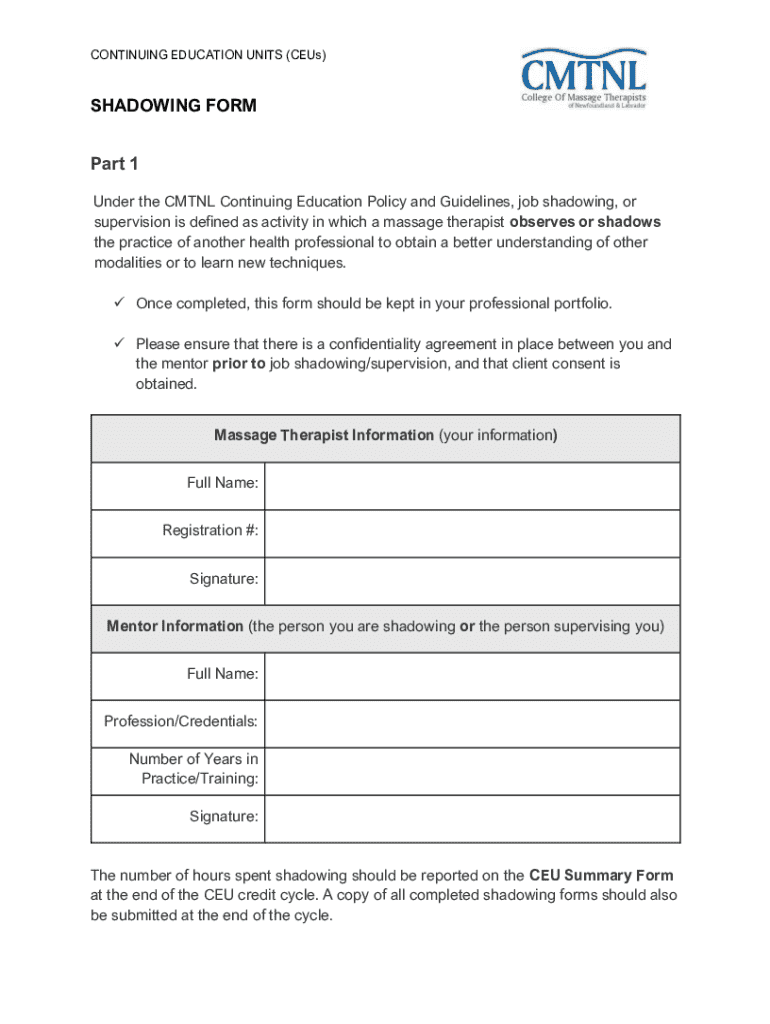
SHADOWING FORM Part 1 serves as a standardized tool for documenting job shadowing experiences, specifically geared towards continuing education units (CEUs) for professionals such as massage therapists. This form plays a dual role: it acts as a record of the professional’s experience and provides a framework for reflections on what was learned during the shadowing activity. It guides participants through the process of capturing essential information, ensuring both comprehensive documentation and the improvement of practice based on new insights. Professionals use this type of form to maintain an accurate account of their ongoing education and development activities.
Key Elements of SHADOWING FORM Part 1
The SHADOWING FORM Part 1 is composed of several critical sections that facilitate thorough documentation:
- Therapist Information: Contact and identification details of the professional who is shadowing, ensuring clear attribution.
- Mentor Information: Details about the professional being shadowed, including qualifications and contact information.
- Activity Details: A description of the shadowing experience, covering the duration, location, and specific actions observed.
- Confidentiality Agreements: Confirmation that all necessary confidentiality measures and client consent requirements were met before the shadowing took place.
- Reflections and Applications: A section dedicated to the participant’s observations and thoughts on integrating learned skills into their practice, fostering a deeper understanding of the field through firsthand experiences.
These elements ensure the completeness and utility of the form by capturing the key details of the shadowing experience.
Steps to Complete SHADOWING FORM Part 1
Completing the SHADOWING FORM Part 1 involves a structured process to ensure accuracy:
- Gather Information: Collect details about the shadowing session, including mentor and venue details.
- Fill Therapist and Mentor Sections: Record relevant personal and professional information in the prescribed fields.
- Document the Activity: Provide an accurate account of the shadowing activity, including date, duration, and key observations.
- Confirm Confidentiality Protocols: Note any agreements made to maintain client privacy and security, such as signed consent forms.
- Complete Reflection Section: Write down reflections and takeaways from the shadowing experience, explaining how it will influence future practice.
Following these steps ensures that the form is completed accurately and comprehensively.
How to Use SHADOWING FORM Part 1
Professionals can use the SHADOWING FORM Part 1 effectively by integrating it into their regular documentation practices. The form can be maintained as part of a continuous professional development portfolio, providing evidence of participation in shadowing activities. It should be filled out immediately following the shadowing session to ensure details are fresh and accurate. The form can be presented during certification renewals or audits to demonstrate compliance with CEU requirements and professional growth.
Eligibility Criteria for SHADOWING FORM Part 1
Eligible individuals for using the SHADOWING FORM Part 1 primarily include licensed massage therapists and other health professionals who require CEUs for their ongoing licensure or certification. The form may also be utilized by students pursuing health-related fields, where practical experience is a curricular element. Eligibility hinges on enrollment in a program or profession that acknowledges shadowing as a legitimate component of professional education and development.


Legal Requirements and Privacy Considerations
When using SHADOWING FORM Part 1, legal considerations play an essential role:
- Confidentiality Compliance: Adherence to client privacy laws, including HIPAA, is mandatory. Documenting agreements ensures that all parties are aware of their obligations regarding sensitive information.
- Informed Consent: Obtaining signed consent from clients who may be observed during shadowing activities is crucial. This consent protects both the observer and the mentor legally.
Strict compliance with these legal and privacy guidelines ensures the validity and legality of the shadowing experience documentation.
Practical Examples of Using SHADOWING FORM Part 1
Consider a registered massage therapist seeking advanced therapeutic techniques. They might shadow an orthopedic specialist to gain insights into joint manipulation. During this session, the therapist would document their observations on the SHADOWING FORM Part 1, detail discussions with the mentor, and note reflections on the experience for future reference.
Similarly, a student in a healthcare program might document their shadowing of a rehabilitation specialist. They would focus on techniques observed, patient interactions, and potential applications in their own emerging practice, using the form to summarize their learning outcomes.
Software Compatibility and Submission Methods
Users of the SHADOWING FORM Part 1 have several options for completion and submission:
- Software Tools: Compatible with platforms like DocHub, allowing for seamless digital completion, editing, and sharing. These tools support various file formats, providing flexibility in how documents are managed.
- Submission Methods: Forms can be submitted electronically through secure email, cloud-based platforms, or printed and delivered by traditional mail, ensuring accessibility and clarity regardless of the user’s resource availability.
This flexibility in technological compatibility facilitates ease of use and integration into digital workflows.




