







Definition and Meaning
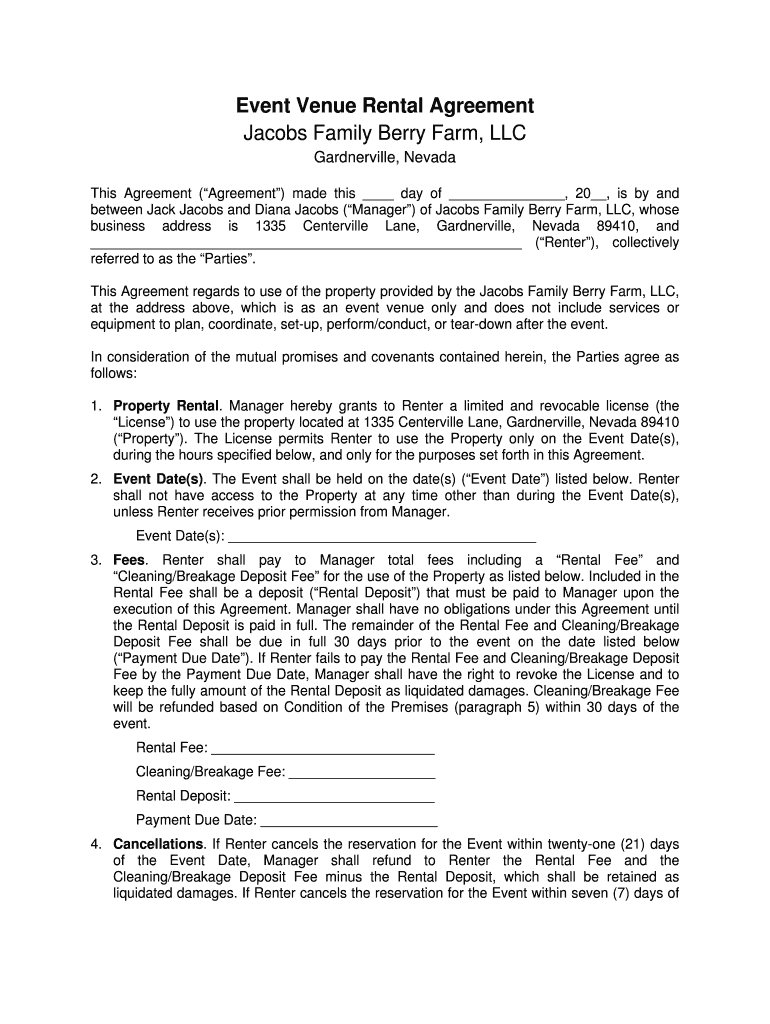
The Event Venue Rental Agreement is a legally binding document designed to outline the specific terms and conditions under which a venue is rented for events. This agreement typically includes details about the rental fees, usage policies, and responsibilities of both the venue owner and the renter. The main purpose of this form is to protect the interests of all parties involved by clearly defining expectations and obligations, thereby minimizing potential disputes. An Event Venue Rental Agreement can cover various event types, such as weddings, corporate functions, and private gatherings, providing a structured framework to ensure smooth and efficient event execution.
Important Terms Related to Event Venue Rental Agreement
Understanding the key terms within an Event Venue Rental Agreement is essential for both the venue owner and the renter to ensure mutual clarity and compliance. Common terms include:
- Rental Fees: The cost associated with renting the venue. This might include hourly rates, flat fees, or package deals depending on the nature of the event.
- Security Deposit: A refundable fee held by the venue to cover any potential damages or additional cleaning that may be required after the event.
- Cancellation Policy: Terms under which the agreement can be canceled by either party, including time frames and any associated fees or penalties.
- Scope of Use: Specifies how the venue can be used, including permitted activities and any restrictions.
- Liability Insurance: A requirement for renters to secure insurance coverage that protects against bodily injury and property damage liabilities during the event.
Steps to Complete the Event Venue Rental Agreement
- Review the Agreement: Both parties should thoroughly read the document, ensuring they understand all components.
- Customize Details: Fill in event-specific details, such as the event date, expected number of participants, and any additional services required.
- Discuss and Settle Terms: Negotiate any terms that require clarification or adjustment, focusing on rental fees, security deposits, and potential penalties.
- Signatures: Both parties must sign the agreement to make it legally effective. Electronic signature platforms like DocHub can facilitate this process.
- Distribute Copies: Each party should retain a signed copy for their records, which can also serve as a reference point if any future questions or issues arise.
Legal Use of the Event Venue Rental Agreement
An Event Venue Rental Agreement serves a dual purpose: it acts as a legal safeguard and a management tool. Legally, it ensures that both renter and venue owner adhere to agreed-upon terms, thus reducing the risk of litigation. The document is particularly critical for high-profile or large-scale events, where the stakes are higher. Additionally, the agreement details indemnification clauses that protect one or both parties from claims that might arise from the event.
Key Elements of the Event Venue Rental Agreement
Key elements, essential for tailoring this agreement to specific events, include:
- Event Details: The specific date and timeframe during which the venue will be used.
- Payment Schedule: Outlines how and when payments will be made. This might include initial deposits, interim payments, and final amounts due.
- Venue Conditions: Describes the current condition of the venue and any expected changes post-event.
- Restrictions: Limitations on noise levels, types of decorations allowed, and the use of third-party vendors.
- Compliance Requirements: Ensures adherence to local regulations, such as fire codes and occupancy limits.
Examples of Using the Event Venue Rental Agreement
Event Venue Rental Agreements are utilized across a wide range of events, serving different purposes:
- Weddings: This agreement specifies decoration allowances, sound restrictions, and timelines for setup and cleanup.
- Corporate Events: Ensures clarity around audiovisual equipment usage, seating arrangements, and catering services.
- Community Gatherings: Facilitates transparency regarding the use of communal spaces, ensuring all community guidelines are followed.
Each of these examples highlights the versatility of the agreement, adapting to the specific needs and expectations of diverse events.
State-Specific Rules for the Event Venue Rental Agreement
While the core structure of an Event Venue Rental Agreement remains consistent, particular states may impose additional requirements or restrictions. For instance:
- California: Emphasizes the need for clear environmental compliance clauses in the agreement.
- Florida: May require additional provisions for events involving the service of alcohol, demanding specific licensing or permissions.
- Texas: Often includes compliance with state-specific insurance requirements for event holders.
Understanding local laws is crucial, as these regulations may necessitate revisions of standard agreements to ensure compliance.
Software Compatibility and Integration
For ease and efficiency, the agreement can be managed digitally using DocHub, which integrates seamlessly with popular platforms such as Google Workspace. This compatibility allows users to:
- Import, edit, and export from connected services like Google Drive.
- Use various document formats, enhancing flexibility.
- Collect signatures digitally, ensuring compliance with legal standards for electronic documentation.
This digital integration not only streamlines the agreement process but also facilitates quick modifications and real-time collaboration.




