
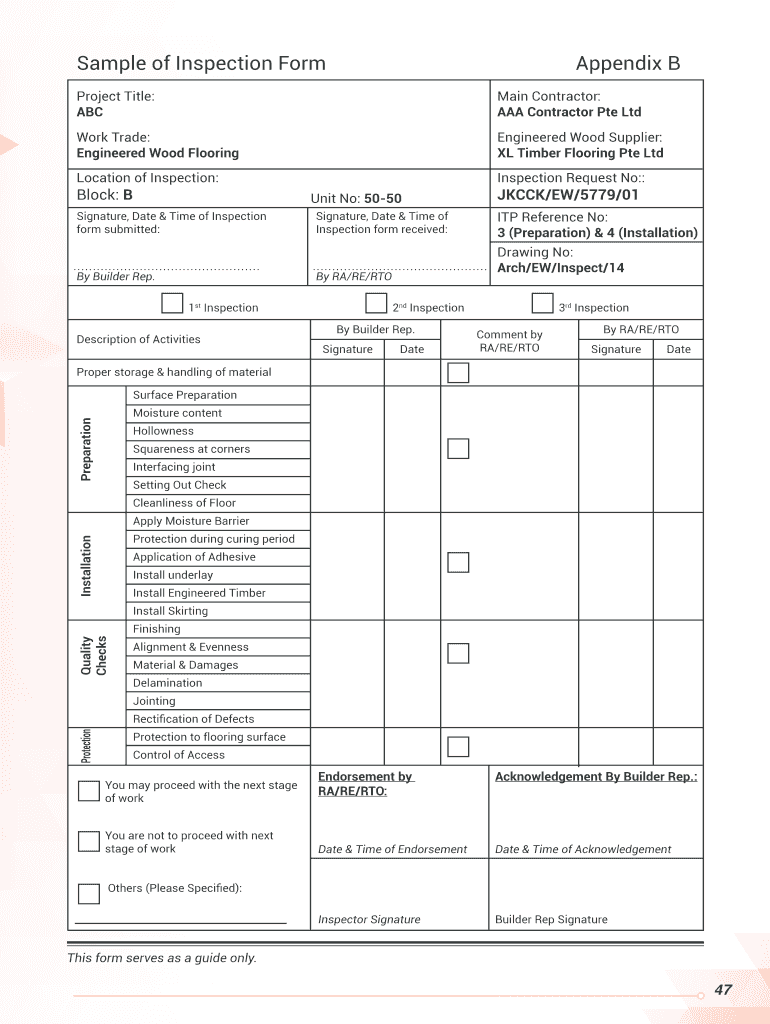







Definition and Purpose of the Sample of Inspection Form
The Sample of Inspection Form for a project like 'ABC' serves as a structured document that outlines specific parameters and processes for conducting inspections. This form is crucial for ensuring that installations, such as engineered wood flooring by AAA Contractor Pte Ltd, meet the required standards and specifications. By defining the necessary checks and balances for various stages of installation, it provides a clear framework for maintaining quality assurance.
The form includes sections that capture essential details such as contractor information, requests for specific inspections, and quality checks. It also facilitates endorsements by the relevant representatives, ensuring that every inspection step is verified and validated. This helps in maintaining a high standard of work and avoiding potential issues down the line.
How to Use the Sample of Inspection Form
To utilize the Sample of Inspection Form effectively, it's essential to understand its structure and navigate through its sections systematically.
- Begin by entering the contractor information. This includes the name and contact details, which helps in identifying the responsible party for the work being inspected.
- Follow by specifying the type of inspection needed. This section guides the inspector on what specific activity or process to evaluate during their visit.
- During the inspection, use the activity and quality check sections to record observations. This documentation is critical for maintaining a reliable historical record of the inspection process.
- Conclude by obtaining endorsements. Relevant parties must sign off on the inspections to confirm that evaluation results have been reviewed and accepted.
The form’s detailed structure ensures that nothing is overlooked, and each inspection step aligns with the overall project goals.
Key Elements of the Sample of Inspection Form
Understanding the components of the Sample of Inspection Form is vital for accurate completion and submission.
- Contractor Information: This includes details such as the contractor’s name, license number, and contact information. This section identifies who is accountable for the work being inspected.
- Inspection Requests: Here, requests are documented for specific inspections at various project stages. This ensures the right focus is applied at the right time.
- Activity and Quality Checks: This section enables inspectors to note specific activities observed and the quality assurance checks performed. It’s integral for ensuring compliance with industry and project standards.
- Endorsements: Involves sign-off by relevant parties, signifying that each inspection phase has been completed satisfactorily and reviewed by necessary stakeholders.
These elements form the foundation of the form, providing a comprehensive view of the inspection process.
Steps to Complete the Sample of Inspection Form
Completing the Sample of Inspection Form entails a systematic approach to ensure accurate and thorough documentation.
- Initial Setup: Fill in the contractor’s information to identify the party responsible for the project segment under inspection.
- Inspection Detailing: Specify the inspection type and its timing relative to the project timeline. This step ensures that each inspection aligns with project milestones.
- Documentation of Findings: During the inspection, document observations and findings carefully. This real-time recording supports transparency and accountability.
- Approval and Signature: After inspection, obtain necessary endorsements from authorized personnel to confirm review and acceptance of findings.
- Review and Submit: Prior to submission, review the form for completeness and accuracy to avoid potential delays or rejections.
By following these steps, one can ensure that the inspection process is documented effectively and every required action is captured clearly.
Who Typically Uses the Sample of Inspection Form
The Sample of Inspection Form is used by various stakeholders involved in construction and installation projects.
- Contractors: Responsible for requesting inspections to verify that the work meets specific criteria before proceeding to the next project phase.
- Inspectors: Use the form to document the inspection process and findings systematically.
- Project Managers: Require the form to review and verify that all project components are inspected and meet quality standards before sign-off.
Understanding the diverse user base of this form ensures that all relevant parties effectively contribute to and utilize the document as part of their project responsibilities.


Legal Use of the Sample of Inspection Form
The legal standing of the Sample of Inspection Form is fundamental to ensuring that inspections are conducted according to industry standards and regulations.
- Compliance with Regulations: The form ensures adherence to relevant laws and safety standards, providing a documented trail of compliance.
- Record Keeping: It serves as an official record, potentially used in legal situations where proof of compliance or quality assurance is required.
- Endorsements as Legal Binding: Signed endorsements on the form act as legally binding acknowledgments of inspection findings, increasing accountability for contractors and inspectors.
By understanding these legal aspects, stakeholders can use this form responsibly while ensuring compliance with industry requirements.
Examples of Using the Sample of Inspection Form
Various scenarios illustrate the practical use of the Sample of Inspection Form. For instance, during the installation of engineered wood flooring in a commercial building, an inspector uses the form to document the material's consistency with specified quality standards. This ensures that each step of the flooring project meets the buyer's quality criteria and complies with safety regulations.
Another example is its use in a residential construction project where multiple contractors are involved. Each contractor can utilize the form to track their work, request necessary inspections at different stages, and ensure their work aligns with the overall project standards.
State-Specific Rules for the Sample of Inspection Form
State-specific regulations can influence the use and structure of the Sample of Inspection Form. Depending on the region where the project is being undertaken, additional requirements might need to be addressed, such as state-specific safety codes or inspection intervals.
- California may require additional endorsements related to seismic resilience, while states like Florida might focus on hurricane preparedness measures.
- Inspectors and project managers must be aware of these variations to ensure full compliance and avoid legal complications.
By understanding and adapting to these state-specific rules, users of the form can ensure their projects are compliant with local laws and standards.
This comprehensive approach to the Sample of Inspection Form ensures that it serves as a reliable tool in the successful management and execution of various inspection tasks across different industry scenarios.




