
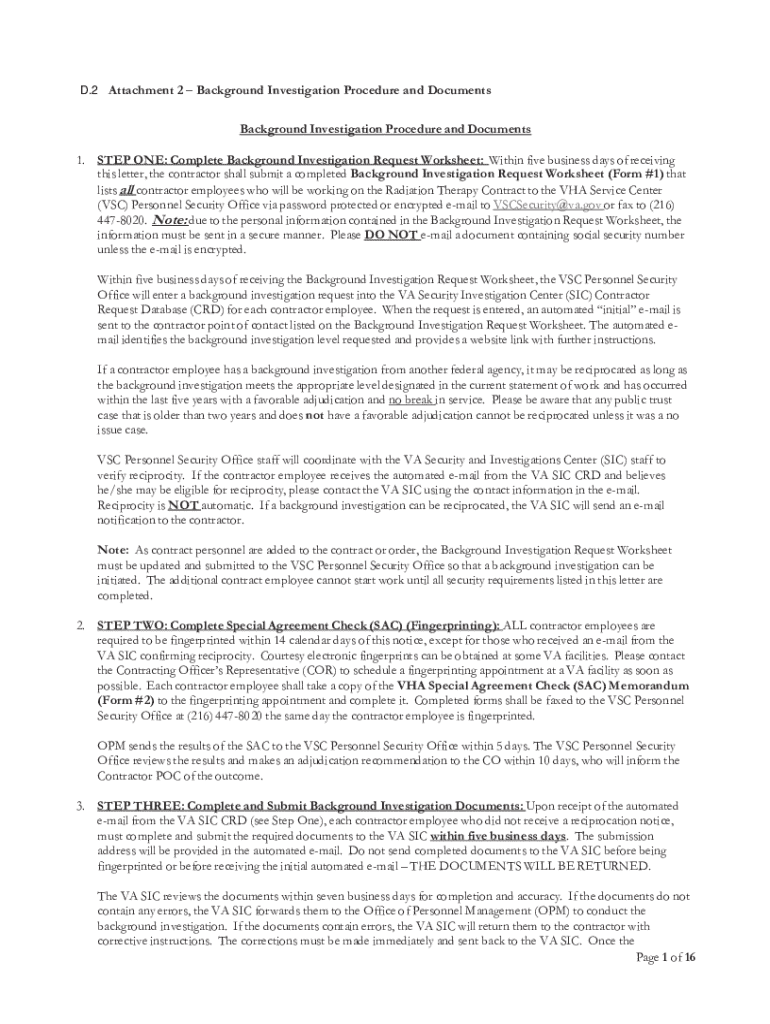







Definition and Purpose of the Background Investigation Procedure
A background investigation procedure is a critical process used by organizations to verify the credentials, history, and criminal records of individuals, often before employment or contractual engagements. This procedure ensures that contractors, especially those working on sensitive projects like the Radiation Therapy Contract with the VHA Service Center, meet the required standards of security and trustworthiness. This process typically includes identity verification, criminal record checks, and past employment verification.
Steps to Complete the Background Investigation Procedure
-
Submitting a Background Investigation Request Worksheet: The first step involves filling out a detailed worksheet that captures personal information. This includes social security number verification, past employment details, and any relevant criminal record discrepancies. The worksheet acts as a preliminary check to determine eligibility for further background scrutiny.
-
Fingerprinting: After initial submission, individuals must undergo fingerprinting. This step aids in comprehensive criminal history checks, ensuring all legal records are accounted for. Fingerprinting is typically arranged at designated centers ensuring secure data handling.
-
Submitting Required Documents: Compiling and submitting the necessary documents is a crucial step. These documents may include identification proofs, previous employment certificates, and consent forms. Each document must be verified for authenticity to continue the investigation process.
-
Obtaining a Personal Identity Verification (PIV) Card: Once initial checks are complete, eligible candidates receive a PIV card. This card grants access to necessary facilities and systems. The PIV card is a critical security measure ensuring only authorized individuals access sensitive information and locations.
-
Completing Required Training: Individuals must complete various training modules related to security practices and job responsibilities. These training sessions equip individuals with necessary skills and knowledge to adhere to organizational security protocols.
Required Documents for the Background Investigation Procedure
- Personal Identification: A government-issued ID, such as a driver's license or passport.
- Social Security Information: Documents verifying your social security number.
- Criminal Record: Copies of any criminal records or legal documents for transparency.
- Employment History: Certificates or references from past employers.
Each document is vital to the verification process, ensuring all information is accurate and complete.
Legal Use of the Background Investigation Procedure
This procedure is structured to comply with privacy laws and data protection standards. Organizations must handle all personal information securely, adhering to regulations such as the Fair Credit Reporting Act (FCRA) and other relevant U.S. legal frameworks. Ensuring legal compliance is paramount to protect the privacy and rights of all individuals involved.
Who Typically Uses the Background Investigation Procedure
Many sectors, including healthcare, government contracting, and education, use background investigations. They are crucial for roles involving sensitive data handling, financial responsibilities, or interactions with vulnerable populations. Employers in these fields rely on background checks to maintain high standards of safety and integrity.


Importance of Background Investigation Procedures
Conducting background investigations helps protect organizational integrity, prevent fraud, and ensure a secure work environment. These investigations can also mitigate risks associated with negligent hiring practices and foster a culture of safety and trust within the organization.
Examples of Using the Background Investigation Procedure
- Healthcare Settings: Ensuring medical staff have appropriate licenses and a clear legal history.
- Government Contracts: Verifying contractor eligibility for projects that involve sensitive information.
- Educational Institutions: Checking educational credentials and criminal history to protect students.
State-Specific Rules for Background Investigations
Background checks may vary significantly by state due to differing regional laws and regulations. For instance, some states restrict the reporting of certain criminal records after a specified period. Understanding these nuances is crucial to ensure compliance and accuracy in background investigations.




