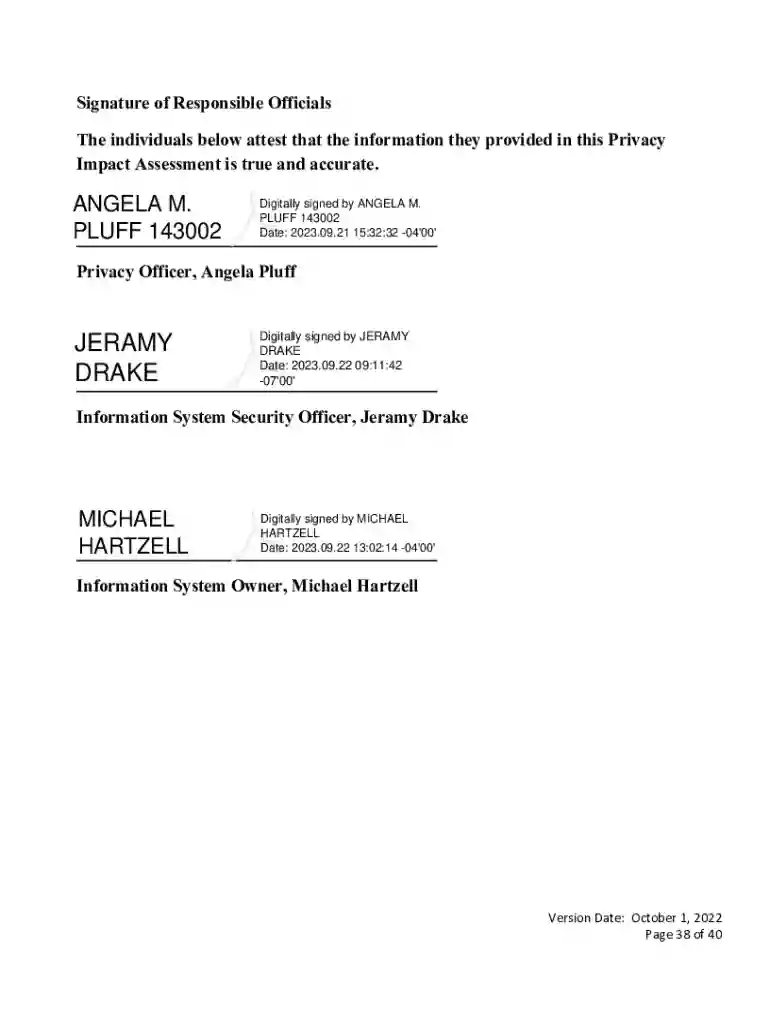
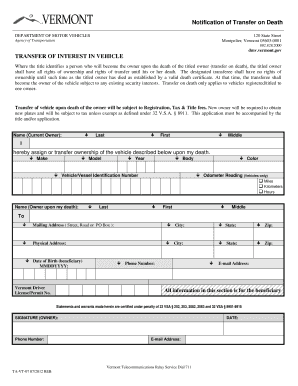
Privacy Impact Assessment for Ehrm 2026

Get Form
Privacy Impact Assessment for Ehrm Preview on Page 1

Here's how it works

01. Edit your form online
Type text, add images, blackout confidential details, add comments, highlights and more.

02. Sign it in a few clicks
Draw your signature, type it, upload its image, or use your mobile device as a signature pad.

03. Share your form with others
Send it via email, link, or fax. You can also download it, export it or print it out.

Definition and Meaning of Privacy Impact Assessment for EHRM

A Privacy Impact Assessment (PIA) for the Electronic Health Record Modernization (EHRM) is an essential review process aimed at evaluating and ensuring the privacy and security of personal information within the system. The EHRM system is designed to enhance healthcare delivery by improving the management of electronic health records for veterans. This assessment identifies and mitigates privacy risks associated with handling personally identifiable information (PII) and protected health information (PHI), ensuring compliance with legal standards and safeguarding sensitive data.

Key Components

  • Purpose and Scope: Focuses on enhancing patient care, improving provider effectiveness, and comprehensive electronic health record management.
  • Data Collection and Storage: Analyzes how PII and PHI are collected, stored, and processed securely.
  • Risk Assessment: Identifies potential privacy risks and vulnerabilities within the EHRM system.
  • Legal Compliance: Ensures adherence to federal privacy regulations and standards.

How to Use the Privacy Impact Assessment for EHRM

To use the Privacy Impact Assessment for EHRM effectively, stakeholders should understand its structure and purpose. This involves a systematic approach to ensure that all aspects of data privacy and security are thoroughly evaluated.

Steps for Effective Use

  1. Preparation: Gather relevant documents and information about data handling practices.
  2. Assessment: Conduct a detailed review of data collection, usage, storage, and sharing protocols within EHRM.
  3. Analysis: Identify privacy concerns and potential risks related to data handling.
  4. Mitigation: Develop strategies to address identified risks and ensure compliance with privacy regulations.

Steps to Complete the Privacy Impact Assessment for EHRM

Completing the PIA for EHRM involves several thorough steps to guarantee comprehensive evaluation and documentation of privacy measures.

Detailed Steps

  1. Identify Information Types: Determine the kinds of PII and PHI collected.
  2. Evaluate Collection Methods: Analyze how information is collected and the involved processes.
  3. Assess Data Usage: Review purposes for which data is used, ensuring it aligns with privacy standards.
  4. Examine Data Sharing: Assess who has access to information and under what circumstances it can be shared.
  5. Document Privacy Risks: Highlight potential threats to data privacy.
  6. Develop Risk Management Strategies: Implement measures to reduce or eliminate identified risks.
  7. Review Legal Compliance: Check adherence to required privacy laws and standards.

Key Elements of the Privacy Impact Assessment for EHRM

The Privacy Impact Assessment for EHRM contains critical elements vital for maintaining data security and compliance.

Essential Components

  • Data Management Policies: Guidelines for handling, processing, and storing information.
  • Privacy Risks: Identification and assessment of possible privacy threats.
  • Mitigation Strategies: Plans to counteract identified privacy risks.
  • Compliance Documentation: Evidence of adherence to applicable legal requirements and standards.

Why Conduct a Privacy Impact Assessment for EHRM

Conducting a Privacy Impact Assessment for EHRM is vital for protecting sensitive health information and ensuring the system's integrity.

Reasons for Conducting the Assessment

  • Protect Patient Information: Safeguard PII and PHI from unauthorized access and breaches.
  • Enhance System Integrity: Ensure that EHRM operates within secure parameters.
  • Compliance: Meet federal privacy regulations and avoid legal penalties.
  • Trust Building: Foster trust with veterans and stakeholders by demonstrating commitment to privacy.

Legal Use and Compliance in Privacy Impact Assessment for EHRM

The legal use of a PIA for EHRM focuses on maintaining compliance with laws such as the Health Insurance Portability and Accountability Act (HIPAA).

Compliance Aspects

  • Federal Regulations: PIA ensures alignment with relevant U.S. privacy laws.
  • Security Standards: Adherence to guidelines that protect against data breaches.
  • Audit Trails: Maintain records of data access and modifications for legal accountability.

Important Terms Related to Privacy Impact Assessment for EHRM

Understanding specific terms is crucial for effectively navigating and implementing the PIA for EHRM.

Key Terms

  • Personally Identifiable Information (PII): Information that can identify an individual.
  • Protected Health Information (PHI): Health-related information protected under privacy laws.
  • Risk Mitigation: Strategies to minimize potential data privacy risks.
  • Data Sharing Protocols: Rules governing the exchange of data with authorized entities.

Business Types That Benefit Most from Privacy Impact Assessment for EHRM

Certain business entities derive significant advantages from employing the EHRM PIA, particularly in the healthcare sector.

Benefiting Entities

  • Healthcare Providers: Clinics and hospitals that utilize electronic health records.
  • Veteran Services Organizations: Entities focused on improving veteran health services through EHRM.
  • Health IT Companies: Businesses developing technology solutions for healthcare data management.

These entities can leverage the PIA to streamline their operations while ensuring the protection of sensitive information.

be ready to get more

Complete this form in 5 minutes or less

Get form

Got questions?

We have answers to the most popular questions from our customers. If you can't find an answer to your question, please contact us.
Contact us
A data protection impact assessment (DPIA) is an assessment of the impact of the envisaged processing operations on the protection of personal data. You must carry out a DPIA before you process personal data when the processing is likely to result in a high risk to the rights and freedoms of individuals.
A PIA is typically designed to accomplish three main goals: Ensure conformance with applicable legal, regulatory, and policy requirements for privacy. Identify and evaluate the risks of privacy bdocHubes or other incidents and effects. Identify appropriate privacy controls to mitigate unacceptable risks.
A privacy impact assessment (PIA) is a process used to determine how a program or service could affect the privacy of an individual. It can also help to avoid or lessen possible negative effects on privacy that might result from a program or service.

Security and compliance

At DocHub, your data security is our priority. We follow HIPAA, SOC2, GDPR, and other standards, so you can work on your documents with confidence.

Learn more
ccpa2
pci-dss
gdpr-compliance
hipaa
soc-compliance