Privacy Impact Assessment for the Va Area Lebanon 2026

Get Form
Privacy Impact Assessment for the Va Area Lebanon Preview on Page 1

Here's how it works

01. Edit your form online
Type text, add images, blackout confidential details, add comments, highlights and more.

02. Sign it in a few clicks
Draw your signature, type it, upload its image, or use your mobile device as a signature pad.

03. Share your form with others
Send it via email, link, or fax. You can also download it, export it or print it out.

Definition and Meaning

The Privacy Impact Assessment (PIA) for the VA Area Lebanon is a comprehensive evaluation tool used to assess the risks associated with collecting, using, and managing Personally Identifiable Information (PII) and Protected Health Information (PHI). These assessments are crucial under the E-Government Act of 2002 and VA Directive 6508, ensuring that all data handling processes adhere to privacy laws and regulations. PIAs are designed to help identify potential vulnerabilities in data protection and provide informed recommendations for mitigating those risks.

Key Elements of the Privacy Impact Assessment for the VA Area Lebanon

Several essential components make up the PIA for the VA Area Lebanon:

  • Legal Compliance: The assessment ensures adherence to mandates such as the E-Government Act and VA directives.
  • Data Management: It outlines procedures for securely handling PII and PHI within the VA facilities.
  • Stakeholder Identification: Key stakeholders involved in the data lifecycle are clearly defined.
  • Risk Analysis: Identifies potential privacy risks associated with information sharing both internally and externally.
  • Security Measures: Details specific measures for data protection and breach prevention.

These elements collectively safeguard sensitive information against unauthorized access and misuse.

Steps to Complete the Privacy Impact Assessment for the VA Area Lebanon

Completing a Privacy Impact Assessment involves several detailed steps:

  1. Initiate the PIA: Begin by identifying the project or system to be assessed.
  2. Data Collection: Gather detailed information about how data is collected, used, and stored.
  3. Risk Identification: Evaluate potential privacy risks and vulnerabilities associated with data handling.
  4. Mitigation Strategies: Develop strategies to mitigate identified risks, ensuring robust data protection.
  5. Documentation and Review: Compile the findings into a comprehensive report and review it with relevant stakeholders.
  6. Implementation: Integrate the recommended strategies into the organization's data management practices.

Following these steps helps bolster organizational compliance and ensure the secure handling of sensitive information.

Who Typically Uses the Privacy Impact Assessment for the VA Area Lebanon

PIAs are primarily used by individuals and organizations that handle PII and PHI within the VA Area Lebanon. Key users include:

  • VA Administrators: Responsible for overseeing data management and ensuring compliance with privacy laws.
  • IT Professionals: Implement security measures and manage data systems.
  • Legal Advisors: Ensure all privacy policies adhere to applicable laws and regulations.
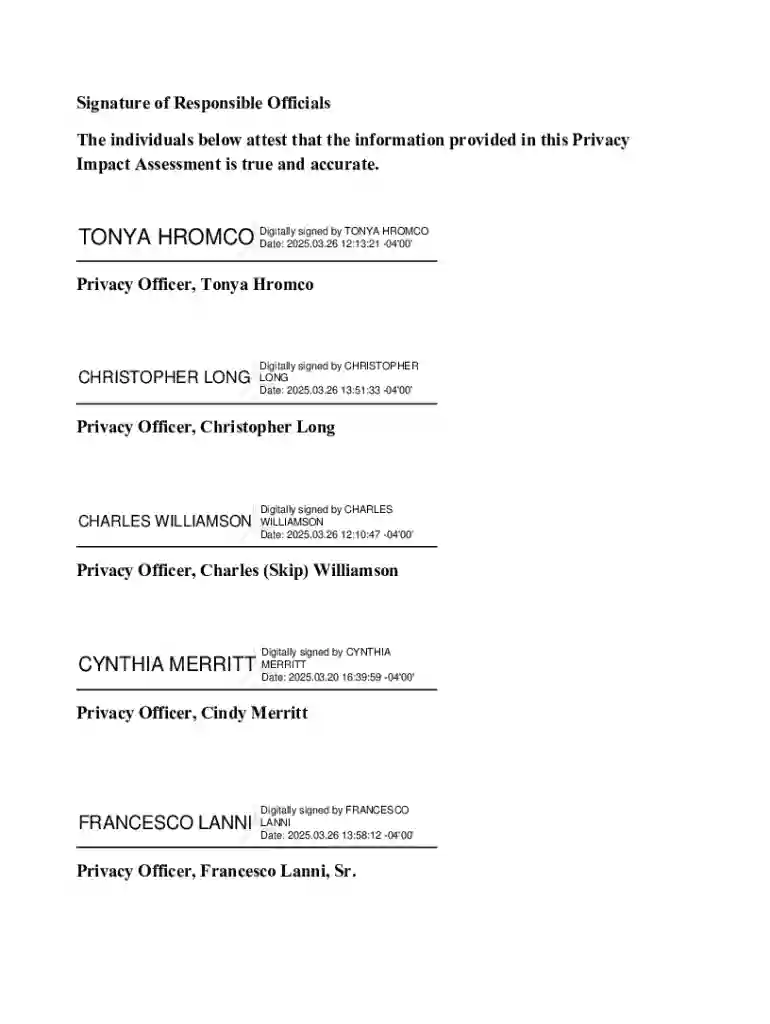
  • Privacy Officers: Specialized personnel tasked with overseeing privacy practices and conducting PIAs.

These users rely on the PIA to maintain data security and safeguard the privacy rights of individuals.


decoration image ratings of Dochub

How to Use the Privacy Impact Assessment for the VA Area Lebanon

Utilizing the PIA involves a structured approach:

  • Assessment Planning: Initiate the process by outlining the scope and objectives of the assessment.
  • Data Flow Mapping: Identify the points at which data is collected, stored, and shared within VA facilities.
  • Risk Assessment: Conduct a thorough evaluation of potential privacy risks and their impact.
  • Actionable Insights: Develop specific, actionable recommendations to mitigate identified risks.
  • Collaborative Implementation: Work with stakeholders to integrate privacy measures into organizational practices.

Following this approach ensures a thorough evaluation and enhancement of privacy processes.

Legal Use of the Privacy Impact Assessment for the VA Area Lebanon

Conducting a PIA is not just a best practice but also a legal requirement under several U.S. laws:

  • E-Government Act of 2002: Mandates that federal agencies conduct PIAs for systems that handle PII.
  • VA Directive 6508: Requires VA facilities to ensure compliance through regular PIAs.
  • HIPAA: While primarily for health information, adherence to similar privacy standards is necessary.

Conducting a PIA ensures legal compliance and helps prevent legal penalties associated with data breaches or privacy violations.

Importance of the Privacy Impact Assessment for the VA Area Lebanon

The importance of the PIA for the VA Area Lebanon cannot be understated:

  • Protects Individuals: Ensures that sensitive information such as medical records is protected against unauthorized access.
  • Enhances Trust: Demonstrates a commitment to privacy, which can enhance stakeholder trust.
  • Prevents Breaches: Proactively identifies and mitigates potential breaches, saving organizations from costly incidents.
  • Legal Safeguard: Provides documentation and evidence of compliance with privacy laws.

By systematically identifying and mitigating privacy risks, the PIA plays a crucial role in maintaining the integrity of sensitive data within the VA.

Examples of Using the Privacy Impact Assessment for the VA Area Lebanon

Several scenarios underscore the utility of PIAs:

  • New IT Systems: Before implementing new IT systems, a PIA evaluates privacy risks associated with data handling processes.
  • Policy Updates: When modifying privacy policies, PIAs assess the impact on data security and privacy practices.
  • Security Breaches: After a data breach, a PIA helps identify gaps and improve future protection mechanisms.
  • Inter-agency Data Sharing: In situations where data is shared between agencies, a PIA ensures that all data protection measures are in place.

These examples illustrate the extensive applications of PIAs in protecting personal information within the VA.

be ready to get more

Complete this form in 5 minutes or less

Get form

Got questions?

We have answers to the most popular questions from our customers. If you can't find an answer to your question, please contact us.
Contact us
A privacy impact assessment (PIA) is a process used to determine how a program or service could affect the privacy of an individual. It can also help to avoid or lessen possible negative effects on privacy that might result from a program or service.
PIAs are a decision tool used by DHS to identify and mitigate privacy risks that notifies the public which information in identifiable form is being collected.
This may include an inventory of personal data, interviews with key personnel, a review of policies and procedures, and analysis of data flows. Risk Identification: Privacy risks are identified by evaluating the collected data and conducting a comprehensive analysis based on the applicable regulatory requirements.
But at a minimum, the assessment should include: An analysis of how personally identifiable information is collected, used, disclosed, and retained. Categories of PI being handled. Context of the handling activity. Consumer expectations for PI processing. Purpose, benefits, and negative impacts of PI processing.
Privacy Act of 1974: This covers how the Federal government, including VA, collects, maintains, uses, and discloses personal information. It covers all personal information maintained in Agency system of records, not just health information, and requires notice and consent for information collection.

Security and compliance

At DocHub, your data security is our priority. We follow HIPAA, SOC2, GDPR, and other standards, so you can work on your documents with confidence.

Learn more
ccpa2
pci-dss
gdpr-compliance
hipaa
soc-compliance

People also ask

A PIA shows privacy factors for all new or docHubly altered Information Technology (IT systems or projects that collect, maintain, or disseminate personal information from or about members of the public, Federal personnel contractors, or Foreign Nationals employed at U.S. military facilities internationally).

Related links