






Definition & Purpose of the Wisconsin DMV Vehicle Buyers Guide
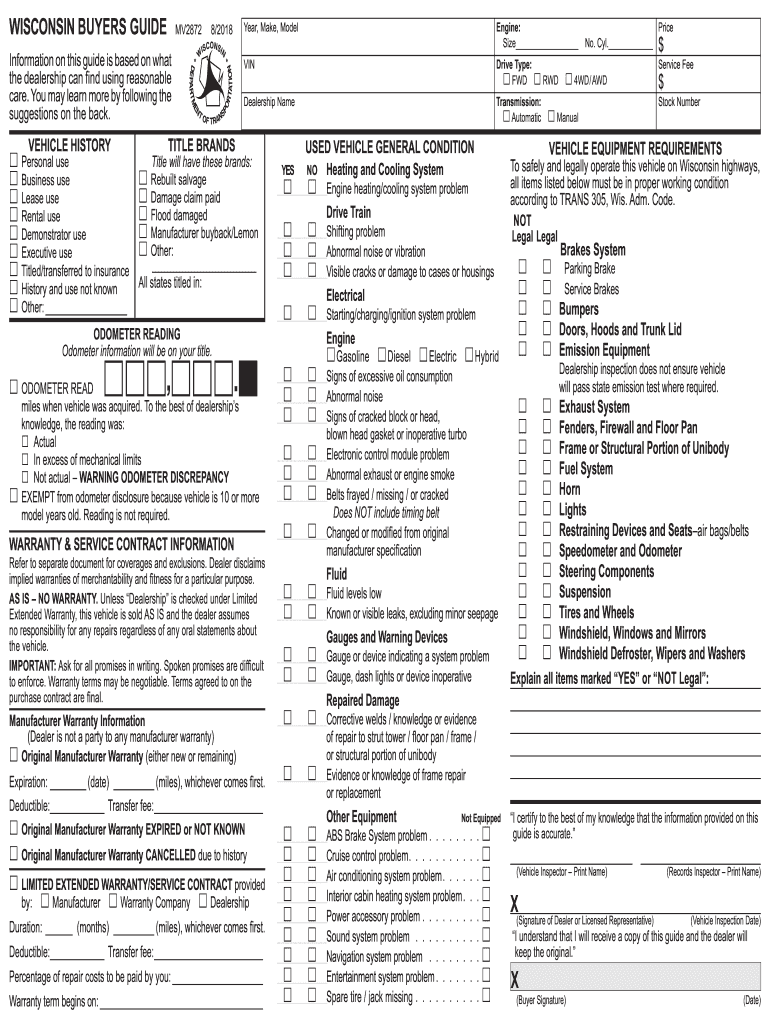
The Wisconsin DMV Vehicle Buyers Guide serves as a crucial resource for individuals looking to purchase used vehicles in Wisconsin. It provides detailed information about the condition and history of a vehicle being sold by dealerships, helping buyers make informed purchase decisions. The guide outlines essential aspects, such as vehicle inspection responsibilities, title brands, and warranty information. Understanding these elements is vital to ensuring consumer protection and avoiding potential pitfalls during the vehicle buying process.
Utilizing the Buyers Guide Effectively
To make the most out of the Wisconsin DMV Vehicle Buyers Guide, potential buyers should follow a structured approach:
- Review Vehicle History Reports: Begin by examining the vehicle's history to check for past accidents or major repairs.
- Inspect the Physical Condition: Use the guide's checklist to assess the vehicle thoroughly for any discrepancies or potential issues.
- Understand Warranty Options: Determine if the vehicle comes with a warranty and what it covers.
- Verify Title and Branding: Ensure that the title is clear of brands like “salvage” or “rebuilt,” which might affect the vehicle’s value.
Obtaining the Buyers Guide
Accessing the Wisconsin DMV Vehicle Buyers Guide is straightforward. It’s usually provided at the dealership as part of the standard information package for used vehicles. Alternatively, it can be downloaded from the Wisconsin DMV’s official website. Ensuring you have the latest version of the guide is essential as it reflects the most current legal standards and consumer rights.
Steps to Complete the Buyers Guide
Completing and using the buyers guide involves several key steps:
- Get the Guide from Dealerships: Ensure the dealership provides a complete guide for every used vehicle.
- Record Observations: Take notes regarding the vehicle inspection, noting any conditions or disparities from the seller's claims.
- Document Negotiations: Use the guide's framework to document any negotiations or modifications agreed upon with the seller.
- Final Agreement Documentation: After inspection and negotiations, ensure all agreements are documented in writing, including any warranty terms or exceptions noted in the guide.
Importance of the Buyers Guide
The Wisconsin DMV Vehicle Buyers Guide is fundamental for protecting consumer interests. It equips buyers with the knowledge to verify vehicle conditions and dispel potential misrepresentations. By following the guide, buyers can better negotiate terms and understand their rights, reducing the risk of unexpected post-purchase issues.
Typical Users of the Buyers Guide
The primary users of the Wisconsin DMV Vehicle Buyers Guide are individuals interested in purchasing used vehicles from dealerships in Wisconsin. It is also a valuable resource for legal advisors or consumer rights advocates who assist clients in vehicle purchasing. Dealers use the guide to comply with state regulations and ensure transparency in vehicle sales.
Key Elements of the Buyers Guide
The guide comprises several critical sections:
- Vehicle Condition Report: Details the overall condition of the vehicle.
- Warranty Overview: Indicates warranty types and their coverage.
- Title Inspection: Provides guidelines on verifying the vehicle’s title status.
- Consumer Rights Guidance: Explains the consumer’s rights during the purchase process.
Legal Aspects of the Buyers Guide
The Wisconsin DMV Vehicle Buyers Guide is backed by state law, mandating that dealerships provide it to prospective buyers. It ensures that all parties understand their obligations and rights, creating transparency and fairness in vehicle transactions. Failing to adhere to these requirements can lead to legal penalties for dealerships, including fines or revocation of their licenses.
Required Documentation and Legal Compliance
Buyers should prepare to present relevant documentation when using the guide, such as identification and, if applicable, pre-approved financing papers. For dealers, ensuring compliance with the provision of the guide is mandatory, as stipulated by Wisconsin law, which aims to safeguard consumer interests in the used vehicle market.