
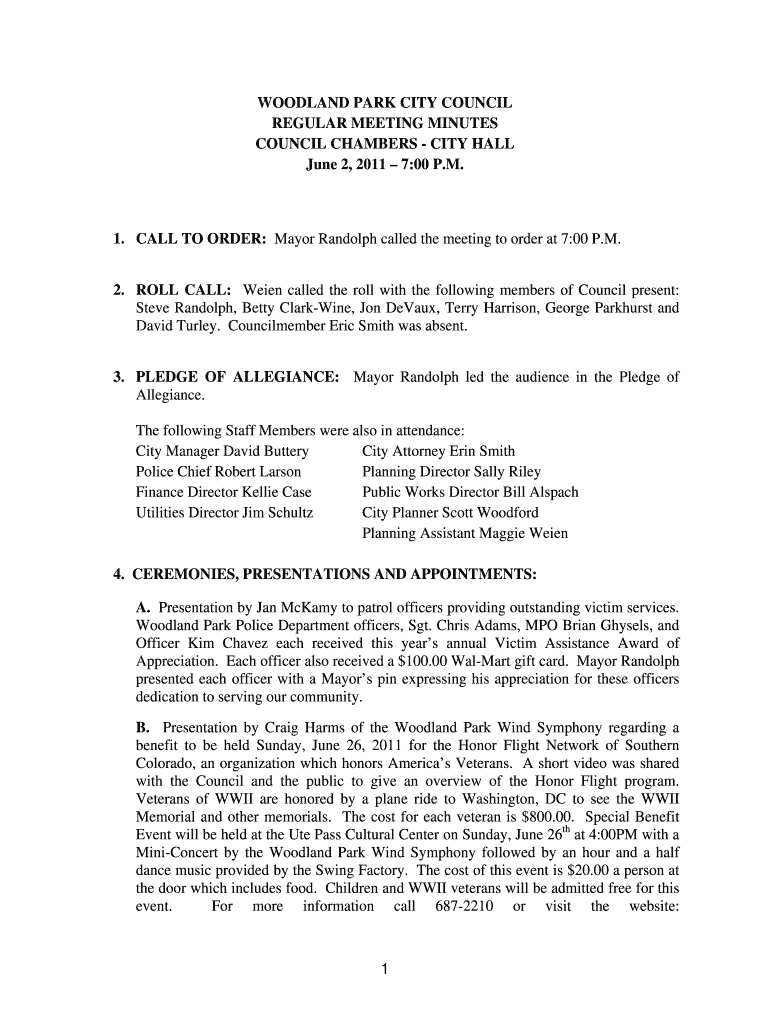







Definition & Meaning
The term "roll call" within the context of council meetings refers to the procedural act of calling out the names of members to establish who is present. It is an essential part of ensuring transparency and accountability. In this specific instance, "Weien called the roll with the following members of Council present: Steve Randolph, Bett" indicates that a record was created detailing who attended the meeting, which is fundamental for meeting legitimacy and record-keeping.
Purpose of Roll Call in Meetings
- Attendance Verification: Roll call confirms which members are present to establish a quorum, a minimum number needed to conduct official business.
- Record Keeping: Maintains a formal record of member participation, crucial for accountability.
- Voting Procedures: Determines who is eligible to vote during the session.
- Transparency: Provides transparency to the public regarding council member participation.
How to Use the Roll Call Effectively
When conducting a roll call, it is important to follow a systematic approach to ensure accuracy and reliability:
- Preparation: Have a list of council members ready for ease of reading.
- Orderly Sequence: Call out names in a predetermined order, often alphabetically or by position.
- Verification: Note whether each member is marked as present, absent, or excused.
- Documentation: Record responses in official meeting minutes for future reference.
Best Practices
- Clarity: Enunciate clearly to avoid misunderstandings.
- Confirmation: Seek verbal acknowledgment from members as they confirm their presence.
- Follow-up: Address absences directly by seeking reasons and documentation if needed.
How to Obtain the Roll Call Record
Accessing roll call records typically involves engaging with official channels established by council administrations. These records can provide valuable insights into member attendance and meeting participation.
Steps to Access
- Contact Council Clerk: The clerk often maintains roll call records and can provide copies upon request.
- Public Records Request: Submit a formal request if the records are not readily available.
- Online Portals: Some councils publish meeting minutes, including roll calls, on their websites.
Steps to Complete the Roll Call Process
Completing a roll call effectively requires diligence and attentiveness to detail to ensure the integrity of the process.
- Initiation: Start by announcing the commencement of the roll call.
- Name Calling: Proceed to call out each member's name.
- Response Recording: Document responses in real-time.
- Close the Roll Call: Confirm the number of present and absent members.
Practical Tips
- Timing: Conduct roll calls at the beginning of each session for efficiency.
- Backup: Use a digital or physical backup to prevent data loss.
Importance of Roll Call Verification
Conducting a thorough roll call is vital for the smooth operation of council meetings and enhances procedural integrity.
- Ensures Quorum: Confirms enough members are present to make decisions.
- Promotes Accountability: Tracks member participation and commitment.
- Supports Fairness: Allows for informed decision-making when determining who can vote.
Participants in Roll Calls
Typically, roll calls are conducted in various formal settings to ensure proper establishment of presence and quorum.
Common Participants
- Council Members: Primary participants whose attendance is being confirmed.
- Council Clerk: Facilitates the roll call and records attendance.
- Chairs and Presiding Officers: Oversee the process to maintain order.
Key Elements of Effective Roll Call Records
A well-maintained roll call record is comprehensive and includes all necessary details to reflect true attendance.
- Date and Time: Document when the roll call took place.
- Member Names: Every participant should be listed distinctly.
- Attendance Status: Clearly mark each member as present, absent, or excused.
- Notes on Absence: Record reasons for absence if provided.
Ensuring Accuracy
- Verification: Regularly verify and audit records to maintain correctness.
- Accessibility: Ensure records are easily accessible for future reference.
Examples of Roll Call Applications
Roll call procedures are utilized in a variety of scenarios beyond city council meetings, demonstrating their wide appropriateness and relevance.
Use Cases
- Corporate Meetings: Used in board meetings to confirm director participation.
- Educational Institutions: Employed by schools to record student attendance.
- Legislative Bodies: Conducted in state and federal assemblies to establish member presence before votes.
Each context showcases the roll call's role in reinforcing organization and procedural compliance.




