







Definition & Meaning
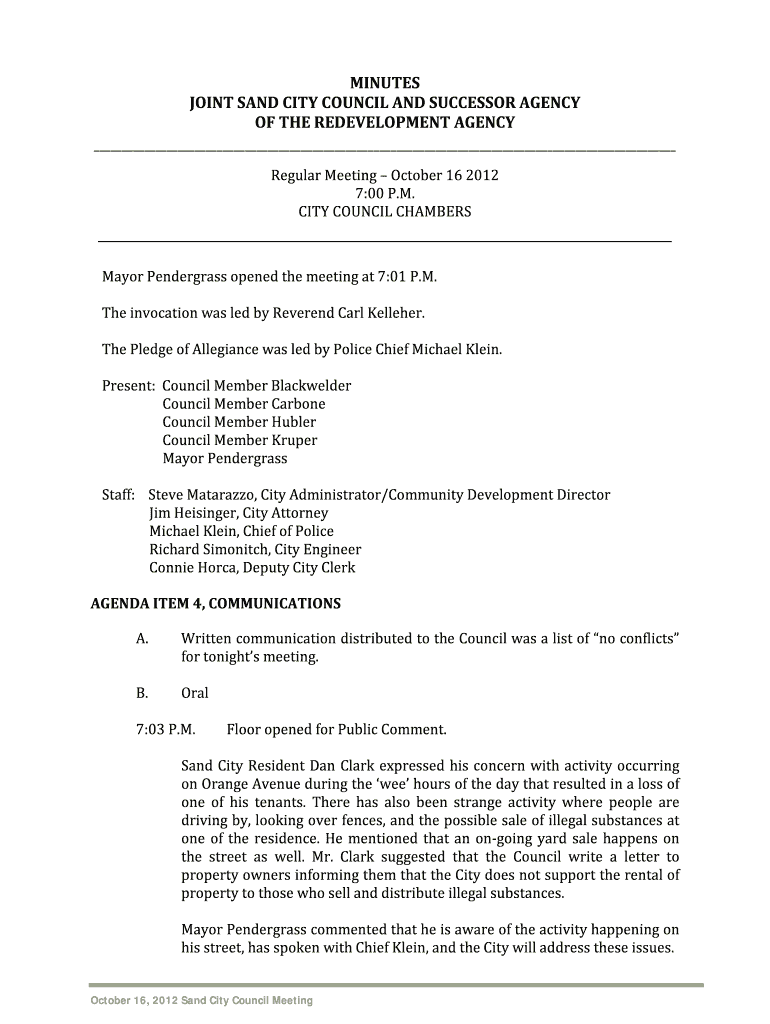
The phrase "Present: Council Member Blackwelder, Council Member Carbone, Council Member Hubler, and Council Member Krup" likely refers to the roll call during a governmental meeting where these specific council members were present. Roll calls are a standard part of public meetings as they confirm attendance. This is significant for maintaining transparency and accountability within the city council's operations. Attendance not only helps in fulfilling quorum requirements but also ensures that decisions made in the meeting have the necessary representation.
Relevance in Council Meetings
- Decision-Making: Acknowledging the presence of these council members indicates that they have an active voice in the meeting's decisions and discussions.
- Accountability: Documents such as minutes of meetings serve as a public record of officials’ attendance, emphasizing transparency.
- Quorum Formation: The presence of these members helps in meeting the minimum number of participants needed for the decisions to be valid and lawful.
Steps to Complete a Council Meeting Roll Call
Preparing for the Roll Call
- Verify Council Member List: Ensure that the list of council members is up-to-date ahead of the meeting.
- Attendance Check: As each council member's name is called, they should verbally confirm their attendance.
During the Meeting
- Ensure Accuracy: The roll call should be accurate to reflect true attendance.
- Document Findings: Record which members are present, late, or absent for future reference and documentation.
How to Use the Roll Call Information
Importance of Accurate Records
- Public Record Maintenance: Maintaining accurate attendance is crucial for producing minutes that accurately reflect the meeting’s proceedings.
- Facilitation of Follow-ups: Without proper records, follow-ups on decisions made in the meetings may be challenging.
Case Application
- For Legal Proceedings: Proper attendance records can be vital in situations where council decisions are legally challenged.
- Member Performance Review: Attendance records can be used as part of performance reviews for council members.
Key Elements of a Council Meeting Roll Call
Essential Components
- Names and Titles: Ensure that full names and titles are clearly identified.
- Date and Time: Record the date and time of the meeting for future reference.
- Location: Specify the venue of the meeting, whether virtual or physical.
Supporting Information
- Absentees: Note any absent members and their stated reasons if provided.
- Alternates: If an alternate or deputy is present in place of a main council member, this should also be recorded.
Legal Use of Attendance Records
Complying with Open Meeting Laws
- Transparency Requirements: Many jurisdictions have laws that require public bodies to keep accurate attendance records to ensure transparency.
Public Accessibility
- Records Access: Attendance records should be made accessible to the public, upholding the principles of open governance.
Examples of Using Attendance Records
Practical Scenarios
- City Council Decisions: Attendance records are essential in validating the legitimacy of decisions, e.g., passing local ordinances.
- Historical Reference: They serve as an informative reference for reviewing past council activities and member participation.
Who Typically Uses the Roll Call


Key Users
- City Council Secretaries: Responsible for compiling and maintaining accurate records of meetings.
- Legal Teams: Use the records to verify membership and voting in legal disputes.
Additional Users
- Local Citizens: Residents may also review attendance as part of their civic engagement efforts.
Variations in Attendance Recording
State and Local Differences
- Regulations: States or localities might have specific regulations dictating how roll calls should be conducted and recorded.
Meeting Types
- Different Formats: In addition to regular council meetings, such as town hall meetings or special sessions, may have different attendance recording requirements.
These blocks provide comprehensive and in-depth information related to the document concerning the council members and their presence at meetings, focusing on practical implications, legal context, and procedural details.




