







Definition and Meaning
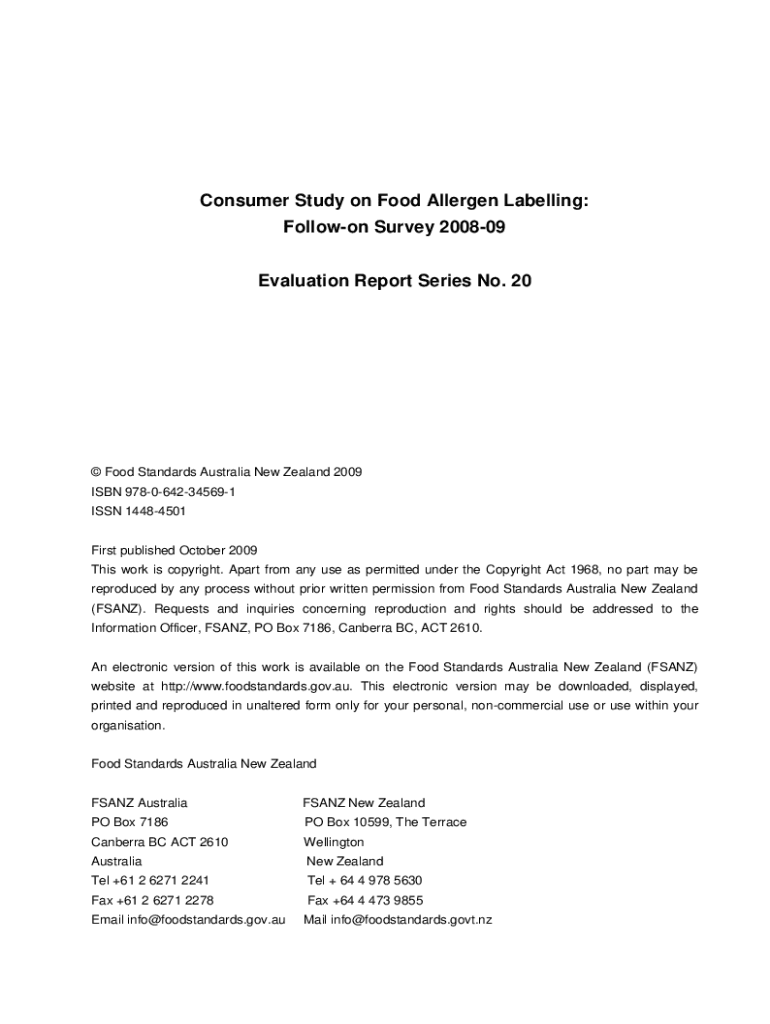
The "Consumer study on food allergen labelling: follow-on survey" is a comprehensive evaluation report conducted by Food Standards Australia New Zealand (FSANZ). It investigates consumer perspectives, attitudes, and behaviors related to food allergen labeling. The report specifically compares data from a follow-on survey taken in 2008-09 against a benchmark study from 2003. The primary aim is to understand how awareness and trust in food labeling have evolved, highlighting issues consumers face in identifying allergens due to labeling practices.
Key Elements of the Consumer Study
The study focuses on several critical elements to assess the state of food allergen labeling:
- Consumer Awareness: Measures how well-informed consumers are regarding current labeling practices.
- Trust in Labels: Evaluates the confidence consumers have in the information provided by food labels.
- Labeling Challenges: Identifies common issues such as unclear or inconsistent labeling that complicates allergen identification.
- Improvement Suggestions: Offers insights into enhancing labeling clarity, consistency, and detail for better consumer support.
Important Terms Related to the Survey
Understanding the terminology used in the consumer study is essential for interpreting the findings:
- Allergens: Substances in food that can cause allergic reactions.
- Labeling Practices: Methods and standards used to list allergens on product packaging.
- Benchmark Study: The initial study conducted in 2003 used as a reference point for measuring progress.
- Follow-on Survey: The subsequent survey executed in 2008-09 for updated insights.
Who Typically Uses the Consumer Study
The primary users of this consumer study include:
- Regulatory Bodies: Organizations like FSANZ that are responsible for setting and enforcing food labeling standards.
- Food Manufacturers: Companies that produce packaged foods and need to comply with labeling regulations.
- Dietitians and Nutritionists: Professionals advising clients with food allergies rely on this data for informed guidance.
- Consumer Advocacy Groups: Organizations that advocate for consumer rights related to food safety and transparency.


Steps to Complete the Survey
Completing a consumer study survey involves:
- Defining Objectives: Determine the primary goals and focus areas for the survey.
- Survey Design: Develop questions that accurately capture consumer experiences and attitudes about food allergen labeling.
- Participant Selection: Choose a representative sample of consumers with diverse backgrounds and experiences with food allergies.
- Data Collection: Distribute the survey through appropriate channels and aggregate responses.
- Analysis and Reporting: Analyze the data to identify trends, challenges, and areas for improvement, resulting in a comprehensive report.
Why Conduct the Consumer Study
Conducting this type of consumer study is crucial for several reasons:
- Regulatory Improvement: Provides evidence needed for amending regulatory guidelines to improve consumer safety.
- Consumer Safety: Helps reduce the risk of allergic reactions by ensuring that labels are clear and accurate.
- Market Trust: Builds trust among consumers when they see efforts are made to improve labeling accuracy and consistency.
Legal Use of the Consumer Study
The legal application of the consumer study findings has significant implications:
- Policy Formulation: Regulators use these findings to develop or refine food labeling policies that ensure consumer safety and transparency.
- Compliance Enforcement: Ensures manufacturers meet legal standards by providing clearly defined labeling requirements.
- Consumer Protection: Shifts some burdens onto manufacturers to facilitate easy allergen identification.
Penalties for Non-Compliance
Failure to adhere to recommended labeling practices as informed by the consumer study can result in:
- Fines and Penalties: Financial repercussions for manufacturers that fail to comply with updated labeling requirements.
- Recalls: Potential withdrawal of mislabeled products from the market to protect consumer health.
- Reputation Damage: Loss of consumer trust, which can lead to reduced sales and brand credibility concerns.




